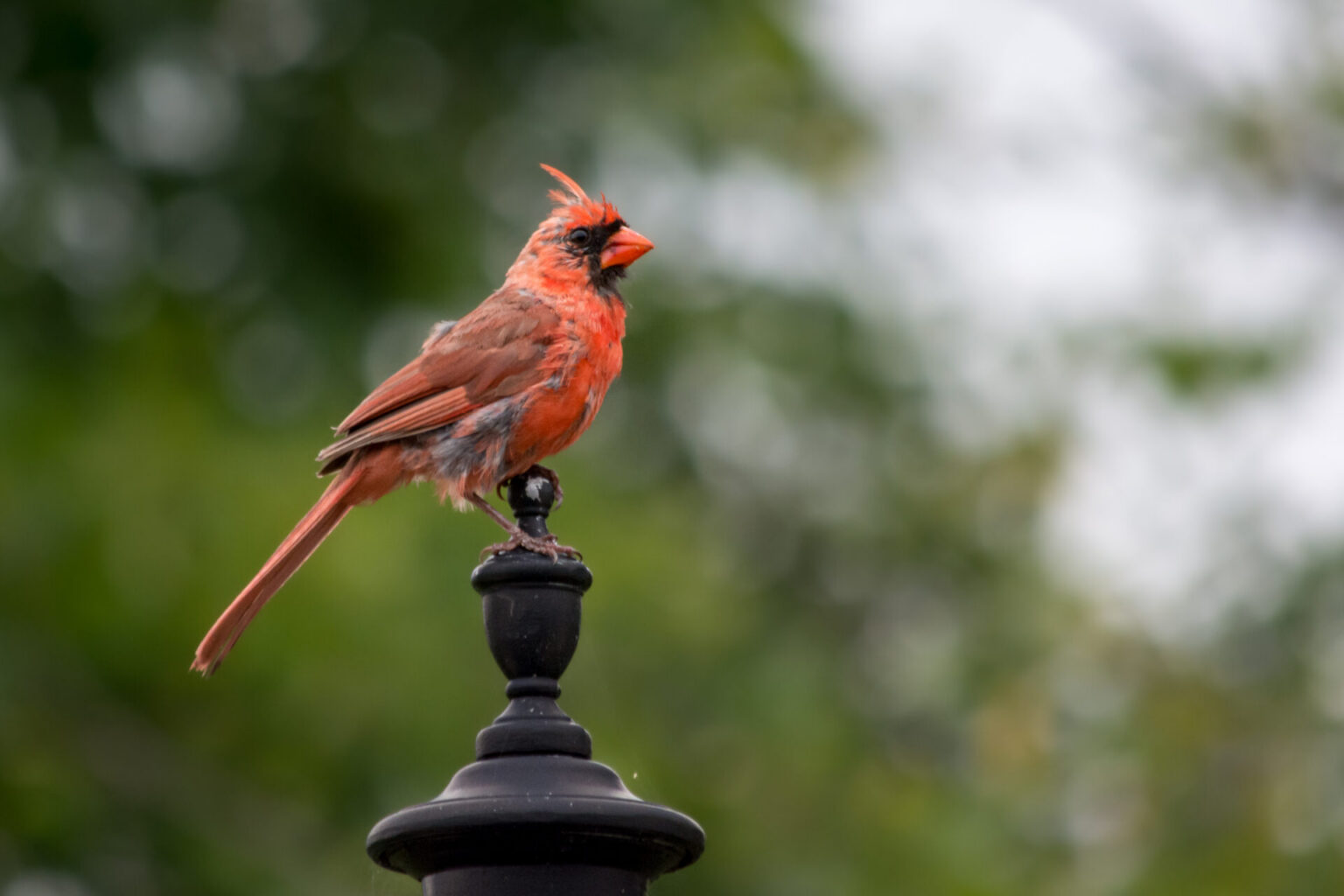
August in the birding world is a bit like the morning after a massive rock festival. The high-energy spring breeding season is officially over, the loud dawn chorus has completely tanked, and our backyard songbirds are exhausted. Right now, they are entering a critical, highly stressful phase: the annual post-breeding molt.
Over the next few weeks, your favorite native birds will systematically shed their worn, battered feathers and grow a shiny, insulated new set for winter. It is a brilliant biological reset, but it comes with a major catch.
Growing feathers requires massive amounts of metabolic energy. Even worse, missing feathers makes flight clumsy, awkward, and painfully slow. A molting bird is essentially like a fighter jet with half the control flaps missing from the wings. You can technically still take off, but your turn radius is shot, you can’t climb quickly, and any predator behind you has an easy target. Right now, the birds want to lay low, stay quiet, and hide out in the shadows.
Enter the invasive House Sparrow [Passer domesticus]
Unlike our native migrants, these aggressive little thugs do not fly south for the winter. Instead, they form massive, raucous late-summer flocks that hog the feeders, take over the bushes, and aggressively bully the quiet, vulnerable native birds that just need some peace and quiet.
If you want to turn your yard into a safe summer sanctuary for local native birds, you need a tactical plan. Here is how to engineer a backyard setup that gives molting birds a safe room while showing House Sparrows the door.
| Feature | Native molting songbirds | Invasive House Sparrows |
|---|---|---|
| Cover Preference | Deep, dark, tangled native shrubs | Open lawns, gutters, open fences |
| Diet | High-fat suet, safflower, nyjer | Cheap millet, cracked corn, milo |
| Feeder Comfort | Clinging, upside-down, agile | Upright perching, flat surfaces |
| Water Habits | Shallow water near instant cover | Deep, open, stagnant water |
Build a “sparrow-resistant” fortress (brush piles 2.0)
A backyard brush pile is the ultimate safe-house for a clumsy, featherless bird, but if you just chuck some sticks in a pile, it instantly becomes a luxury apartment complex for House Sparrows.
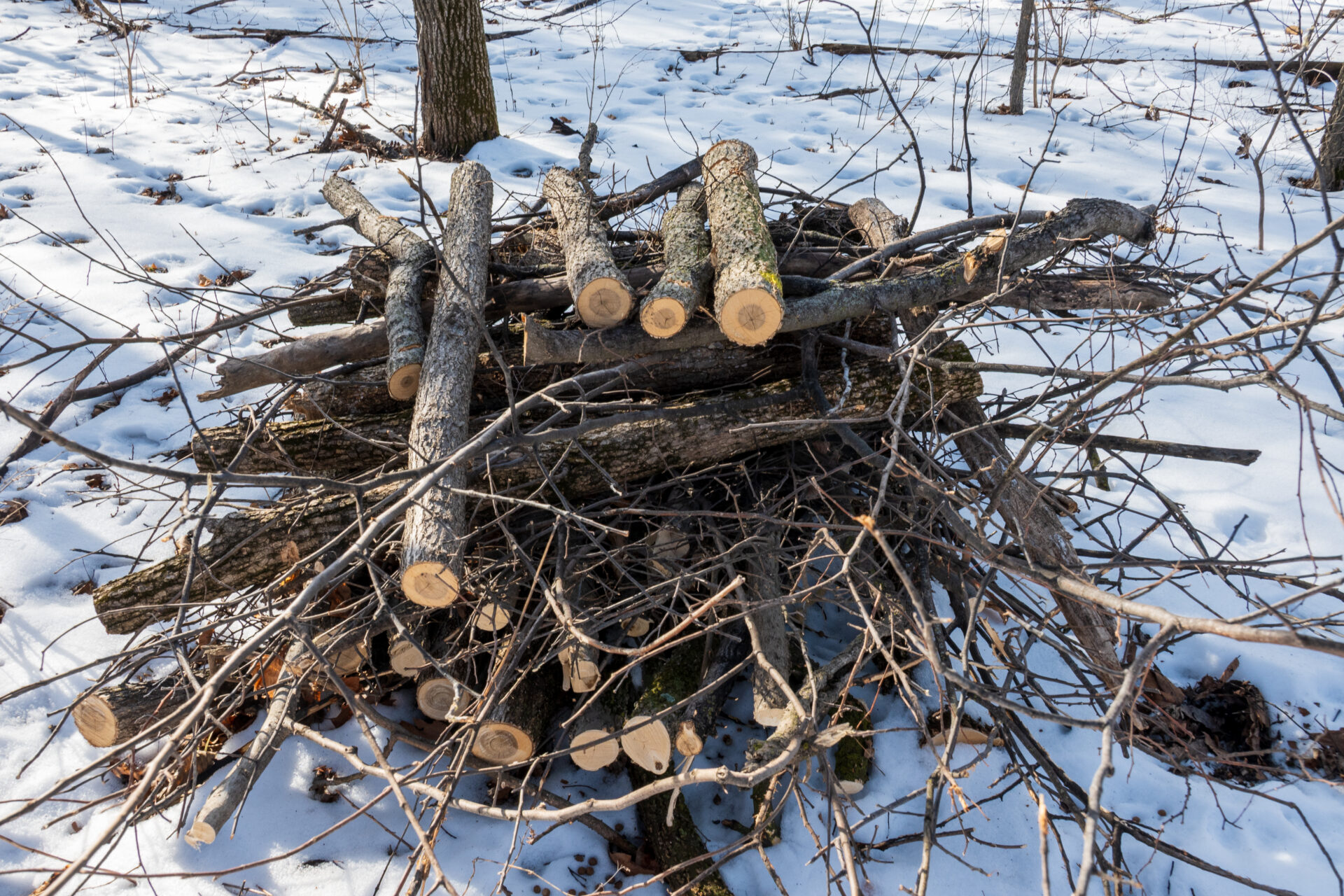
A carefully constructed brush pile provides cover to molting birds
- The blueprint: Start your pile with a solid foundation of heavy, thick logs crisscrossed at sharp angles to create tiny, tight interior chambers. Weave dense evergreen branches (like pine or cedar) tightly over the top.
- The sparrow defense: Native ground-foragers like Song Sparrows, Eastern Towhees, and thrushes are highly comfortable slipping deep into tight, pitch-black ground tunnels. House Sparrows, on the other hand, are deeply suspicious of dark, enclosed ground spaces where they cannot easily fly away as a group. They prefer to sit in loose, open branches where they can chirp in crowds. Making the interior tight and dark keeps the bullies out.
Deploy mechanical feeder physics
If you are still serving generic, cheap grocery store birdseed on an open platform tray, you are basically running a free buffet for the sparrow mafia. House Sparrows love millet, milo, and cracked corn. Clean up the menu by serving pure Nyjer (thistle) and safflower seed, which House Sparrows tend to not prefer but native finches and cardinals love.
To completely lock them out, use these specific mechanical deterrents:
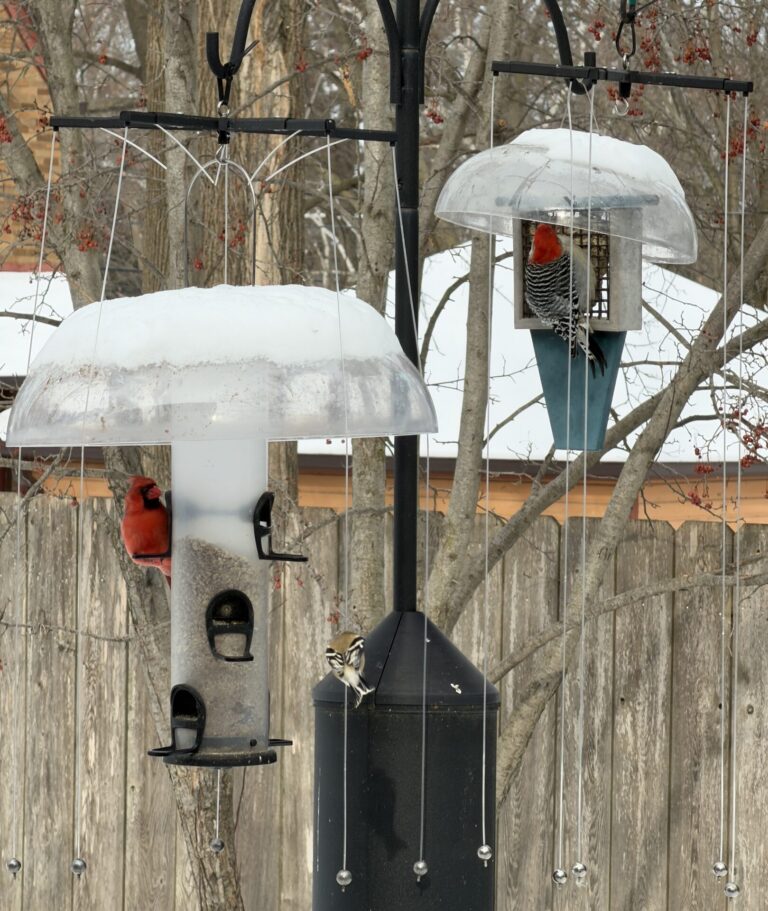
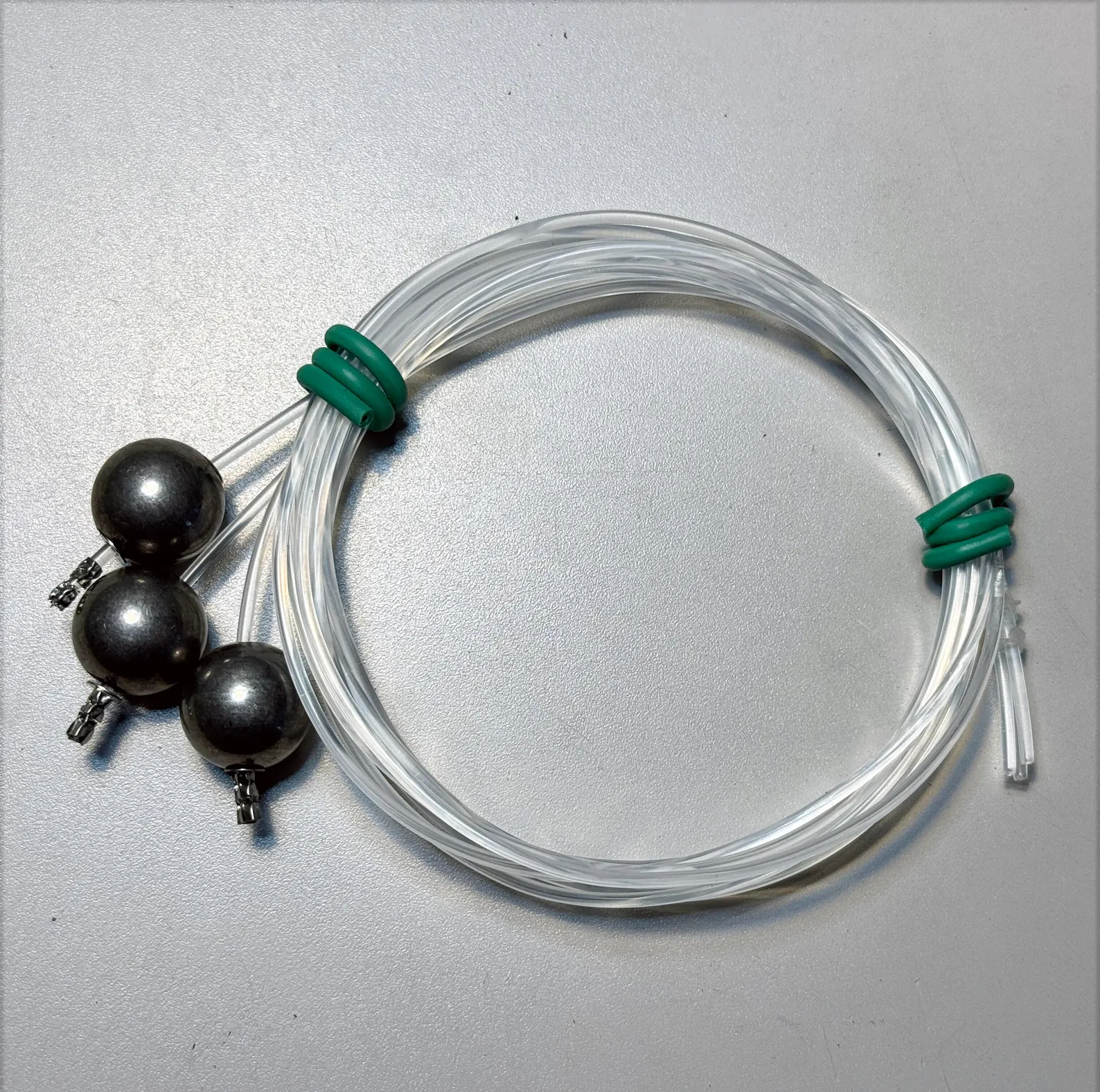
- The Magic Halo: Install a Sparrow-B-Gone or weighted monofilament fishing lines around your feeders. Because of the unique way House Sparrows perceive motion and spatial boundaries, these hanging lines terrify them, causing 90% of them to completely abandon the feeder. Native chickadees, goldfinches, and nuthatches could not care less about the wires and will slip right through.
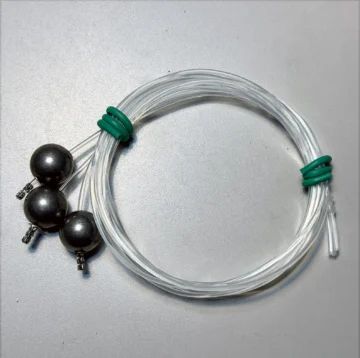
Sparrow-B-Gone’s! 250-pound filament cords are safe for all birds
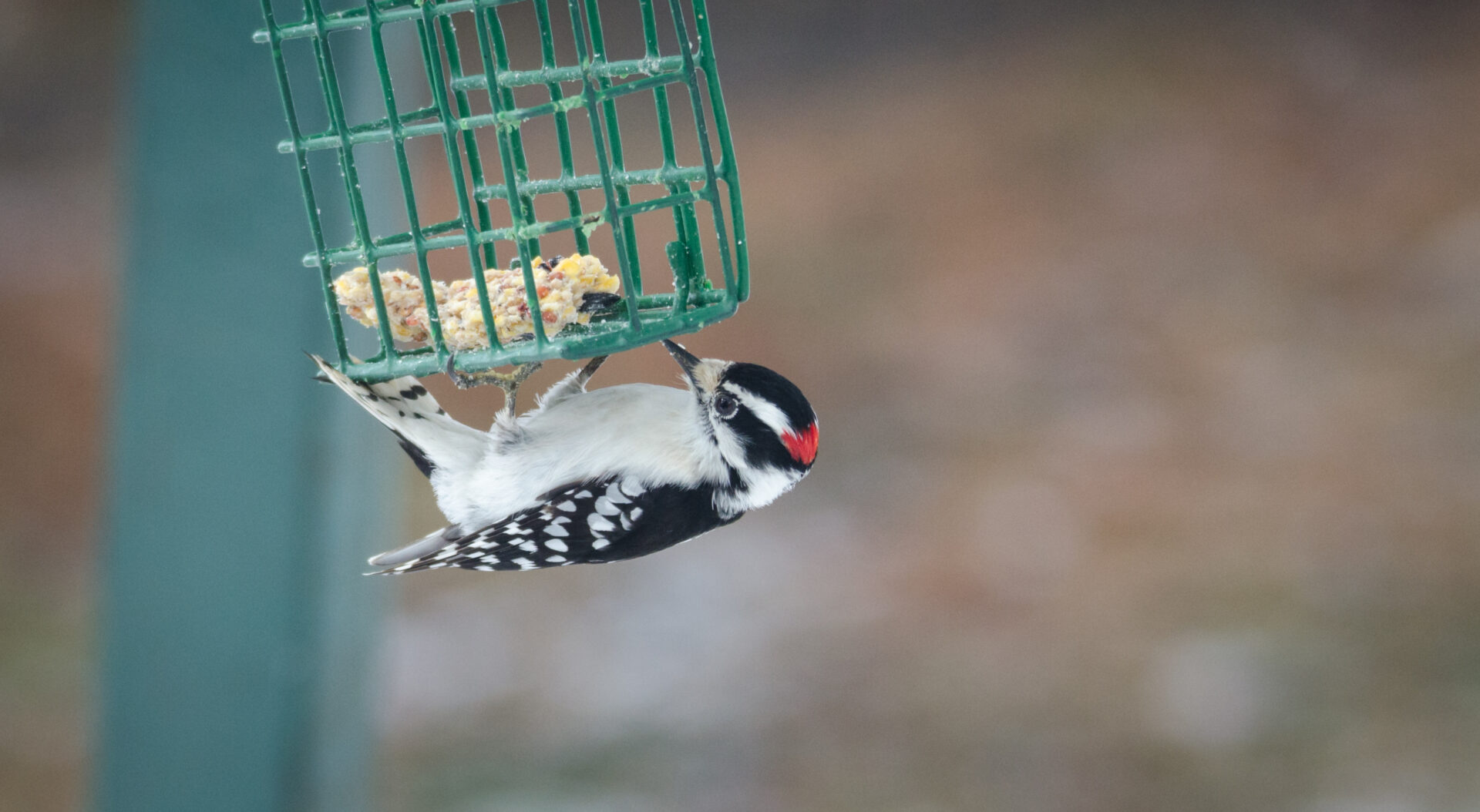
- The gravity flip: Switch to an upside-down suet feeder. Native woodpeckers, nuthatches, and chickadees have the specialized foot anatomy required to effortlessly cling upside down to eat. House Sparrows lack this grip strength; they will try to land, fail miserably, and leave the high-protein meal for the birds that actually need it.
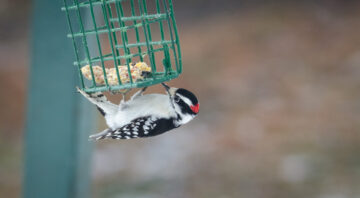
Some birds like to hang upside down to feed, but not House Sparrows
Re-engineer the watering hole
Feather growth produces a ton of waxy sheath debris, making molting birds incredibly itchy and desperate for a bath. However, a soaking wet bird flies even worse than a molting one. A birdbath in the middle of an open lawn is a death trap.
- Move it close: Position your birdbath within three feet of your densest, tangling shrubs like native Arrowwood Viburnum or Elderberry. This allows a vulnerable bird to hop out of hiding, take a quick 10-second splash, and immediately dart back into the shadows to preen and dry off safely.
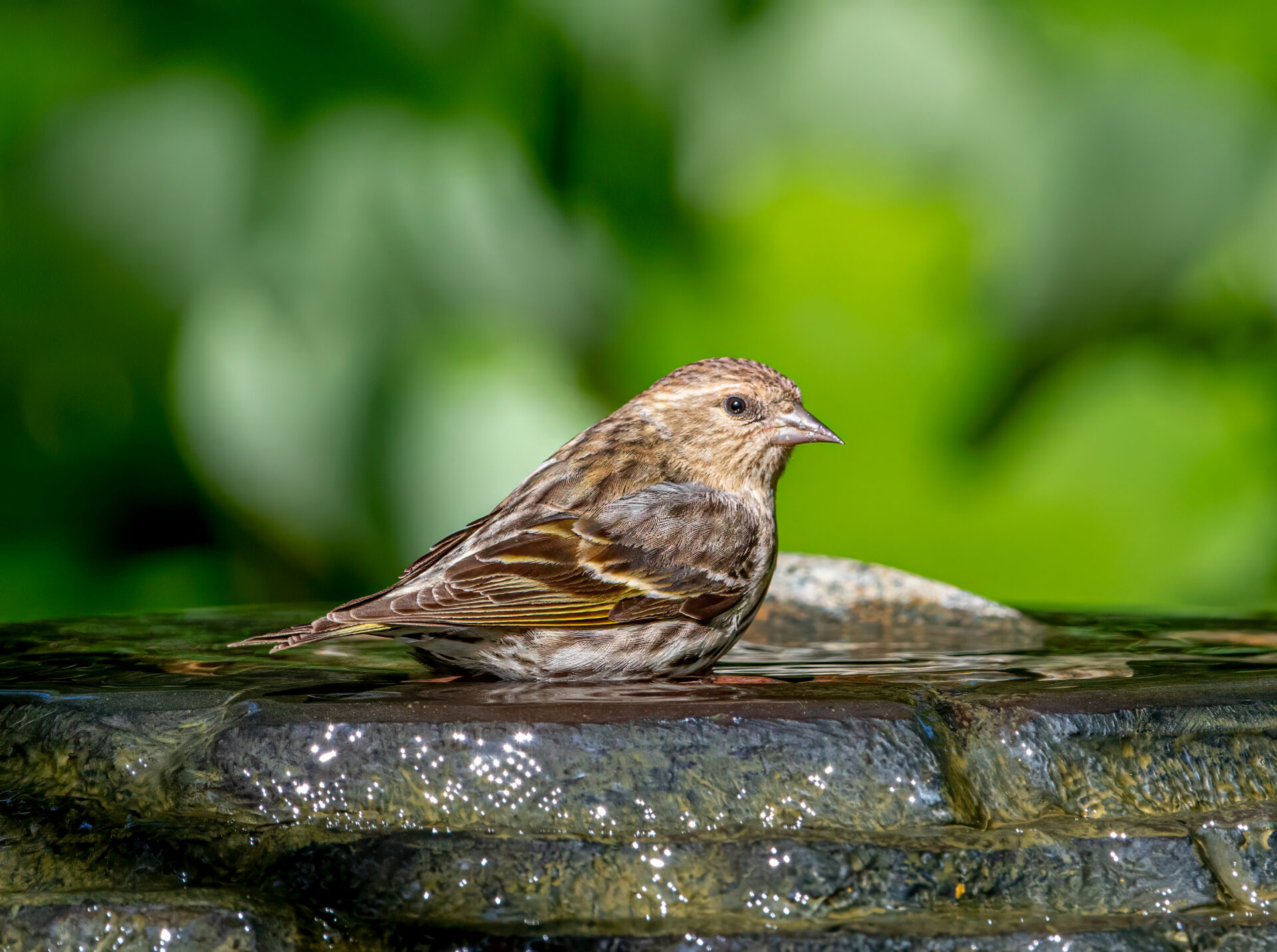
- Keep it shallow: House Sparrows love deep, stagnant water where they can communal-bathe. Keep the water depth under one inch, and add a small water dripper or mister. The sound of moving water acts as a beacon for traveling native migrants, while the moving ripples make the surface less appealing to static House Sparrow flocks.
A cute spring time Pine Siskin enjoying a water fountain in a midwest garden.
By strategically adjusting your yard’s architecture and switching to sparrow-resistant feeding mechanics, you can give our stressed, featherless native residents the quiet, safe refuge they need to rebuild their plumage for the winter ahead.