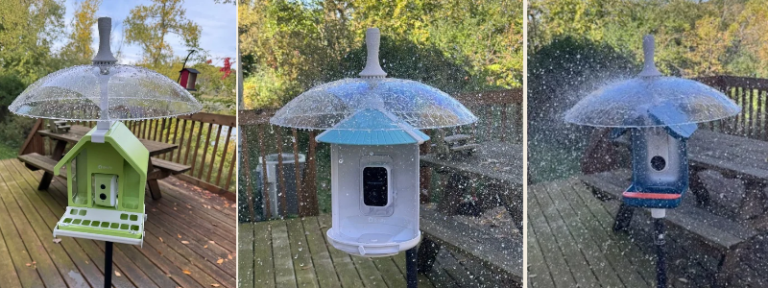
If you’ve noticed the local House Sparrow (Passer domesticus) flock looking a little drabber and less aggressive at your feeders this October, don’t be fooled. They haven’t suddenly become mild-mannered yard guests, nor have they ceded territory to native songbirds.
What you’re seeing is a tactical seasonal shift. Fresh off their post-juvenile autumn molt, male House Sparrows are currently wearing a clever bit of feather “camouflage” designed to help them quietly establish winter roosts and usurp native bird habitats right under your nose.
Understanding how this invasive species operates in the fall is the first step toward taking back your backyard.
The Autumn “Turtleneck”: A Low-Profile Takeover
In spring, a mature male House Sparrow wears his reputation on his chest: a prominent, jet-black throat patch (or “bib”). In sparrow hierarchy, a larger, darker bib signals dominance, aggression, and first rights to prime nesting spots—often at the direct expense of native species like Eastern Bluebirds and Tree Swallows.
In October, however, those aggressive badges seem to vanish.
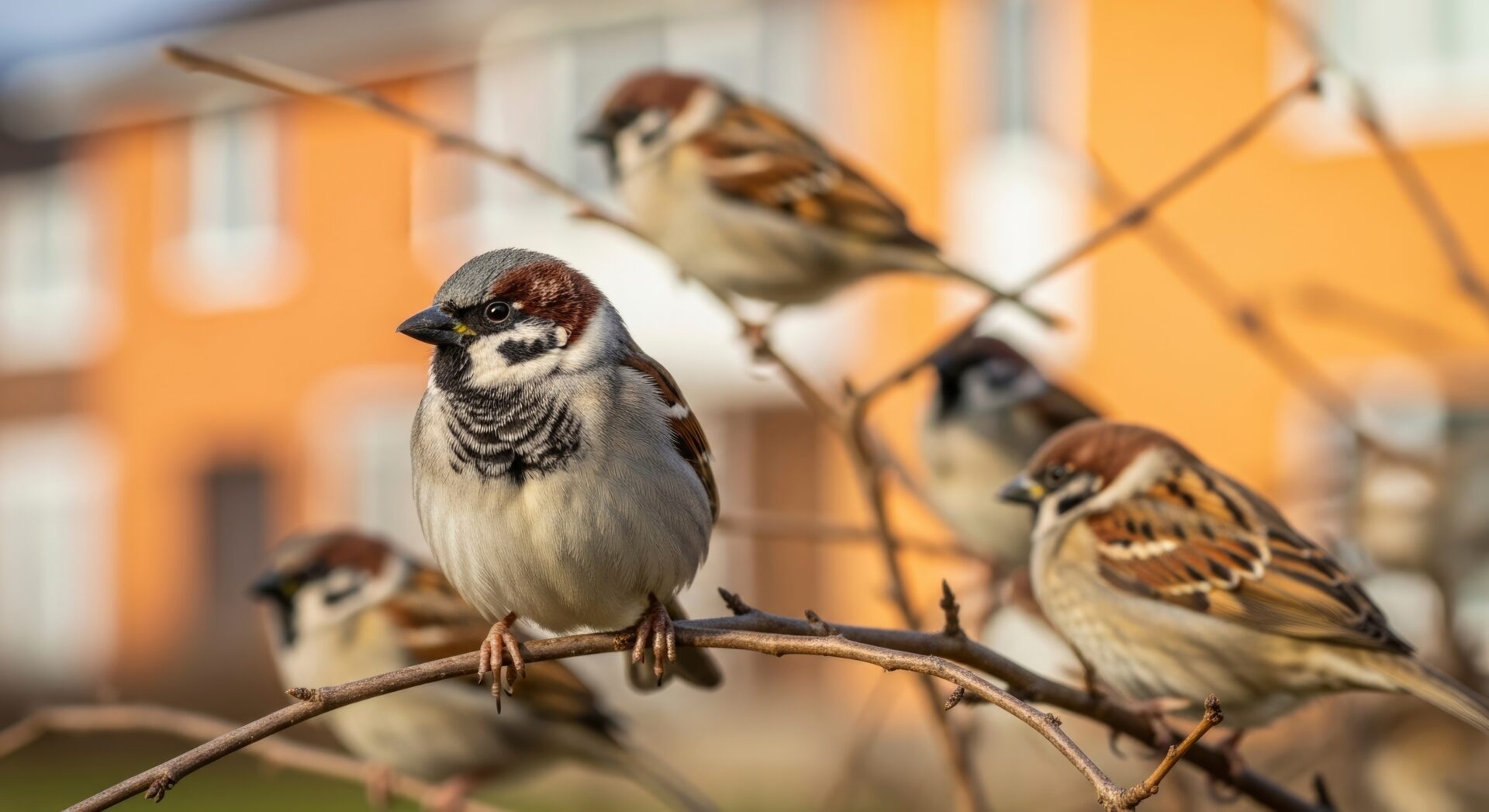
As males complete their late-summer molt, their new black throat feathers grow in with dull, buffy-grey tips. This creates a muted, smudged appearance—effectively placing a grey “turtleneck” over their dominant black tie.
This isn’t an accident of nature; it’s an evolutionarily refined strategy for winter survival:
- Suppressing In-Flock Aggression: High-visibility dominance badges trigger constant fighting. By temporarily concealing their bibs under grey feather tips, male sparrows can form massive, dense winter flocks without wasting energy on constant territory battles.
- Strength in Numbers: By playing nice throughout late autumn and winter, they pool resources to overwhelm bird feeders, strip local seed supplies, and dominate thermal roosting sites in dense hedges and building eaves.
The Slow-Motion Reveal: How They Gear Up for Spring
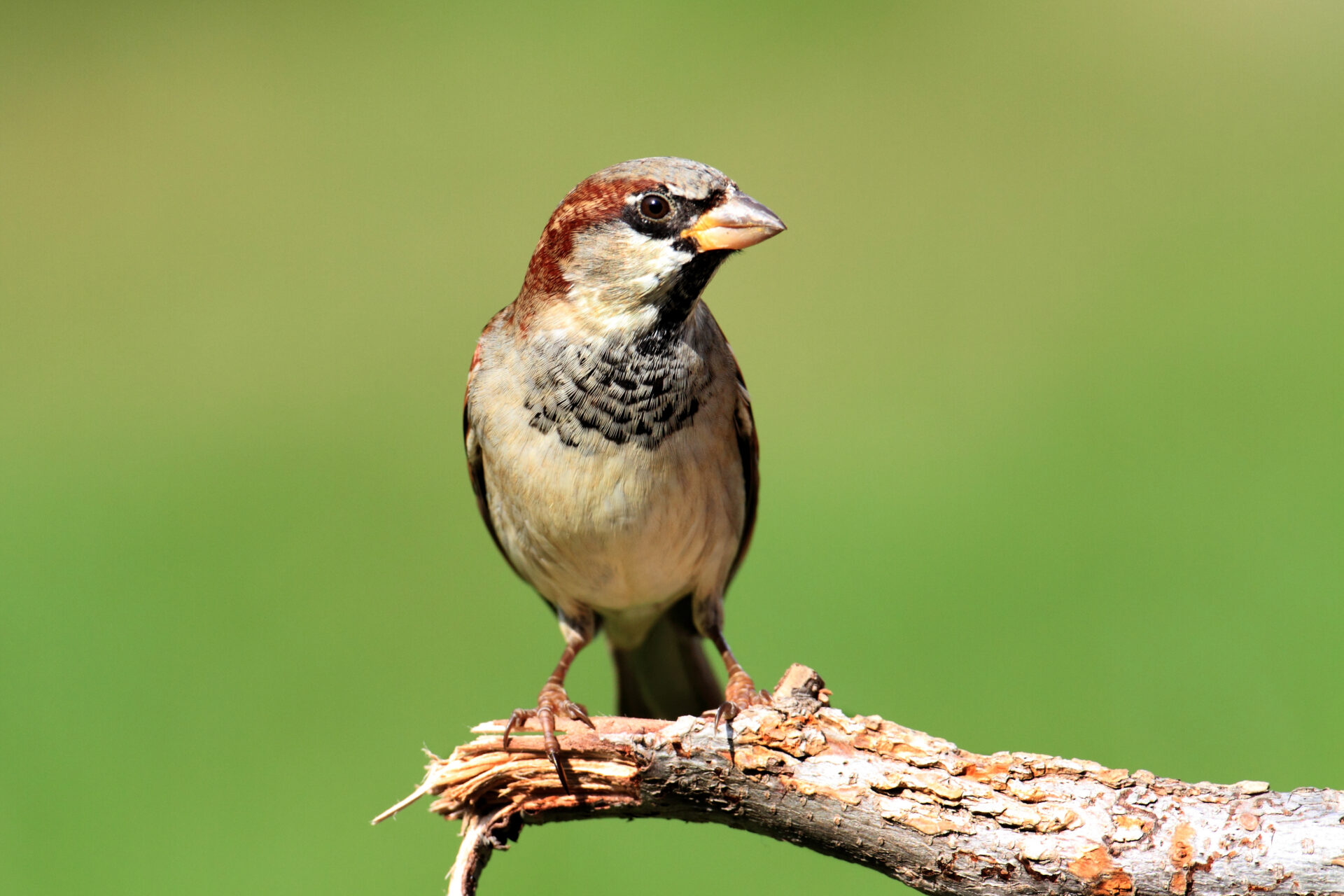
Male House Sparrow (Passer domesticus) with gray tipped bib feathers.
Here is the real catch: House Sparrows won’t need to molt again to regain their dominant spring look.
Throughout the winter, as they squeeze into roost crevices and forage, those soft grey feather tips gradually wear away through physical friction. By early spring, without spending a single calorie growing new plumage, the grey tips crumble away to reveal the stark, jet-black bib underneath.
While you think they are simply resting for the winter, they are actually biding their time, holding territory in your yard, and preparing to aggressively claim nest boxes the moment weather permits.
Fall Prevention: Stop the Winter Flock Before It Settles
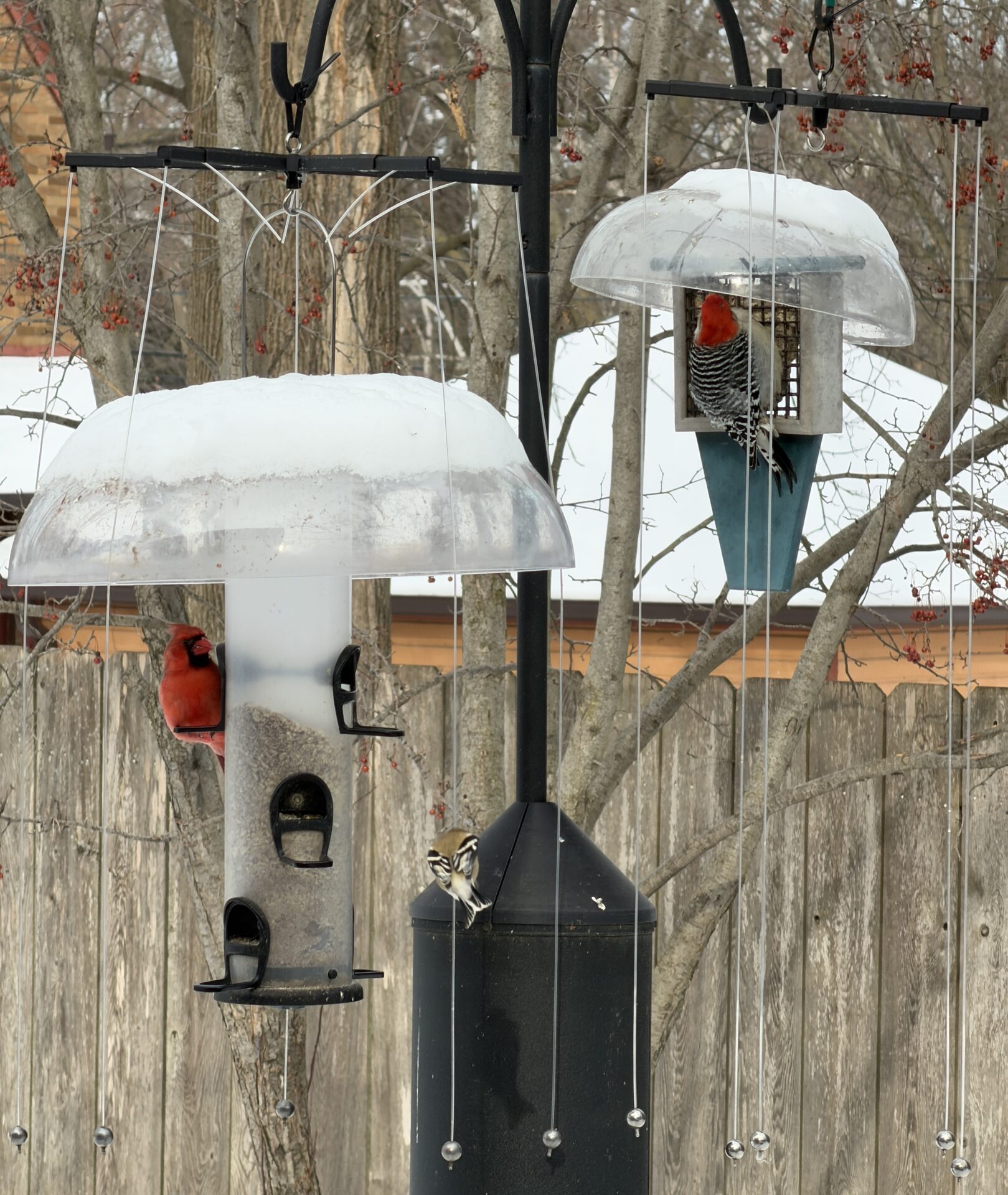
Because House Sparrows use autumn to coalesce into stubborn, large-scale winter flocks, October is the most critical time to audit your property and implement target-specific deterrents.
If you wait until spring to manage them, they’ve already called dibs on your yard.
- Exclude Access to Nest Boxes: House Sparrows frequently use birdhouses as winter roosts to stay warm, cementing their claim for spring nesting. Seal or remove nest boxes in autumn, or install species-specific hole restrictors that exclude sparrows while protecting native birds.
- Switch Up the Menu: House Sparrows thrive on cheap seed mixes containing millet, sorghum, and cracked corn. Transitioning your feeders to sunflower-only setups or specialized cling-feeders makes it significantly harder for invasive flocks to hijack your station.
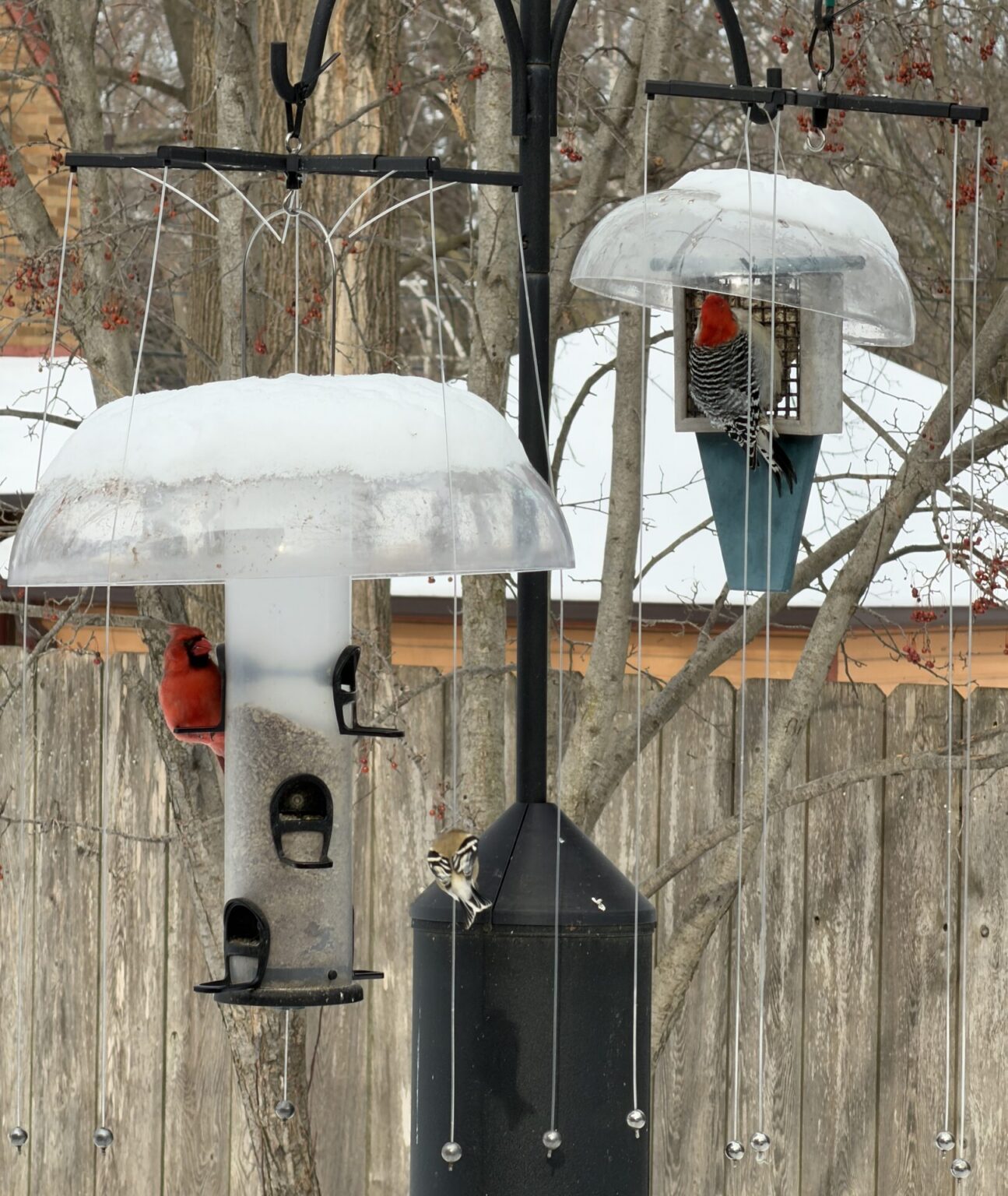
- Implement Target Deterrents: Utilize weighted selective feeders, halo wires or Sparrow-B-Gone!, or physical anti-roosting barriers around eaves and porch ledges before sparrows form established roosting habits for the winter.
Don’t let their muted fall appearance fool you. A House Sparrow in October is simply a nest-stealing pest in winter coat—and taking action now guarantees a safer, healthier environment for native wildlife come spring.