When late autumn sweeps in and temperatures plunge below freezing, backyard birders naturally stockpile black oil sunflower seeds, suet blocks, and peanuts. Providing calories is crucial, but many backyard enthusiasts overlook a winter resource that is far scarcer than food: liquid water .
When ponds, puddles, birdbaths, and shallow streams turn to solid ice, finding a reliable drink becomes a daily survival crisis for wintering birds. Keeping an open water source in your yard during freezing conditions isn’t just a kindness—it is one of the most effective ways to support local wildlife.
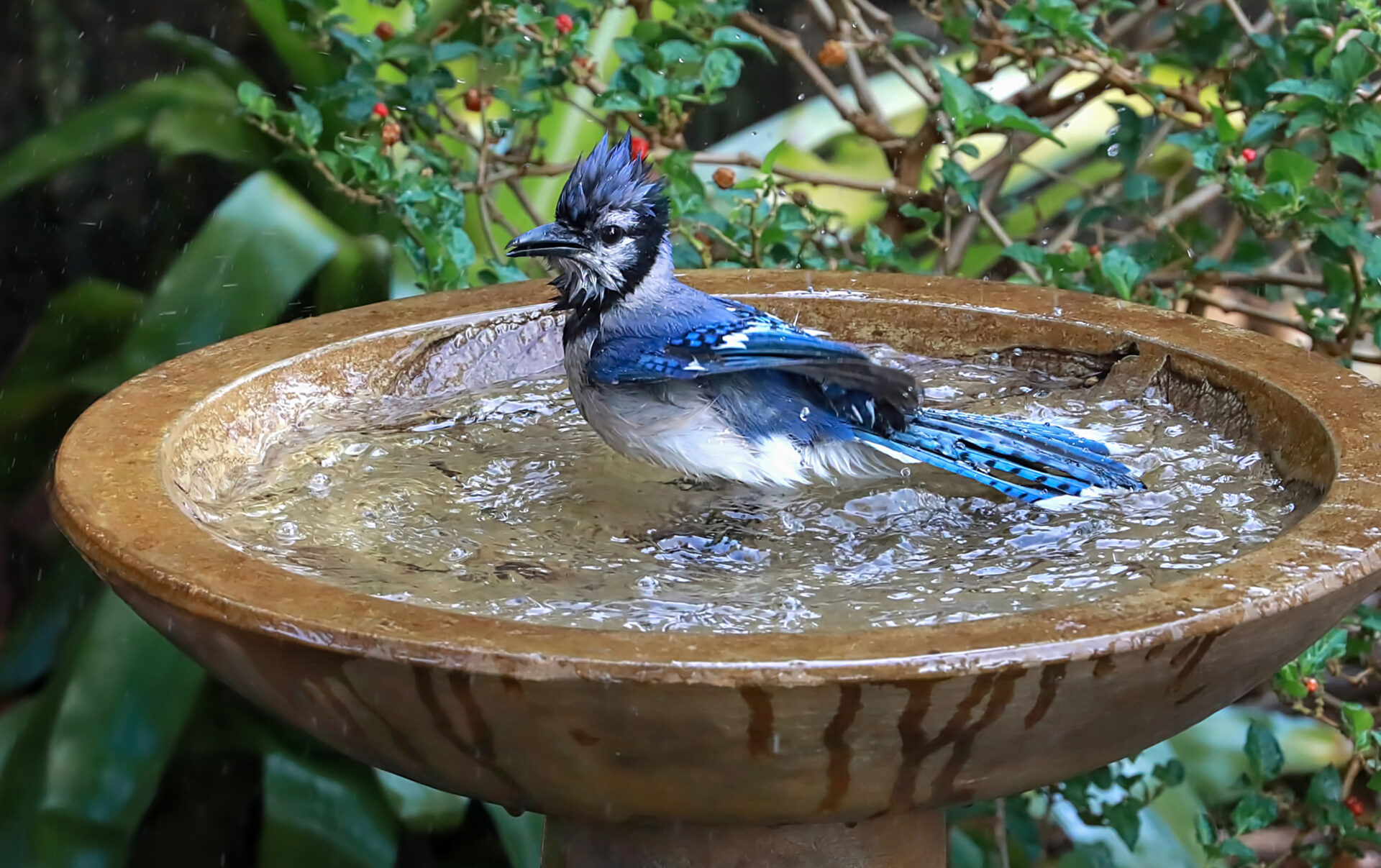
A blue jay enjoying bathing and shaking the water off in a bird bath.
Why Birds Desperately Need Water in Sub-Zero Weather
It seems counterintuitive to worry about dehydration in the middle of a snowy landscape, but birds face severe physiological hurdles in sub-freezing temperatures:
- Caloric Cost of Melting Snow: Birds can and will eat snow if no other choice exists, but doing so carries a heavy biological penalty. It takes substantial metabolic energy to convert ice or snow into liquid inside a bird’s body. In deep cold, burning those calories for hydration leaves fewer calories to maintain core body temperature overnight.
- Preening and Feather Maintenance: Water is vital for staying warm. Feathers only insulate when properly cleaned, aligned, and oiled. If dirt, dust, and food residue foul a bird’s plumage, the feather barbs unlock, letting frigid air penetrate directly to the skin. A quick winter dip and preen keeps their “down jacket” weather-sealed.
- Winter Diet Dryness: The winter backyard menu consists largely of dried seeds, nuts, and tallow-based suet—items with virtually zero moisture content compared to the berries, fruit, and insects available in spring and summer.
Three Reliable Ways to Keep Water Unfrozen
You don’t need a complicated plumbing system to keep water open all winter. Depending on your yard setup and access to power, consider one of these three approaches:
| Method | Best For | Pros | Cons |
|---|---|---|---|
| Submersible Birdbath De-Icer | Existing shallow baths | Inexpensive; thermostatic shutoff; fits most standard basins | Requires an outdoor-rated extension cord |
| All-in-One Heated Birdbath | Long-term winter stations | Sleek design; heating element safely sealed; durable basin | Higher upfront cost; dedicated power needed |
| Passive / Manual Rotation | Yards without exterior power | Zero electricity cost; completely safe | Requires daily manual refilling; freezes quickly in extreme cold |
More on Your Choices
- Thermostatically Controlled De-Icers
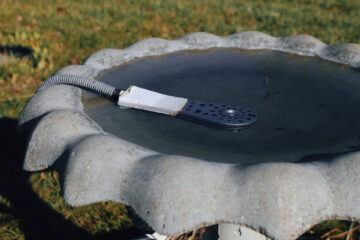
View of a de-icer being used in a concrete bird bath
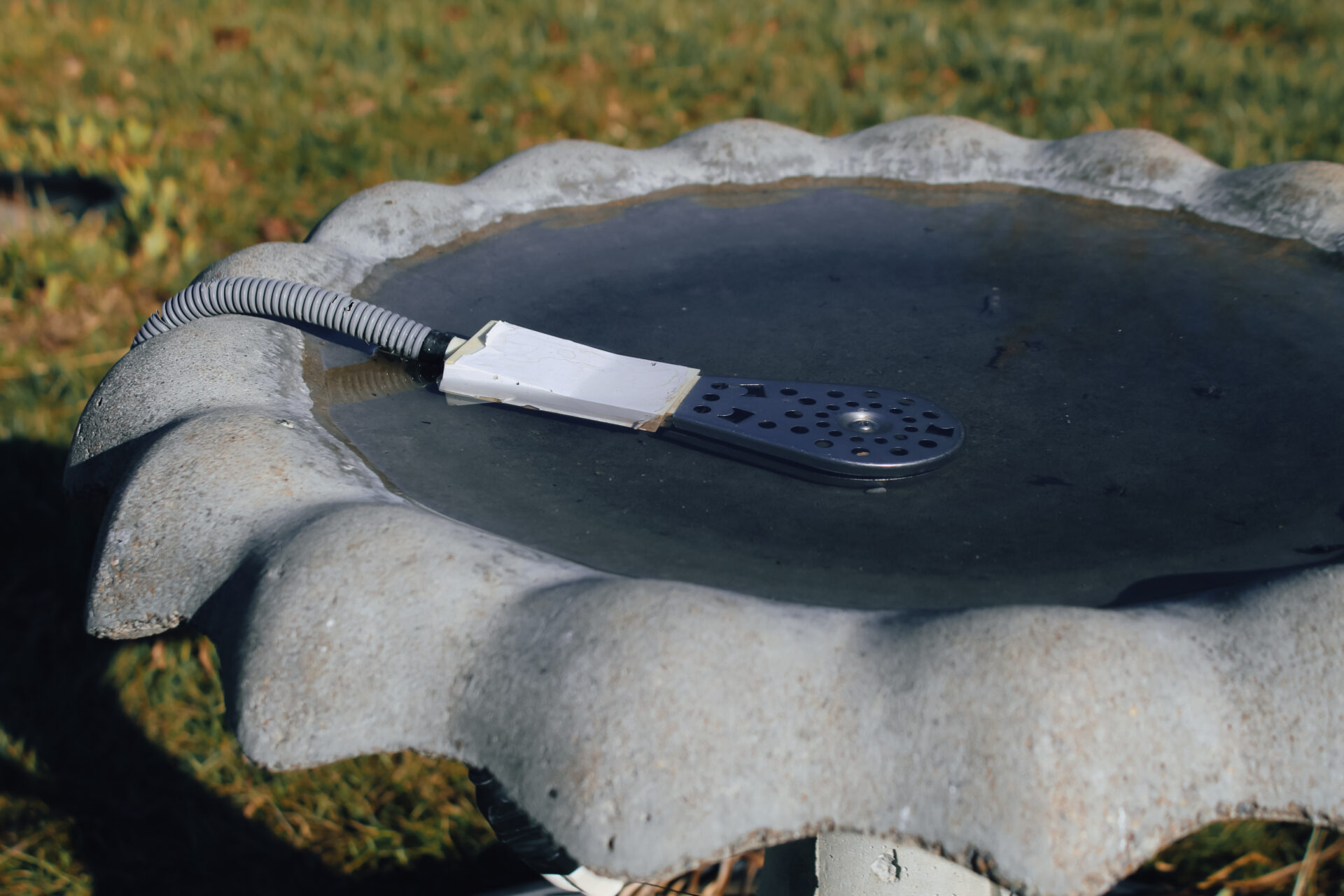
The most common approach is dropping a small, fully submersible de-icer into your existing stone, concrete, or plastic birdbath. Look for models featuring a built-in thermostat that only kicks on when the water temperature dips toward 35°F (1.7°C), turning off automatically as soon as the water warms slightly. This prevents high electric bills and avoids boiling or overheating the water.
- Built-In Heated Basins
An all-in-one heated bath features an internal heating element sealed between molded plastic layers. Many models come with clamp-on hardware for deck railings or pole mounts, keeping them steady against winter winds and easy to clean.
- The Low-Tech “Swapping” Routine
If your feeding area lacks an outdoor electrical outlet, rely on a simple rotation schedule:
- Buy two shallow, flexible rubber or heavy-duty plastic plant saucers.
- Fill one with warm water in the morning and place it in a sunny, wind-sheltered spot.
- When it freezes solid, pop out the ice disc (flexible plastic or rubber won’t crack like ceramic or glass) and swap it with the spare basin filled with fresh water.
What to NEVER Do: Dangerous Winter Water Myths
Well-meaning backyard birders sometimes try household shortcuts that can prove fatal to small birds:
Never add glycerin, salt, or automotive antifreeze. Salt and chemicals are toxic to wild birds. Even non-toxic “bird-safe” antifreeze additives compromise feather structure and cause gut distress.
Never use deep, slick-sided containers. In freezing temperatures, a bird that falls into water or gets completely soaked cannot dry off fast enough to avoid hypothermia. Keep water depth between 1 and 2 inches at most.
Never use metal basins in sub-zero weather. Bare feet, tongues, and wet plumage can freeze and tear upon contact with exposed, frigid metal surfaces.
Best Practices for a Winter-Ready Bath
To make your winter watering station as safe and inviting as possible, keep these tips in mind:
Add Perch Stones: Place a few flat river rocks or clean paving stones inside the bath. Ensure the stones break the surface so birds can stand comfortably at water level and drink without having to submerge their bellies.
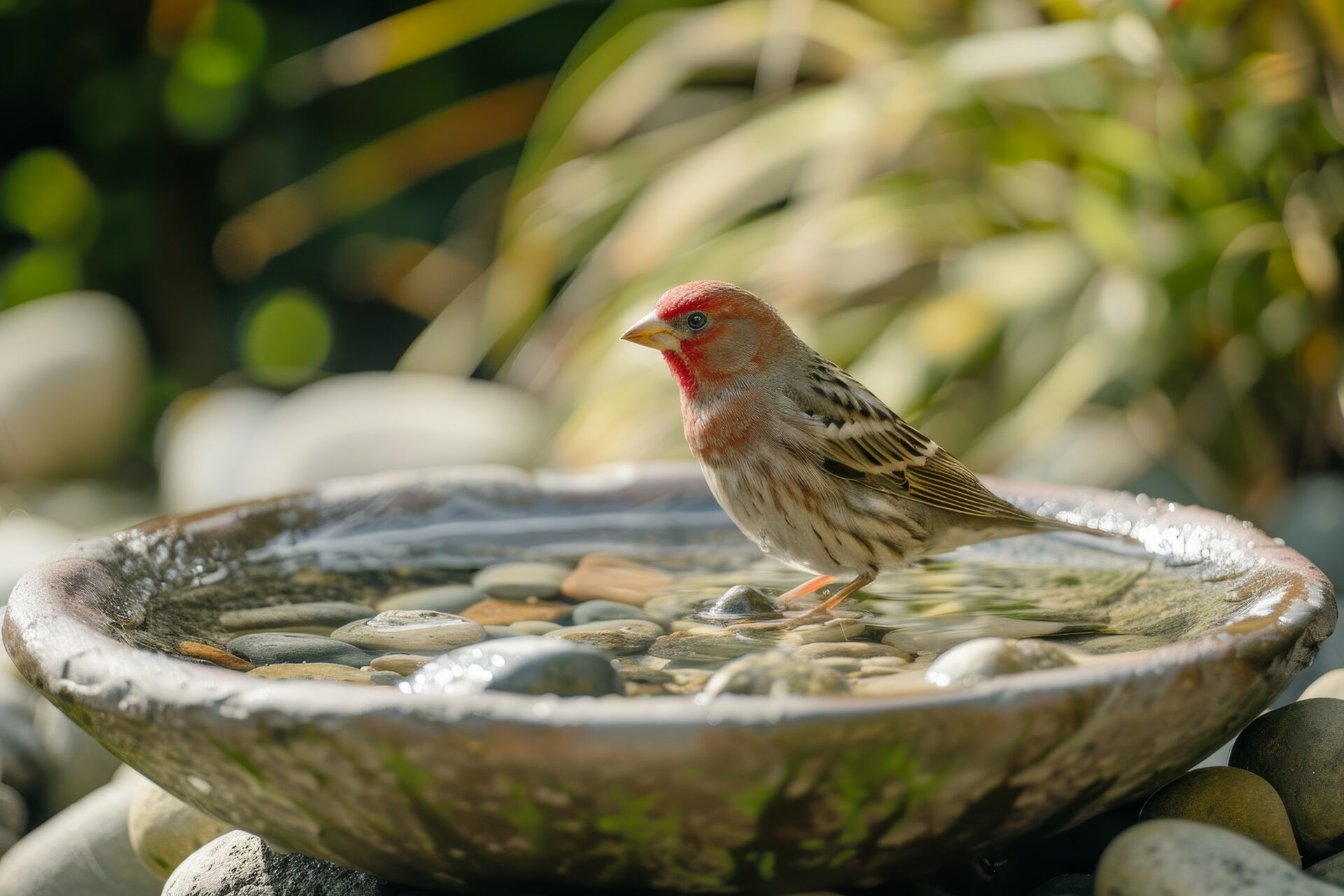
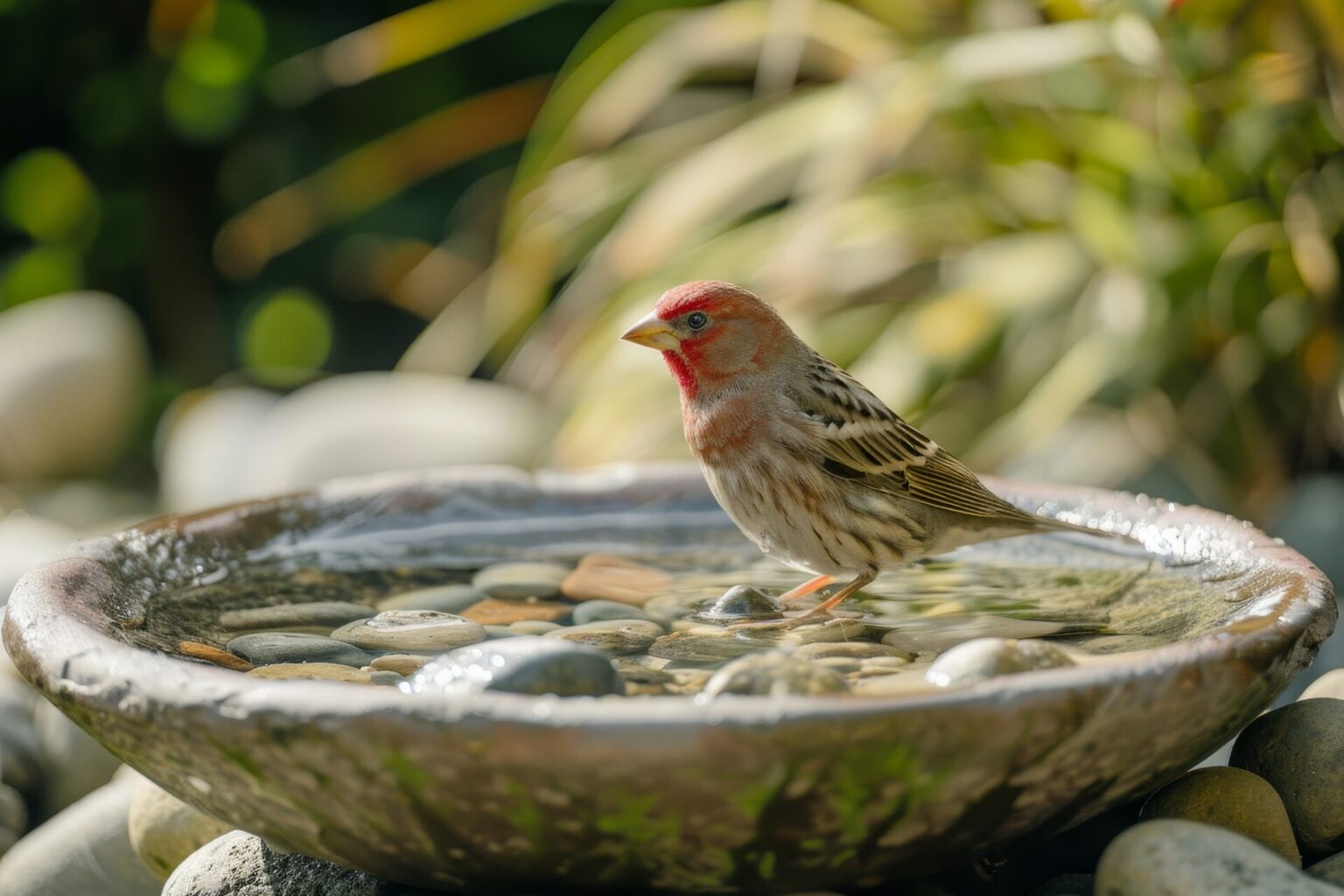
House finch perched on rocks in heated birdbath
Block the Wind: Position the bath in a spot that catches maximum midday sunlight and is shielded from prevailing winter winds by a fence, hedge, or dense conifer.
Use Heavy-Duty Extension Cords: Always connect heating equipment to a GFCI-protected outdoor outlet, and cover cable connections with a waterproof safety gasket or weatherproof electrical boot.
Keep It Clean: Even in cold weather, bird droppings and fallen debris accumulate. Scrub the bath weekly with a stiff brush and a dilute vinegar solution (9 parts water to 1 part white vinegar), rinsing thoroughly with fresh water.
Offering fresh, open water through the coldest weeks of the year will quickly make your yard the primary gathering spot for winter birds—from chickadees and cardinals to woodpeckers and juncos.