If you step outside into your yard right now, you’ll notice two things. First, it is brutally hot and dry. Second, your garden beds look like a miniature meteor shower hit them.
Small, crater-like holes are gouged into your loose soil, your carefully laid mulch has been flung onto the grass, and your potted plants look like they’ve been through a tiny blender.
No, you don’t have moles with a vendetta. You have a House Sparrow spa day happening right in your perimeter.
While you might know these invasive little opportunists best for turning your expensive bird feeders into an all-you-can-eat buffet, mid-summer brings out some of their most destructive—and bizarre—group behaviors. Let’s talk about the science behind the sparrow dust storm, and why letting them get too comfortable in your dirt spells trouble for your native birds.
The dirt on the dust bath: Why are they doing that?
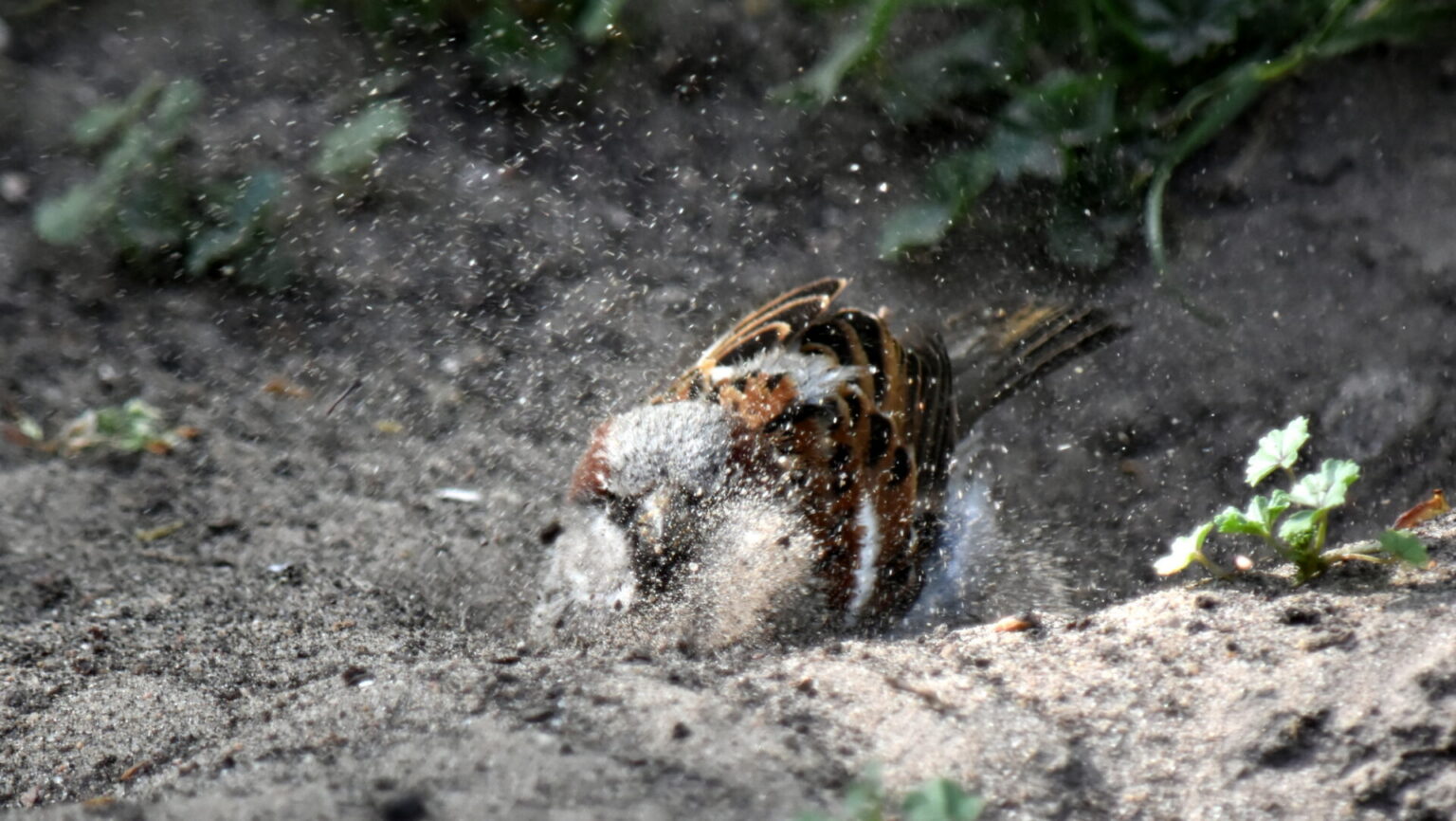
To the uninitiated, watching a flock of House Sparrows throw themselves into dry dirt, violently flap their wings, and kick dust over their heads looks like a collective avian breakdown. It isn’t. It’s actually highly calculated maintenance.
During the sweltering heat of mid-July, sparrows engage in heavy dust bathing. They do this for a few distinct reasons:
- Parasite Eviction: Hot, dry weather is prime time for bird lice and mites. The fine dust acts as a natural abrasive, clogging the breathing pores of the parasites and helping the sparrows shake them loose.
- Oil Management: Feathers need oil to stay flexible, but too much stale preen oil makes them heavy and inefficient. The dirt absorbs excess grease, which the sparrow then brushes off during their post-bath grooming session.
- Social Hour: House sparrows do absolutely nothing alone. If one sparrow finds a premium patch of dry soil, they will quickly form a dirt-bathing committee.
While it’s fascinating from a biological standpoint, it’s infuriating if you actually care about your landscaping. A committed flock can excavate a flower bed or ruin the roots of prized annuals in a single afternoon.
From the sandbox to the stronghold: The territory trap
It’s easy to think, “Well, if they are playing in the dirt, at least they aren’t harassing the Bluebirds at the nesting boxes, right?”
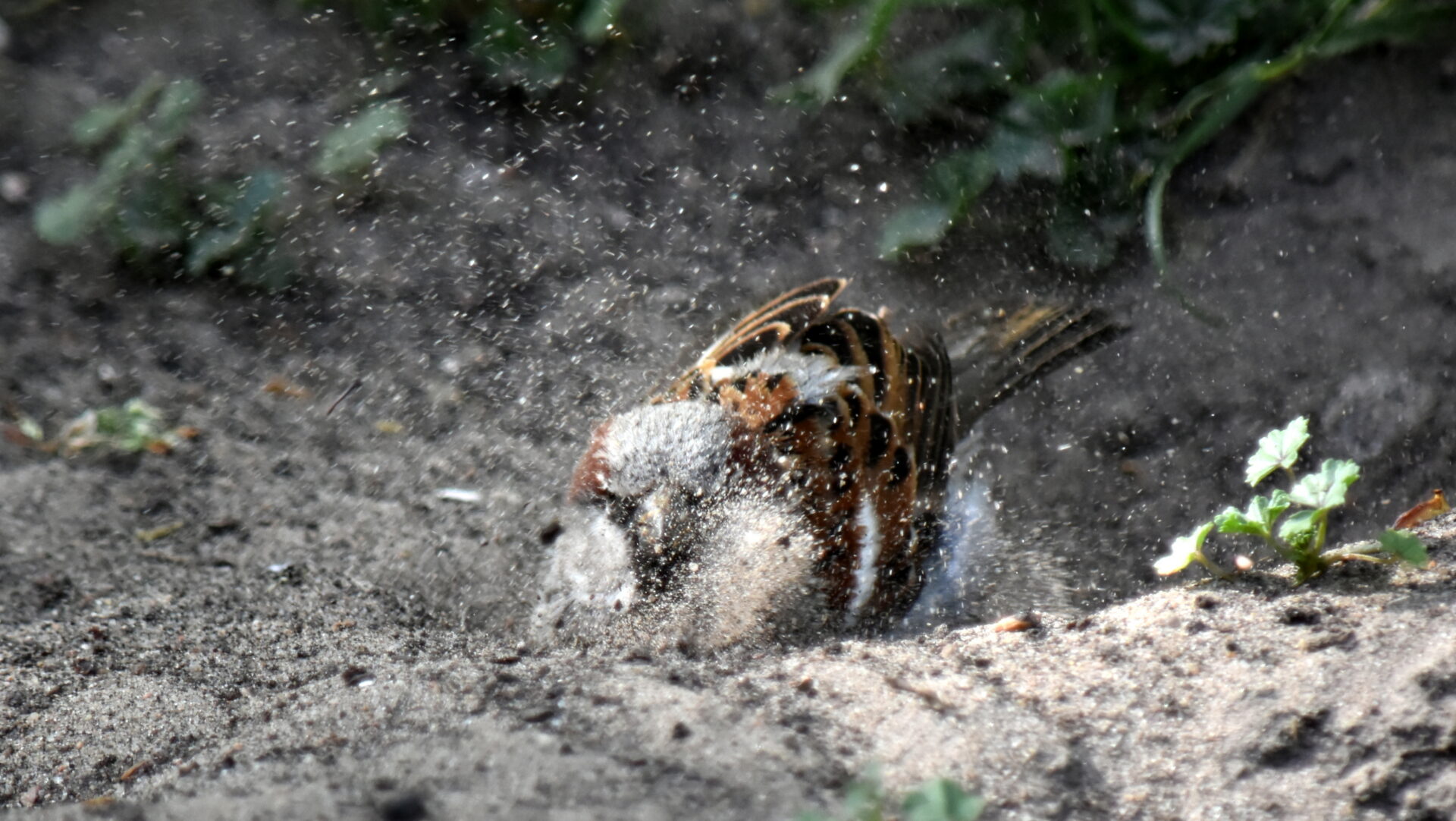
This house sparrow is kicking up a lot of dust
Unfortunately, that is exactly what they want you to think.
House Sparrows are highly territorial and fiercely communal. They don’t just visit your yard; they attempt to colonize it. When a flock establishes a preferred social zone—like a dust-bathing paradise right next to your patio—they treat the entire surrounding area as their personal kingdom.
Once they feel comfortable enough to redecorate your garden beds, they are only a few hops away from aggressively claiming your nearby nesting boxes and completely monopolizing your feeders. They are essentially establishing a base camp. If you give them an inch of dirt, they will take the whole yard.
Evicting the squatters (without losing your mind)
So, how do you reclaim your yard when the weather is dry and the sparrows are dug in?
1. Armor your soil
Sparrows need fine, loose, bone-dry earth to dust bathe. You can temporarily ruin their spa experience by heavily watering vulnerable garden patches in the morning or covering exposed dirt with heavy stones, large decorative rocks, or dense, coarse mulch that they can’t easily displace with their feet.
2. Lock down the anchor points
You can’t pave your entire yard, and you can’t stop the sun from drying out the ground. What you can do is make sure that their social hour doesn’t translate into a permanent takeover of your high-value avian real estate.
This is exactly why we designed the Sparrow-B-Gone.
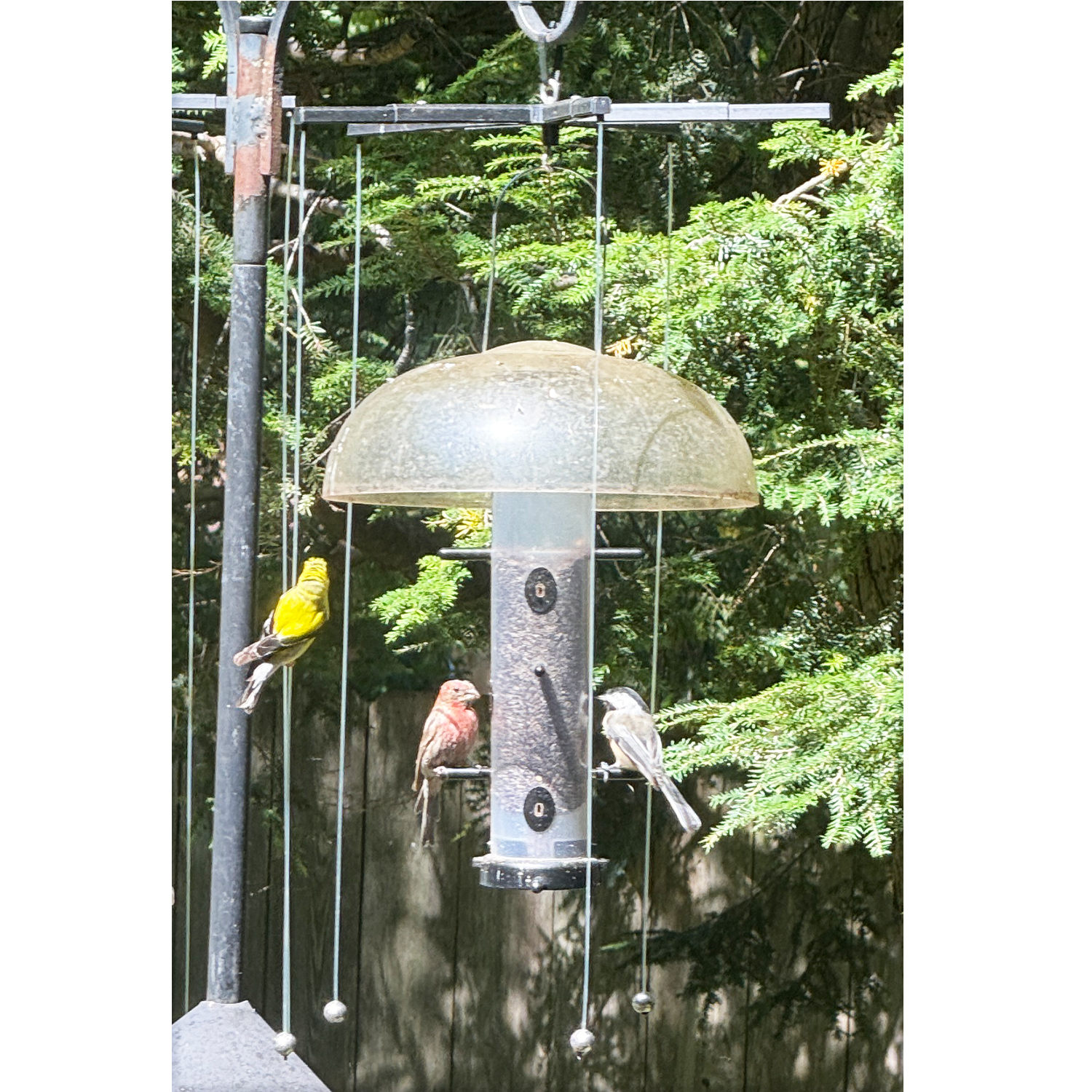
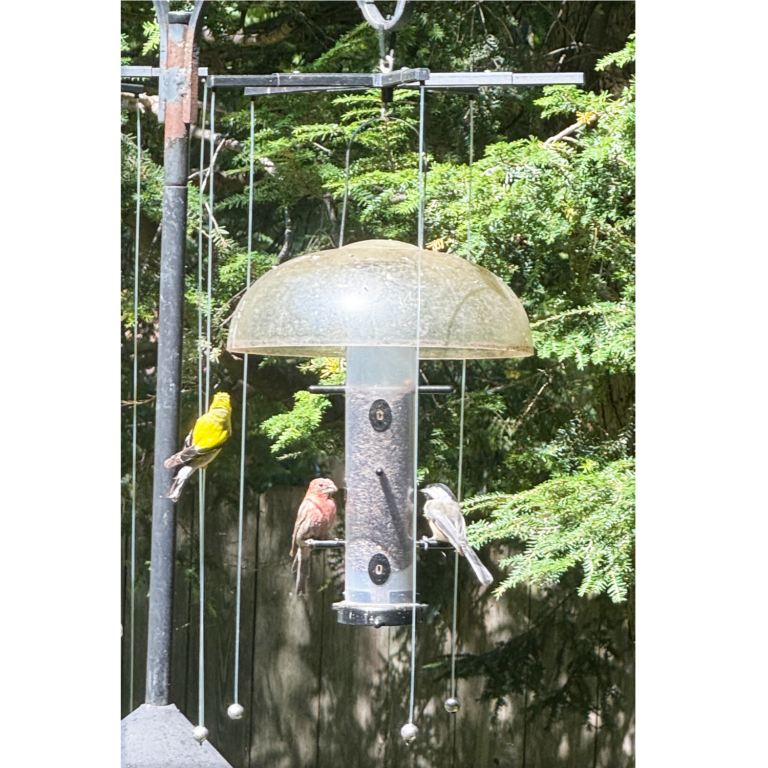
Native birds using the weighted cords of Sparrow-B-Gone! to wait their turn at the feeder
By securing your feeders and nesting boxes with a dedicated, species-specific deterrent, you disrupt their ability to colonize the yard. When sparrows realize they can’t bully their way into the food supply or hijack the local housing market, the yard loses its VIP status. They’ll pack up their dust clouds and take their frantic spa days somewhere else.
Have the sparrows turned your potted plants into a dust bowl this week? What’s the weirdest place you’ve caught them bathing?