If you are trying to manage your backyard bird feeders, step one is knowing exactly who is visiting. Because House Sparrows (HOSP) are an invasive, aggressive species in North America, mistaking them for beneficial native songbirds can cause you to accidentally chase away the wrong guests!
While they might look like just another “little brown bird” at a glance, House Sparrows have distinct physical traits and behaviors that set them apart.
Here is your complete guide to identifying House Sparrows by sight, season, gender, and behavior—plus how to distinguish them from their 5 most common native lookalikes.
The House Sparrow profile: Built like a tank
If a bird looks like it’s been hitting the gym and carries a bit of an attitude, you’re likely looking at a House Sparrow.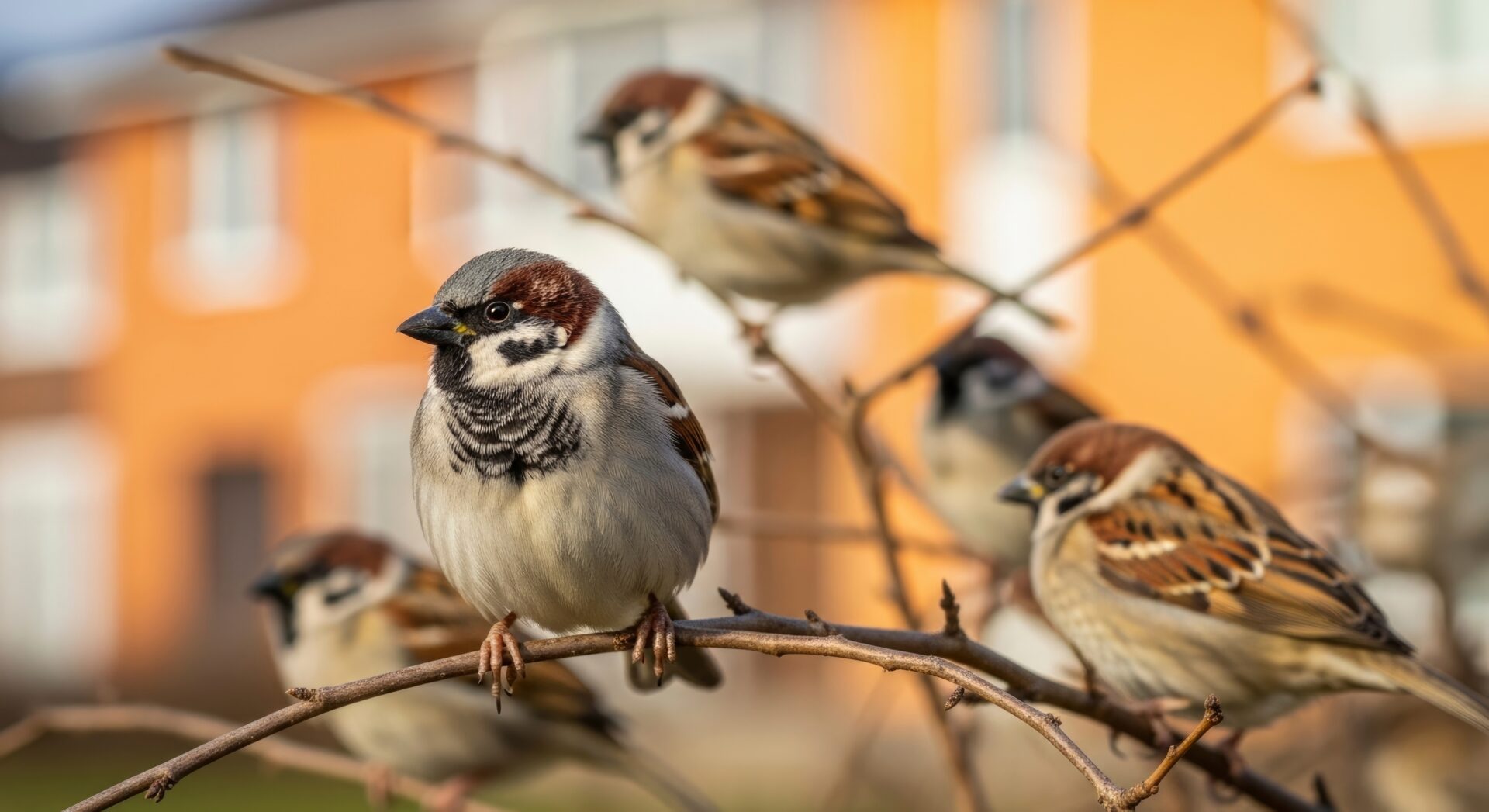
Unlike sleek, flighty native sparrows, House Sparrows (Passer domesticus) are built for durability and aggression:
- The Bill: Thick, conical, and heavy-duty. It is designed for crushing tough agricultural grains and hard seeds, unlike the more slender, delicate beaks of many native songbirds.
- The Body: Chunky, broad-chested, and low-slung. They sit “heavy” on perches and look more solid than native sparrows.
- The Tail: Short, stiff, and usually squared off flat at the tip.
- The Legs: Dark, dingy grey or brownish (whereas most native sparrows feature pale pinkish legs).
Male vs. female vs. juvenile House Sparrows
House Sparrows are sexually dimorphic, meaning males and females look dramatically different from one another.
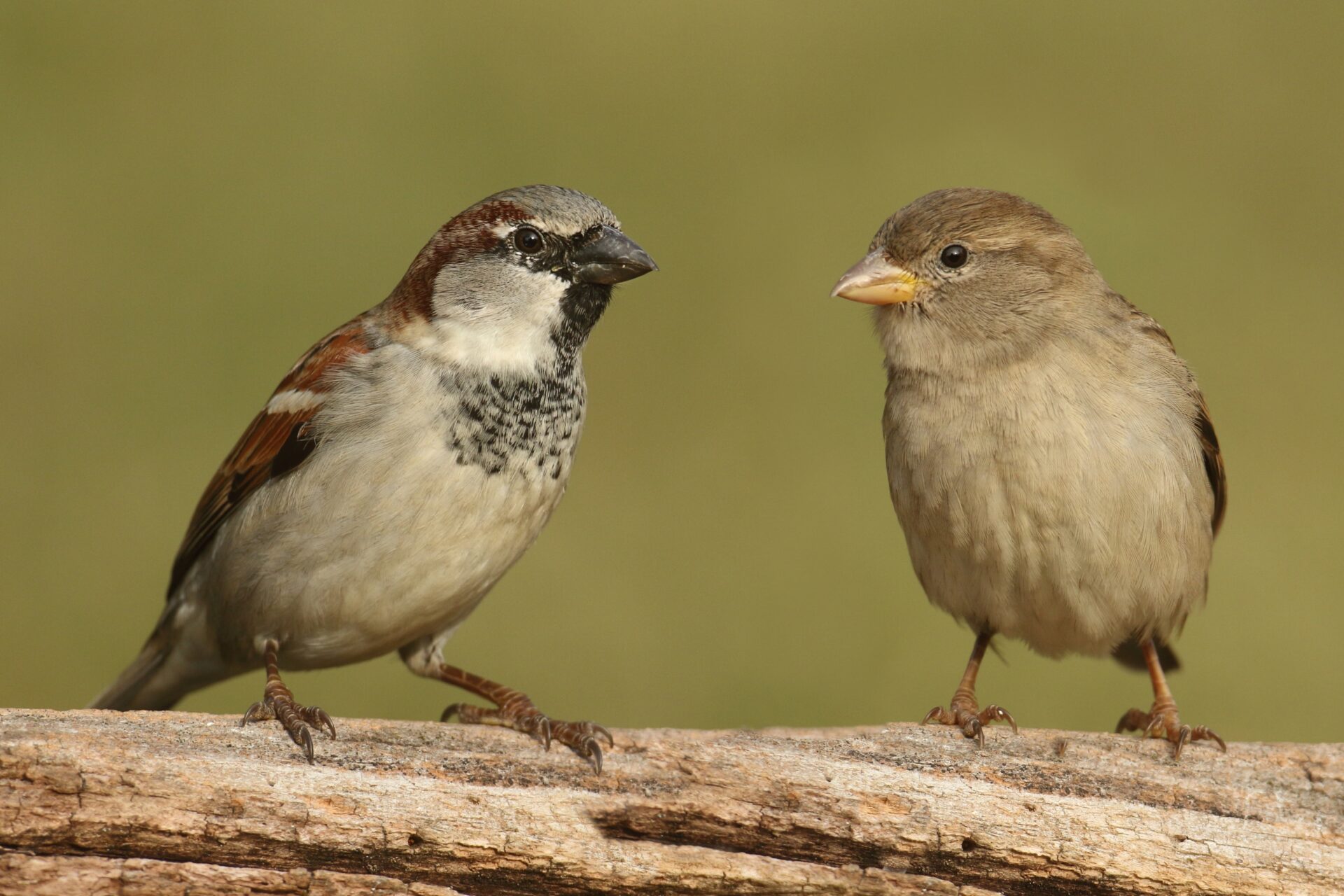
Male on left, female on right.
| Quick Identification | ||
|---|---|---|
| Feature | Male House Sparrow | Female House Sparrow |
| Crown (Head) | Dark slate-grey cap | Plain, buffy-brown |
| Cheeks | Bright white/light grey | Dull, sandy-brown |
| The “Bib” | Black throat & chest | None |
| Eye Line | Rich chestnut/rufous | Pale, tan “eyebrow” |
| Chest / Belly | Solid light grey | Plain, unstreaked dingy |
Expert Field Mark: If you spot a small brown bird with a distinct black bib on its chest, it is almost certainly a male House Sparrow. No native North American sparrow shares this specific “black-tie” chest pattern!\
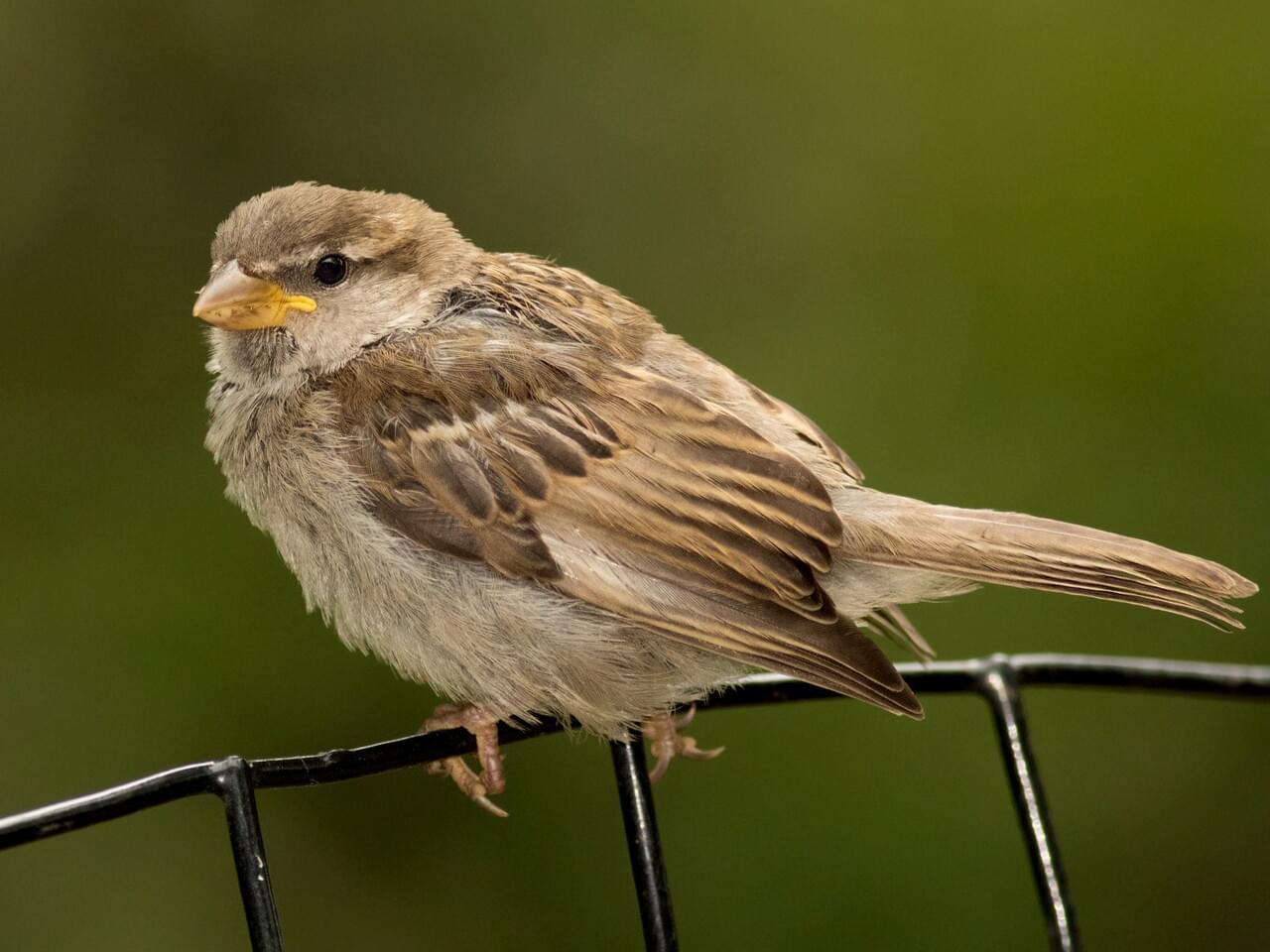
A juvenile House Sparrow
Seasonal beak color changes
Did you know a male House Sparrow’s beak changes color depending on the time of year?
| Seasonal Beak Color Changes | ||
|---|---|---|
| Season | Male Beak Color | Female Beak Color |
| Spring/Summer (Breeding) | Inky, solid black from base to tip | Dark brown/grey (darker on top) |
| Fall/Winter (Non-Breeding) | Yellowish-horn with a dark tip | Pale, sandy-yellow |
The 30-second “quick-check” rule
Standing at your window without binoculars? Ask yourself these three fast questions:
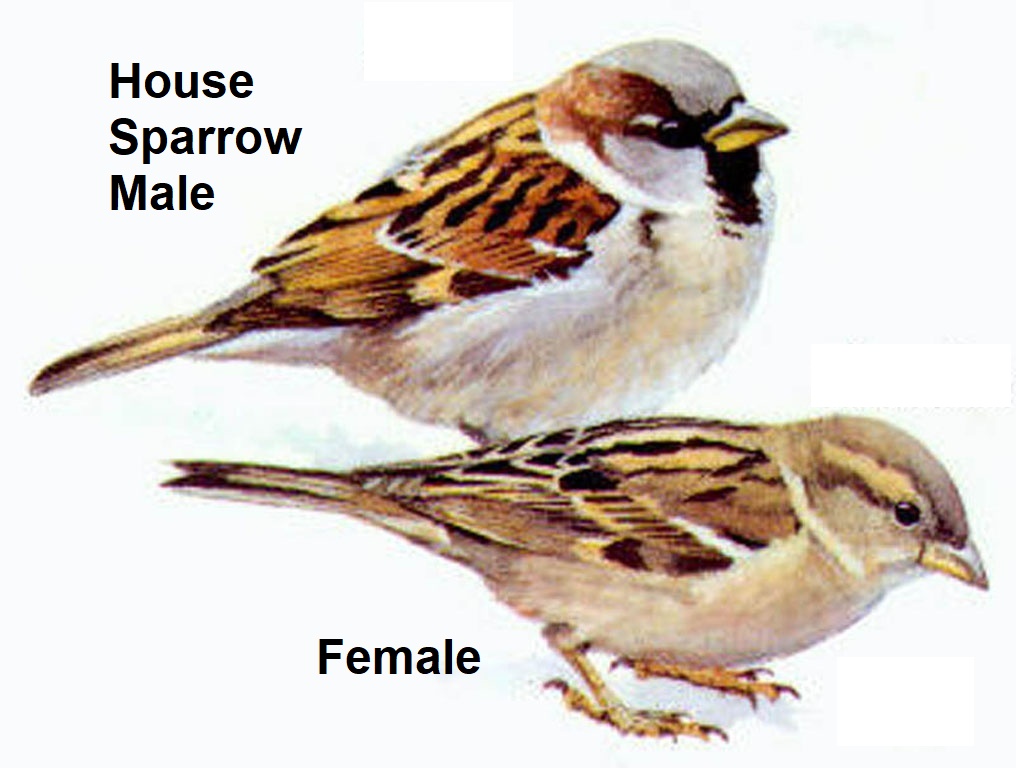
This illustration clearly shows the distinctive black bib on the male house sparrow, and the grey cap and yellowish beak of the female in mating season.
- Does it have a black throat patch or bib? Yes = Male House Sparrow.
- Is the chest plain or streaked? House Sparrows are ALWAYS plain-chested. If you see stripes or spots on the belly, it’s a native sparrow or finch.
- Is it in a noisy mob? House Sparrows rarely travel alone. If 8 to 15 birds are squabbling over a tray feeder together, they are almost certainly House Sparrows.
Five common lookalikes (and how to tell them apart)
1. The House Finch

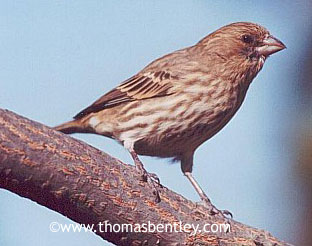
The female House Finch is frequently misidentified as a House Sparrow
The Mix-Up: Both are chunky, incredibly common, and frequent the exact same feeder styles.
Beak shape: A Finch has a noticeably curved, rounded upper bill. A House Sparrow’s bill is straight-edged and conical.
Body Markings: Male House Finches carry bright red or raspberry coloring on their head and chest. Female House Finches are covered in blurry brown vertical streaks across their bellies, whereas female House Sparrows are completely plain underneath.
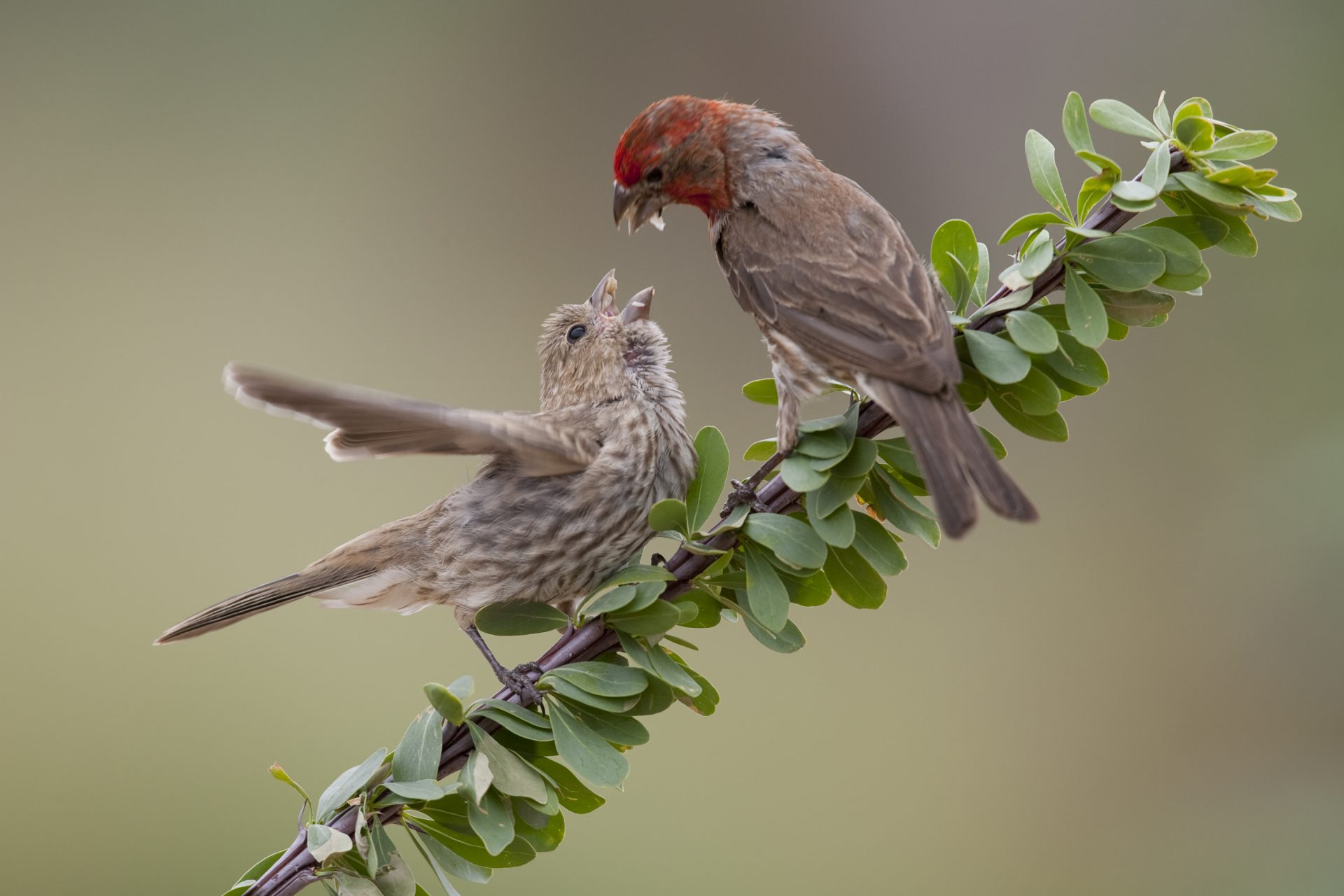
Juvenile House Finch (left), male House finch (right)
2. The Eurasian Tree Sparrow
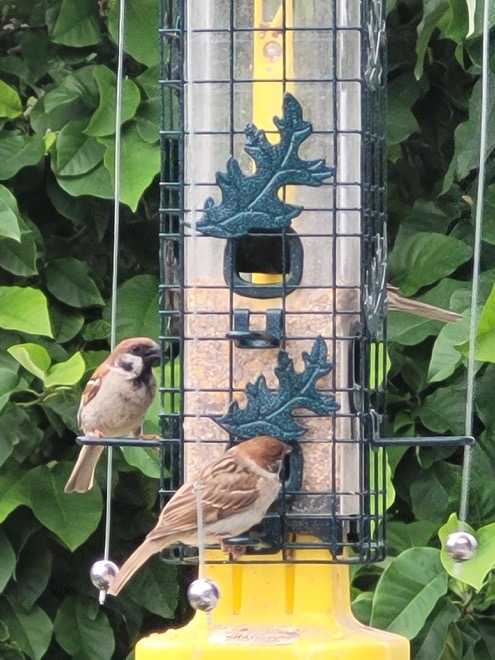
Eurasian Tree sparrows were undeterred by Sparrow-B-Gone
The Mix-Up: This is the ultimate test for birders. Belonging to the exact same genus (Passer), they look almost identical to male House Sparrows.
The Cheek Spot: A Eurasian Tree Sparrow has a sharp, distinct black patch on a bright white cheek. A male House Sparrow’s cheek is plain grey.
The Crown: Eurasian Tree Sparrows have a solid, rich chocolate-brown cap. Male House Sparrows have a slate-grey stripe running down the middle of their crown.
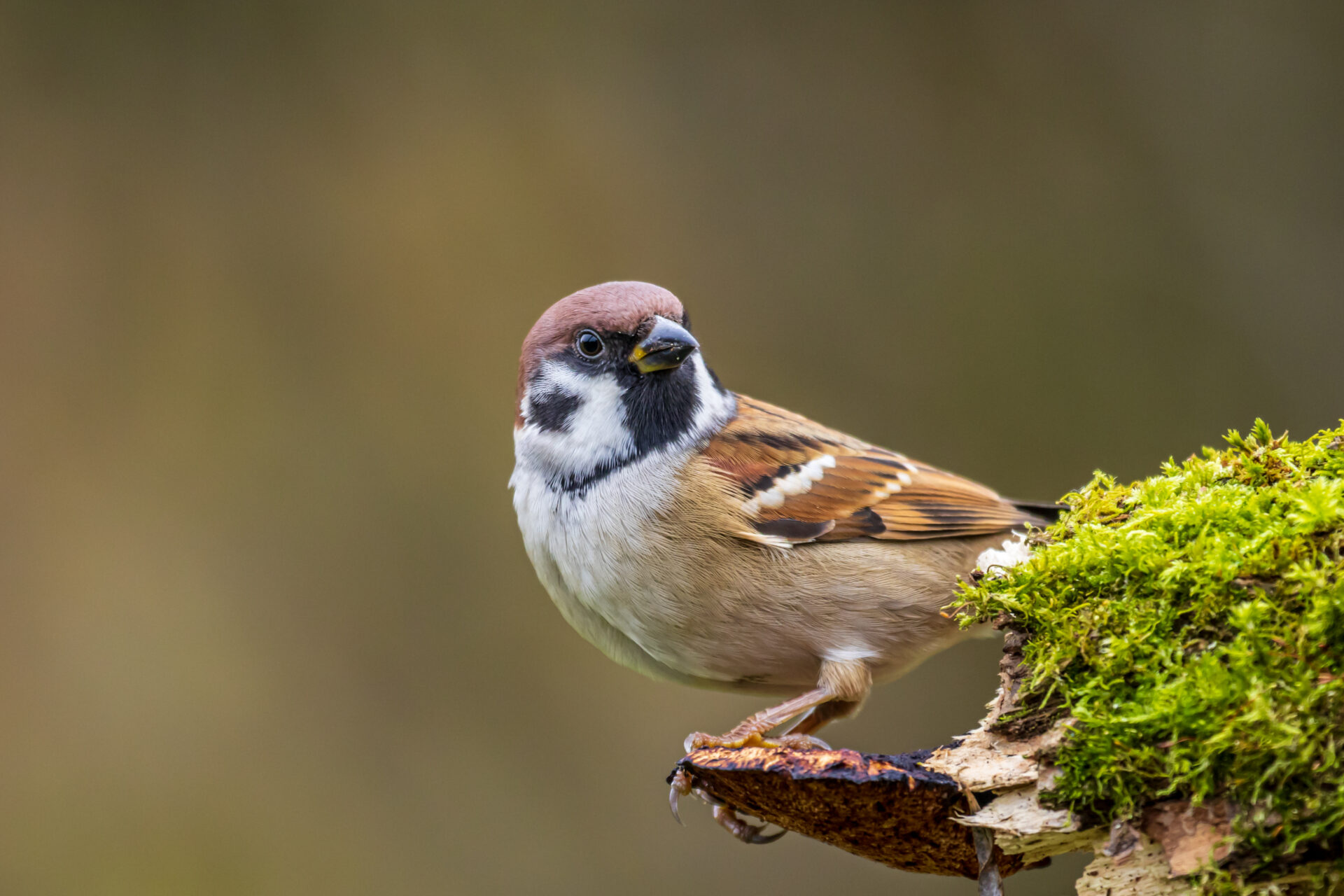
Cute Eurasian tree sparrow sitting on a mushroom on a mossy log
Monomorphic: Both male and female Eurasian Tree Sparrows look identical! If you see a pair that both have black bibs, they are Eurasian Tree Sparrows.
3. The Song Sparrow
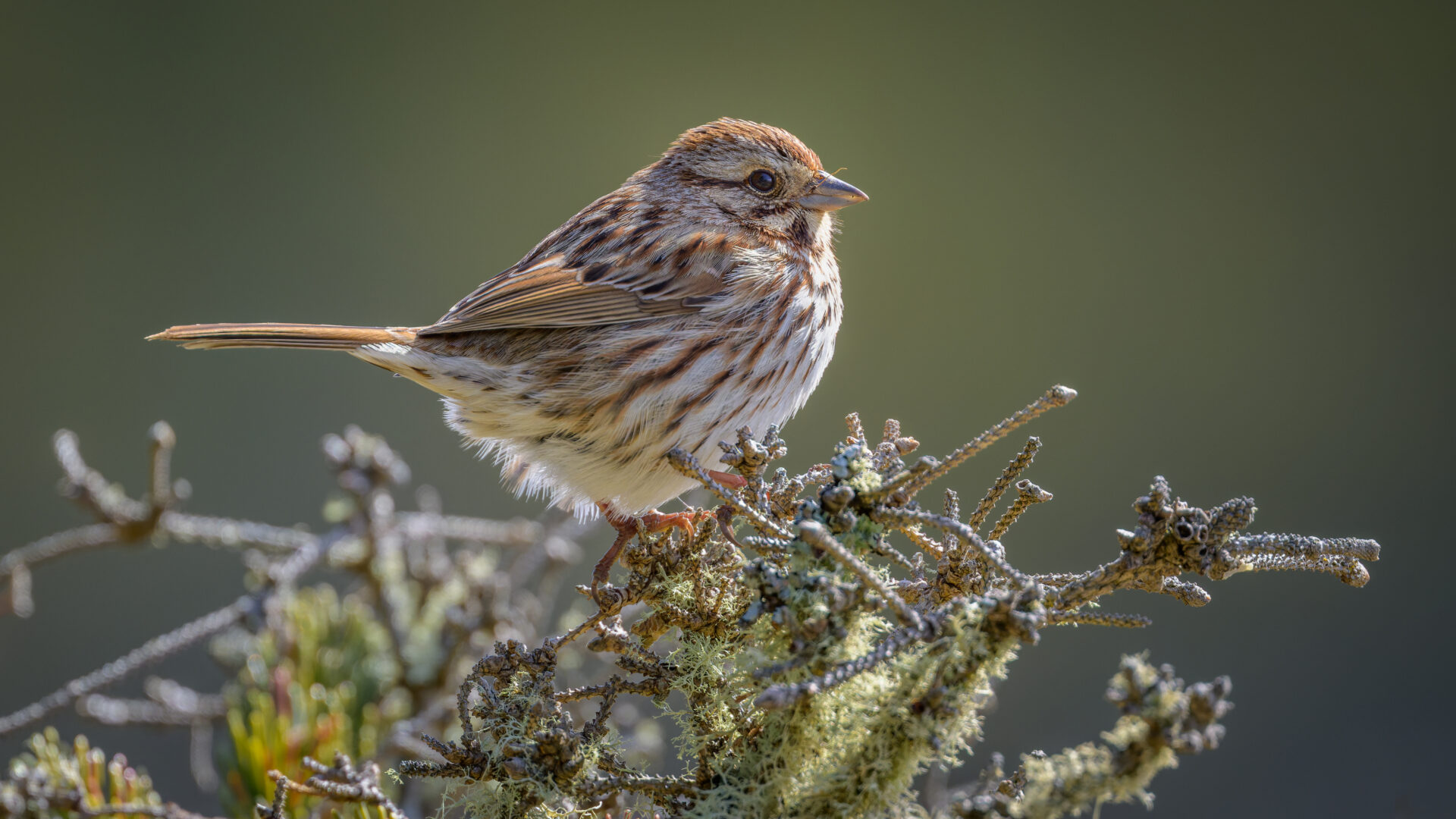
The Song Sparrow has a heavily streaked chest/belly
The Mix-Up: Similar overall size with brown-patterned backs.
The Chest: Song Sparrows have heavy, dark streaks that gather into a distinct central brown spot on the breast. House Sparrows never have chest streaks or a center spot.
Tail Behavior: Song Sparrows have longer tails that they frequently flick or pump downward when flying or perching.
4. The Chipping Sparrow
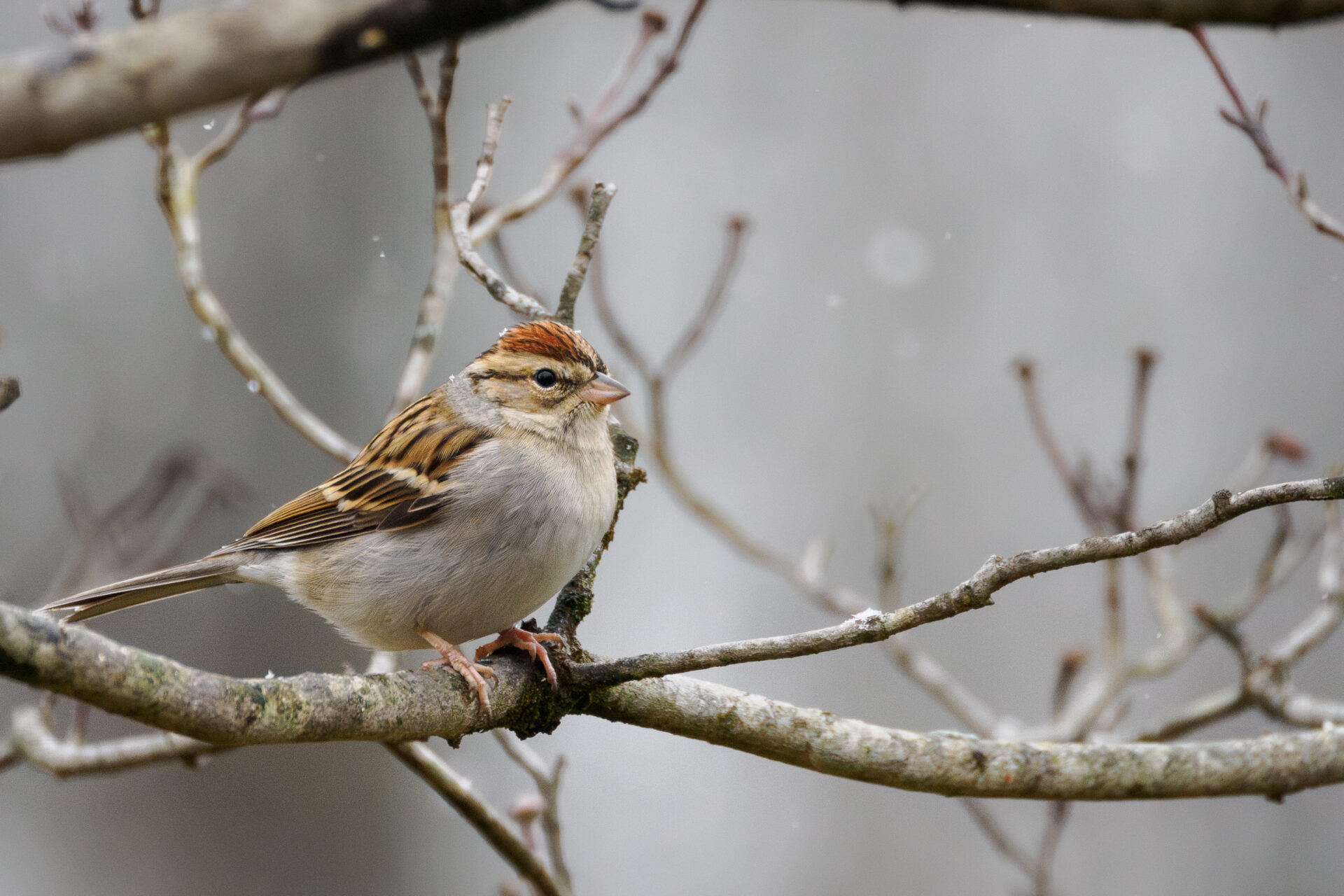
Chipping Sparrow perched on dogwood branches during light snowfall
The Mix-Up: Both feature a reddish/rusty cap during the spring months.
The Eyeline: Chipping Sparrows have a razor-sharp black line passing directly through the eye, topped with a bright white eyebrow.
Build: Chipping Sparrows are much smaller, slender, and delicate compared to the thick, bull-headed House Sparrow.
5. White-Crowned & White-Throated Sparrows
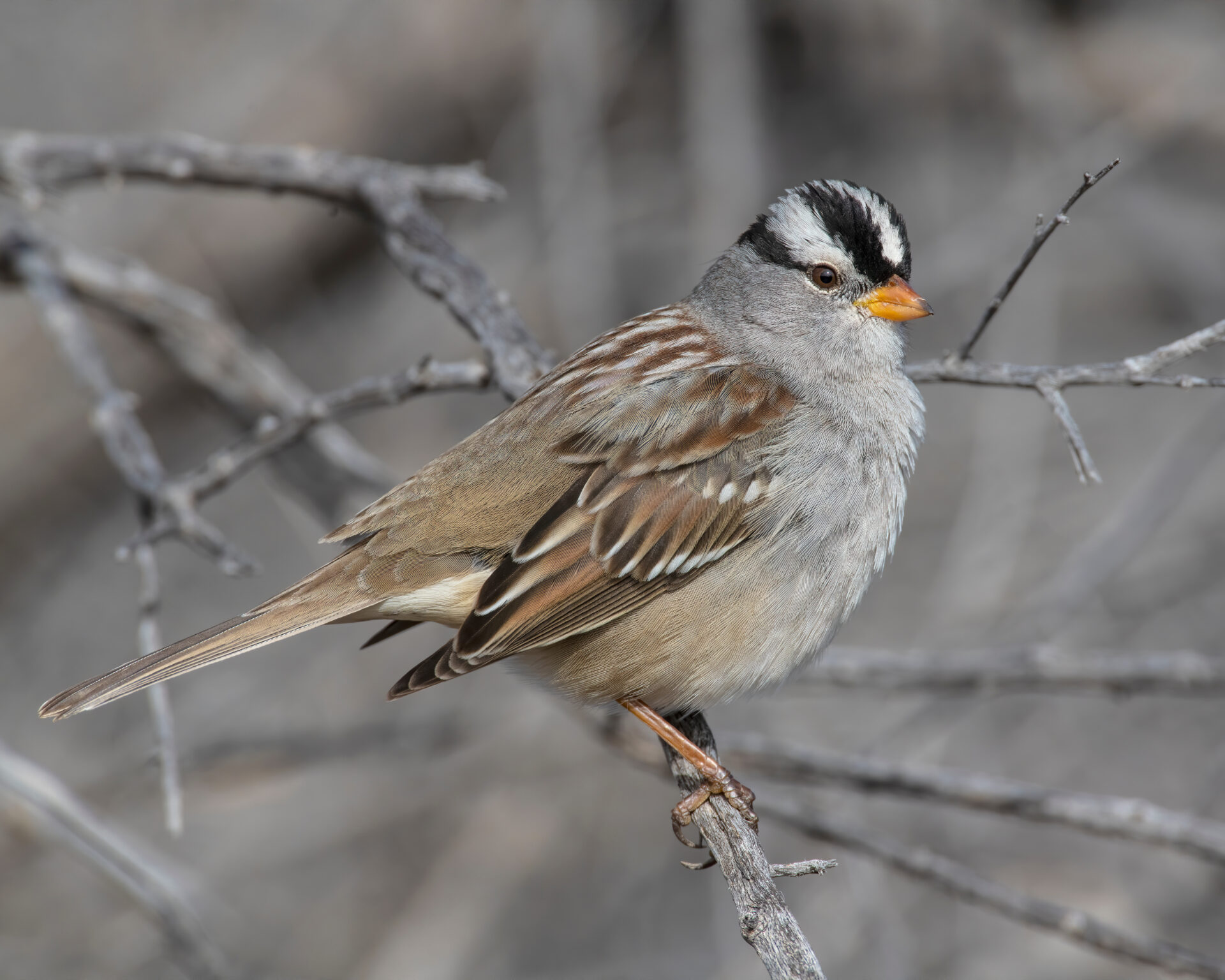
The striped head of the White Crowned Sparrow distinguises it from House Sparrows
The Mix-Up: Similar size and bold head patterns.
Head Patterns: Native White-Crowns wear a striking “bicycle helmet” of black and white stripes. White-Throats feature a bright yellow spot (lore) between the eye and beak. House Sparrows never have yellow face spots or black-and-white head stripes.
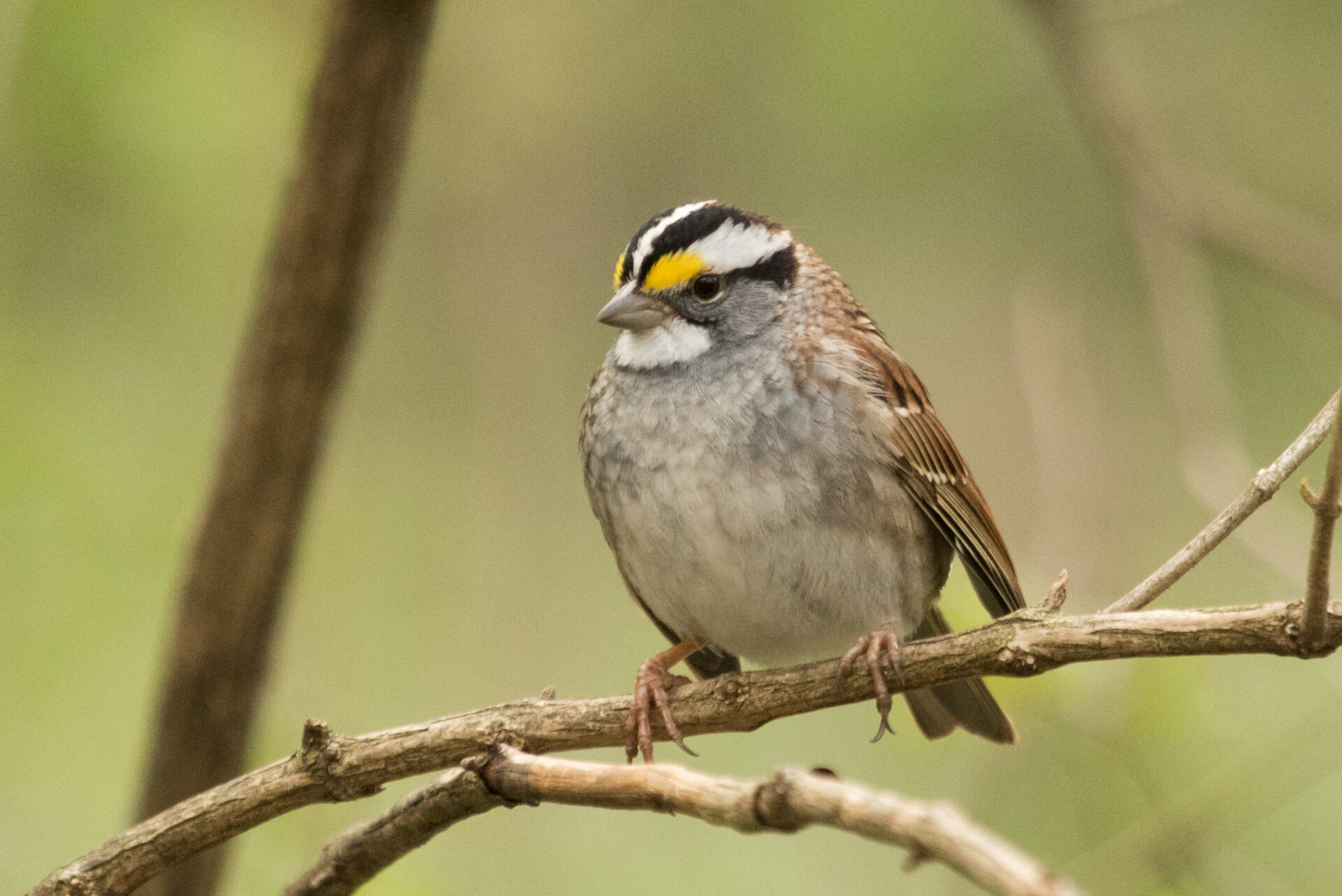
The distinct yellow “eye brow” sets the White-Throated Sparrow apart from other sparrows
| Quick Comparison Summary | ||
|---|---|---|
| Feature | House Sparrow (Invasive) | Native North American Sparrows |
| Underparts | Always plain (no streaks) | Usually streaked, spotted, or distinctly patterned |
| Tail Shape | Short, stiff, squared-off | Longer, notched, or rounded |
| Leg Color | Dark brownish/grey | Pale pink or fleshy |
| Behavior | Aggressive, forms large mobs | Timid, travels solo or in small pairs |
| Habitat | Cities, suburbs, close to human structures | Brush, woods, meadows (varies by species) |
By keeping these key field marks in mind, you can confidently identify House Sparrows in seconds—ensuring your management tactics focus strictly on invasive birds while protecting your native backyard songbirds!