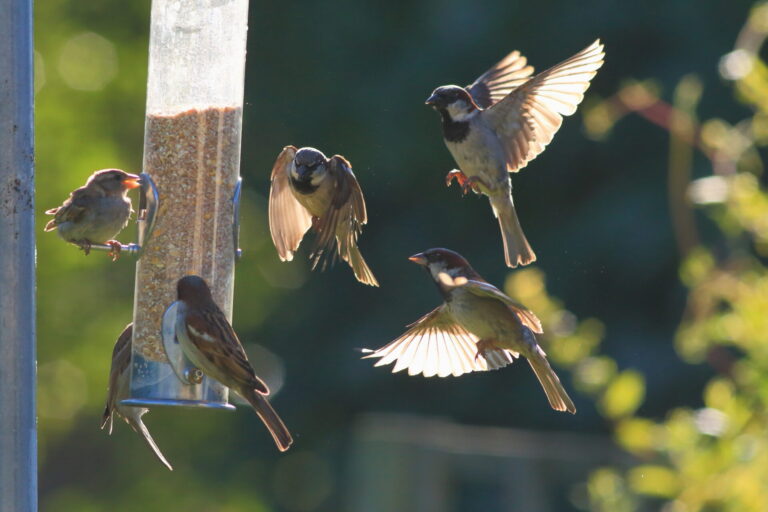
House sparrows are one of the tougher bird problems to deal with, but there are two approaches that genuinely help.
Protect your feeders with a “Magic Halo”
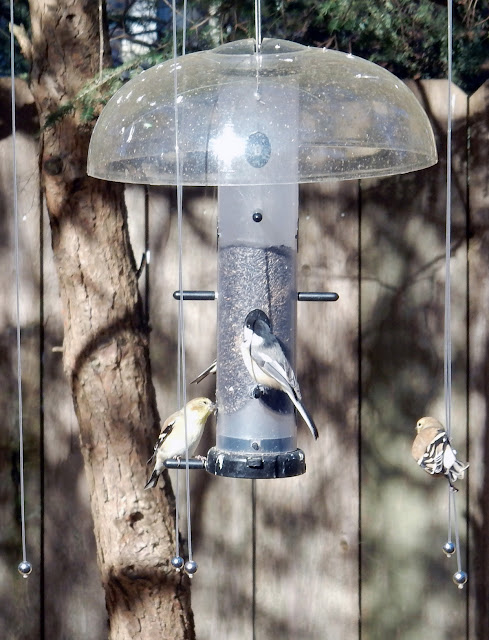
The easier starting point for most people is repelling. The gold standard is the Magic Halo — a frame with cords hanging down around the feeder or house. House sparrows are instinctively spooked by flying between vertical lines while native birds barely notice them. There’s solid research behind this going back to the 90s. More at MagicHalo.org.
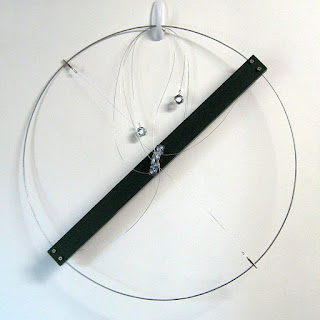
A Magic Halo stored away for the winter season
You can buy a commercial version or build your own — but if you go DIY, the cord choice really matters. Research has documented that thin monofilament fishing line is a serious bird safety hazard. Birds can get tangled and die. If you build your own, you need cord that’s thick enough to be completely safe — 250 lb test deep sea fishing line or greater works well, and has a nice bonus: it’s thick enough for small birds like chickadees and finches to actually cling to the cords. Sparrow-B-Gone sells cord sets at this spec designed specifically for DIY halos, so you don’t have to hunt for the right material yourself.
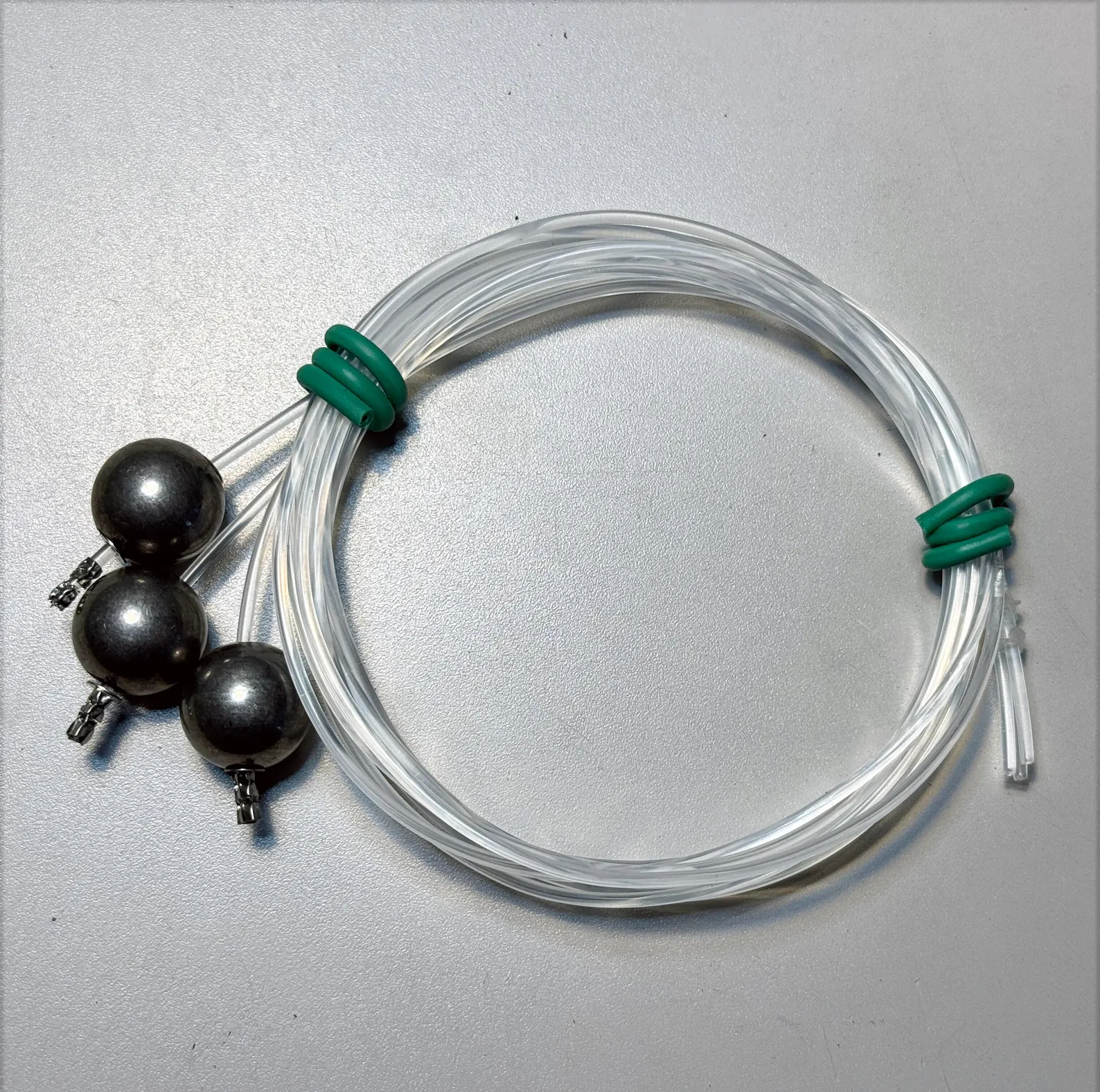
Sparrow-B-Gone’s! 250-pound filament cords are safe for all birds
Guard bluebird houses: Mylar ribbons vs. monofilament cords
For bluebird houses, some people use reflective mylar ribbons hung above the roof. Results are honestly mixed. Unlike the cord approach, ribbons can spook bluebirds too, so if you try them, wait until the first eggs are laid — at that point the parents are motivated enough to push through.
Sparrows also have two ways to beat ribbons: they can get used to them over time, and on calm days a sparrow approaching from the side may not even register ribbons that aren’t moving. The cord design surrounds the whole structure, so there’s no clean angle of approach from any direction.
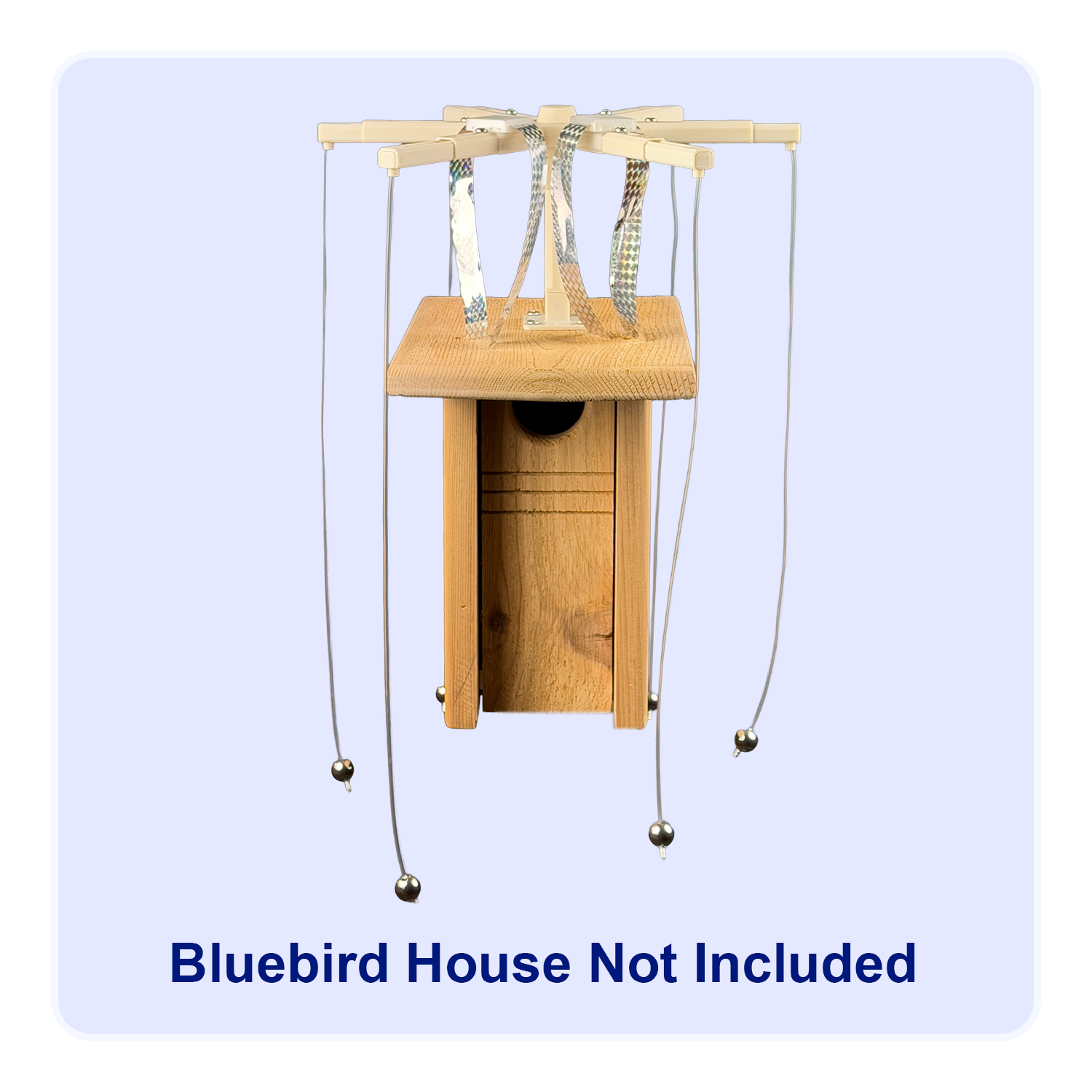
Double the protection with mylar ribbons and the cords that scare off House Sparrows
Why we don’t recommend House Sparrow trapping
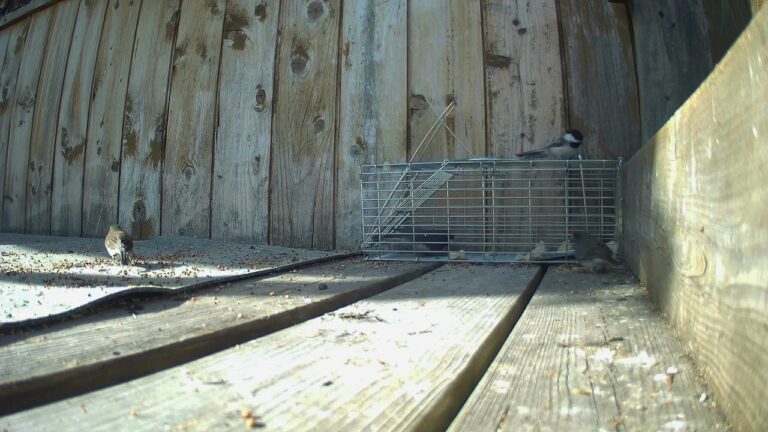
The third approach is trapping and killing. It works, but it’s a serious commitment. Native birds will get caught too, which means you cannot set a trap and walk away. If you’re leaving for even a few hours, the trap needs to come down or get closed. Read more about why we don’t advocate trapping.