For many backyard bird enthusiasts, the cheerful chirping of native songbirds is a daily joy. We
hang feeders, plant native shrubs, and clean birdbaths to welcome chickadees, cardinals,
finches, and bluebirds. But often, another guest arrives: the House Sparrow. Small, noisy, and
brown, these birds can quickly dominate a feeding station, leaving other birds empty-handed.
While it is tempting to reach for a trap to solve the problem, backyard birders must first
understand that trapping introduces significant risks—both legal and biological.
The enemy in the backyard?
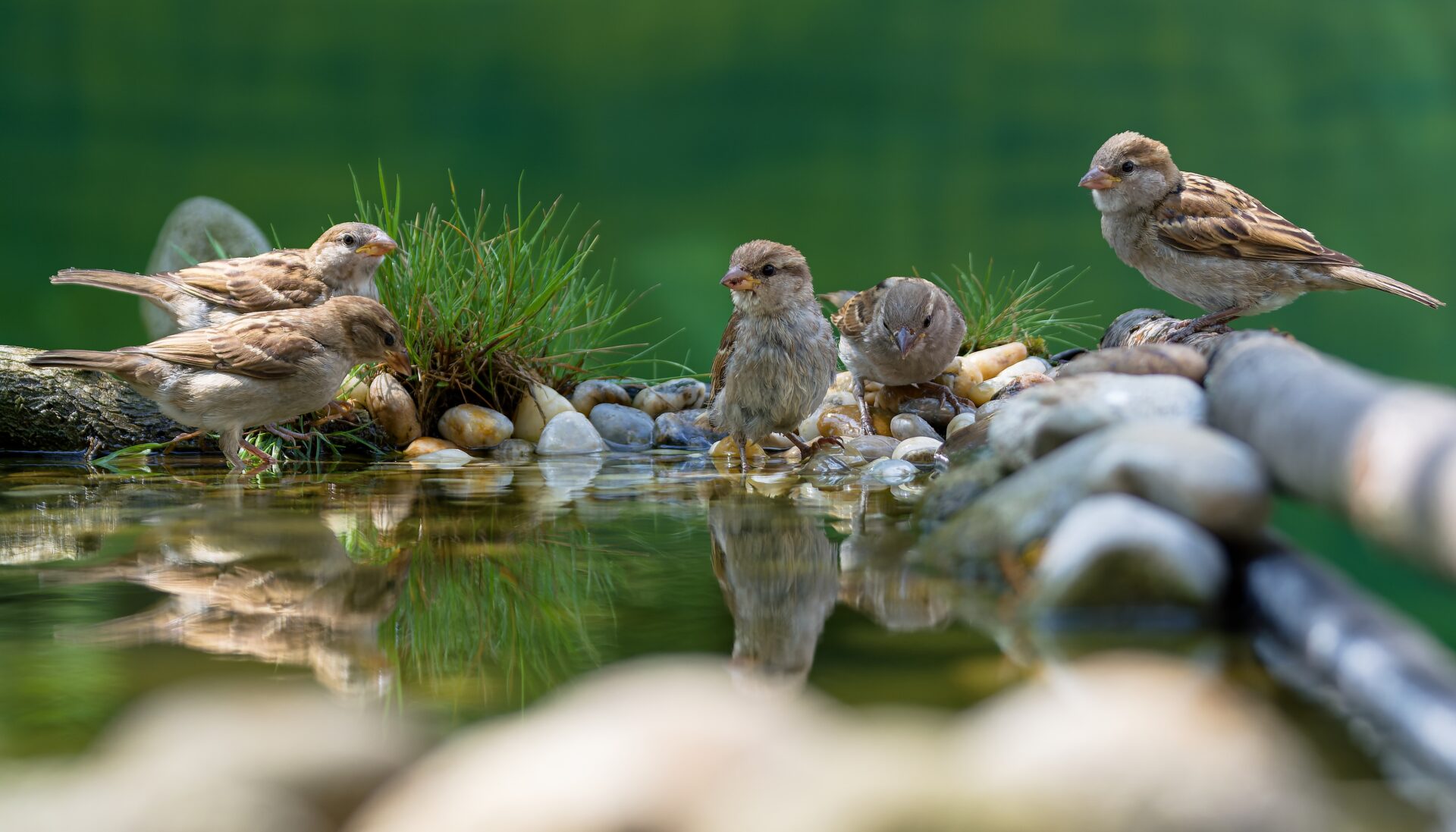
House sparrows travel in packs
House Sparrows (Passer domesticus) are invasive. This means they are not native to North
America; they were introduced from Europe in the 1850s. Since then, their population has
exploded. They are tough, adaptable, and highly aggressive competitors. They fight native birds
for food, and more tragically, they aggressively take over nesting cavities (like bluebird boxes),
often killing native adult birds, eggs, and nestlings to claim the spot.
The legal risks: A federal case
The biggest risk when you decide to trap any bird is breaking the law. In the United States, a very powerful federal law called the Migratory Bird Treaty Act (MBTA) protects the
majority of native birds.
Who is protected?
The MBTA makes it illegal to trap, kill, capture, possess, or even
move the nest or eggs of any protected native bird without a specific federal permit.
Nearly every bird you want to see in your backyard—bluebirds, chickadees, cardinals,
juncos, finches, and robins—is strictly protected.
The catch:
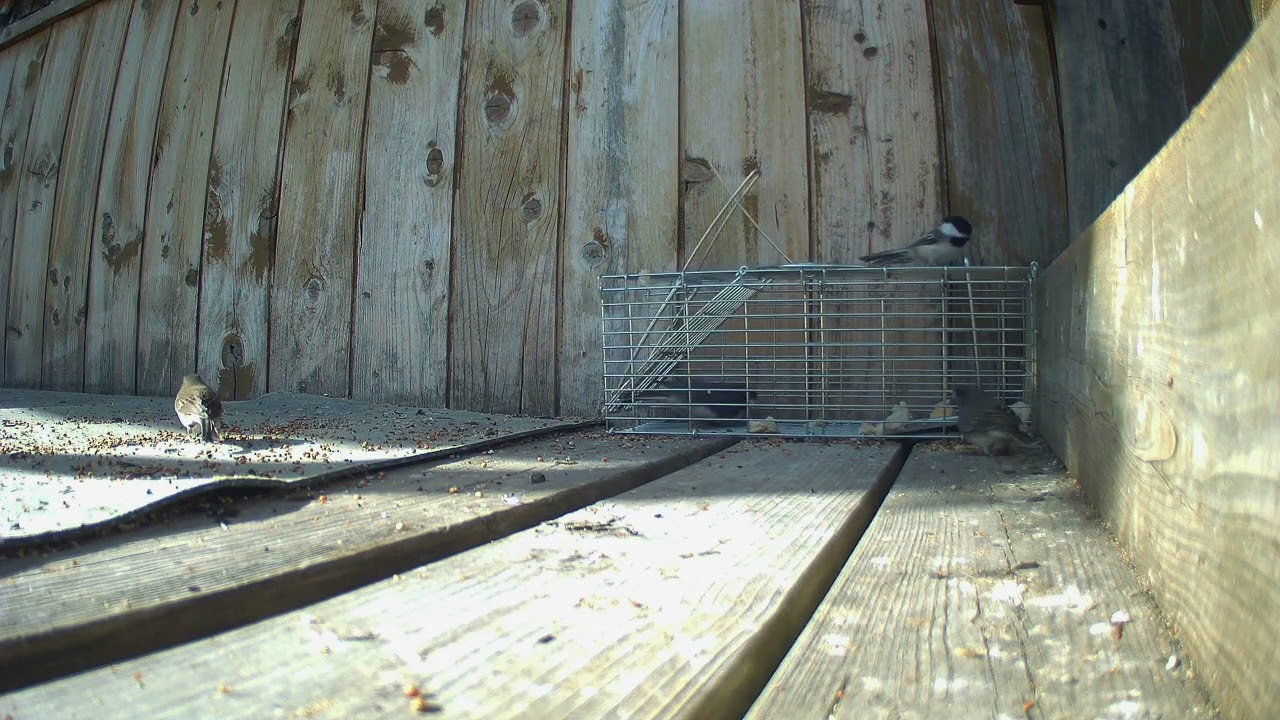
If you set a live trap, like a ground cage trap or a Van Ert trap (an “in-box”
trap used in nesting boxes), you will eventually catch a native bird. The moment that you trap a
native bluebird or chickadee inside your device, you are technically in
possession of a federally protected species without a permit. If that bird is harmed, the
legal consequences can be severe.
The backyard danger: The “angry male” scenario
Traps are not “smart.” They cannot distinguish between an invasive sparrow and a native
songbird. Consider a common situation: A highly aggressive male House Sparrow enters a Van Ert trap. While he is in there, a curious bluebird or a chickadee also enters or is
already present.
This is a disaster for the native bird. Male House Sparrows are fiercely territorial. Their entire
biology is geared toward dominant defense of their territory. When you trap a male sparrow,
his fight-or-flight response goes on overdrive. He becomes extremely stressed and angry.
If a smaller, non-aggressive native bird is forced into that tiny space with him, the sparrow will
see the native bird as a threat to be eliminated.
The results for the native bird:
- Physical Injury: Male House Sparrows have powerful beaks designed for cracking hard
seeds. They use these as weapons, specifically targeting the head and eyes of other
birds. They can severely injure or kill a native bird in minutes inside a confined space. - Feather and Wing Damage: In the panic of being trapped, birds will flutter violently
against the mesh or box. If two birds are fighting or panicking together, their flight feathers
can break or rip out. A bird that cannot fly well cannot escape predators. - Capture Myopathy: This is a severe, often fatal condition caused by extreme stress. A
trapped bird’s muscles can break down, releasing toxins into its bloodstream. Even if you
release the native bird and it looks okay, it may die days later from organ failure.
The constant vigil
Trapping is not a “set it and forget it” solution. Because of these risks, you must monitor traps
constantly—ideally every 30 to 60 minutes. For most homeowners, this level of surveillance is
impossible. A trap left unattended for an afternoon can accidentally become a death sentence
for a native bird that wandered into the wrong place.
Conclusion: A safer way forward
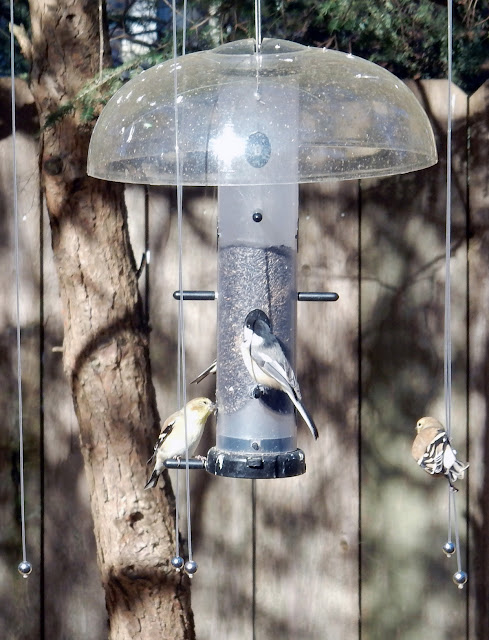
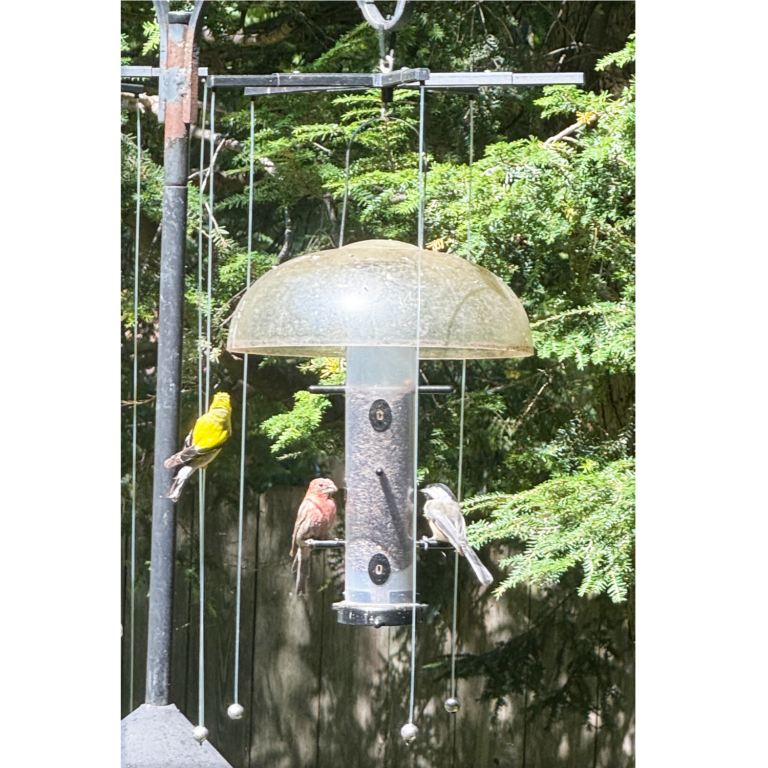
Sparrow-B-Gone let’s the birds you want to access the feeders
While the goal of protecting our native songbirds is noble, trapping is often a “cure” that is as
dangerous as the disease. For those looking to keep their sanctuary safe without the legal
liability, the physical danger to native species, or the constant stress of monitoring traps,
sparrow spookers such as Sparrow-B-Gone! or homemade versions of the old Magic Halo are
very effective and completely safe alternatives. By making your yard “sparrow-unfriendly”
through smarter design, you can protect your bluebirds and chickadees without ever putting them in harm’s way.