
At first glance House Sparrows (HOSP) look innocent enough: small, brown, chirpy, and constantly busy doing “bird things.” In reality? If you’re trying to feed native birds, House Sparrows are that one rude neighbor who never got the memo about boundaries—or personal space.
House Sparrows (Passer domesticus) are an invasive, non-native species that have mastered the art of the “hijack.” This guide is all about why a House Sparrow infestation is a serious problem for your bird feeders—and why “just letting them be” is essentially subsidizing a neighborhood bully at the expense of your favorite native species.
Why House Sparrows take over the birdseed
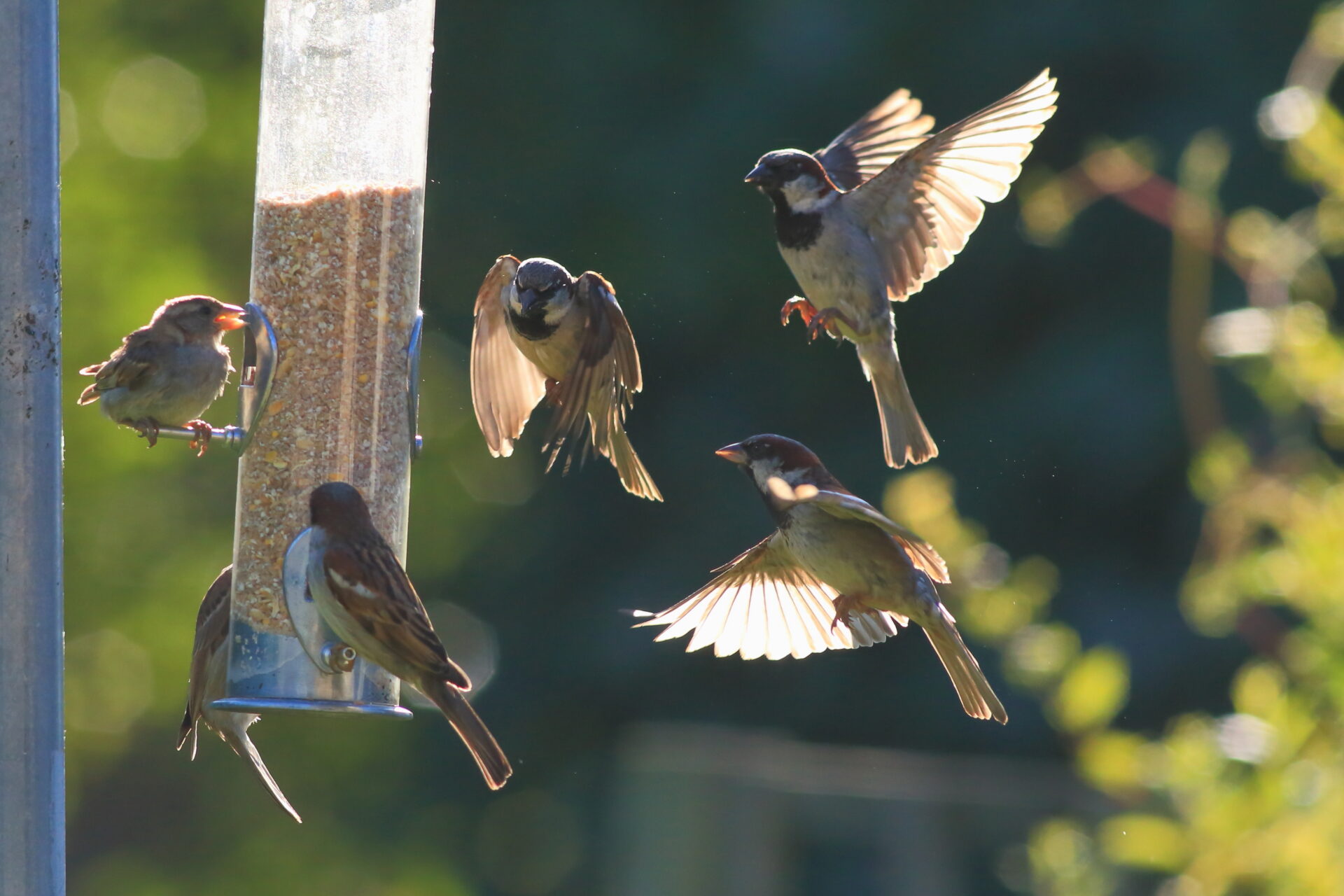
Group of sparrows swarming garden bird feeder
If your backyard is starting to look like an all-House-Sparrow convention, you’re not imagining it. These birds use three specific tactics to dominate your space:
- The “Mob” Mentality: House Sparrows are highly social and travel in aggressive flocks. Once one finds your bird feeder, they send out the signal, and your sanctuary turns into a drab grey cafeteria overnight.
- The “Seed Sweeper” Maneuver: This is the #1 cause of bird seed waste. House sparrows use their beaks to flick through your premium bird seed to find high-fat sunflower hearts, tossing the rest into the dirt to rot (or to attract rodents).
- The Intimidation Factor: Polite native guests like Eastern Bluebirds, Goldfinches, and Chickadees don’t like a crowd. When the house sparrow mob arrives, the colorful birds simply stop showing up.
The hidden cost: competition & conservation
House Sparrows aren’t just “one more bird at the buffet.” They change the whole ecosystem of your yard:
- Resource Wars: They are faster and more aggressive, outcompeting native birds for safe perches and food.
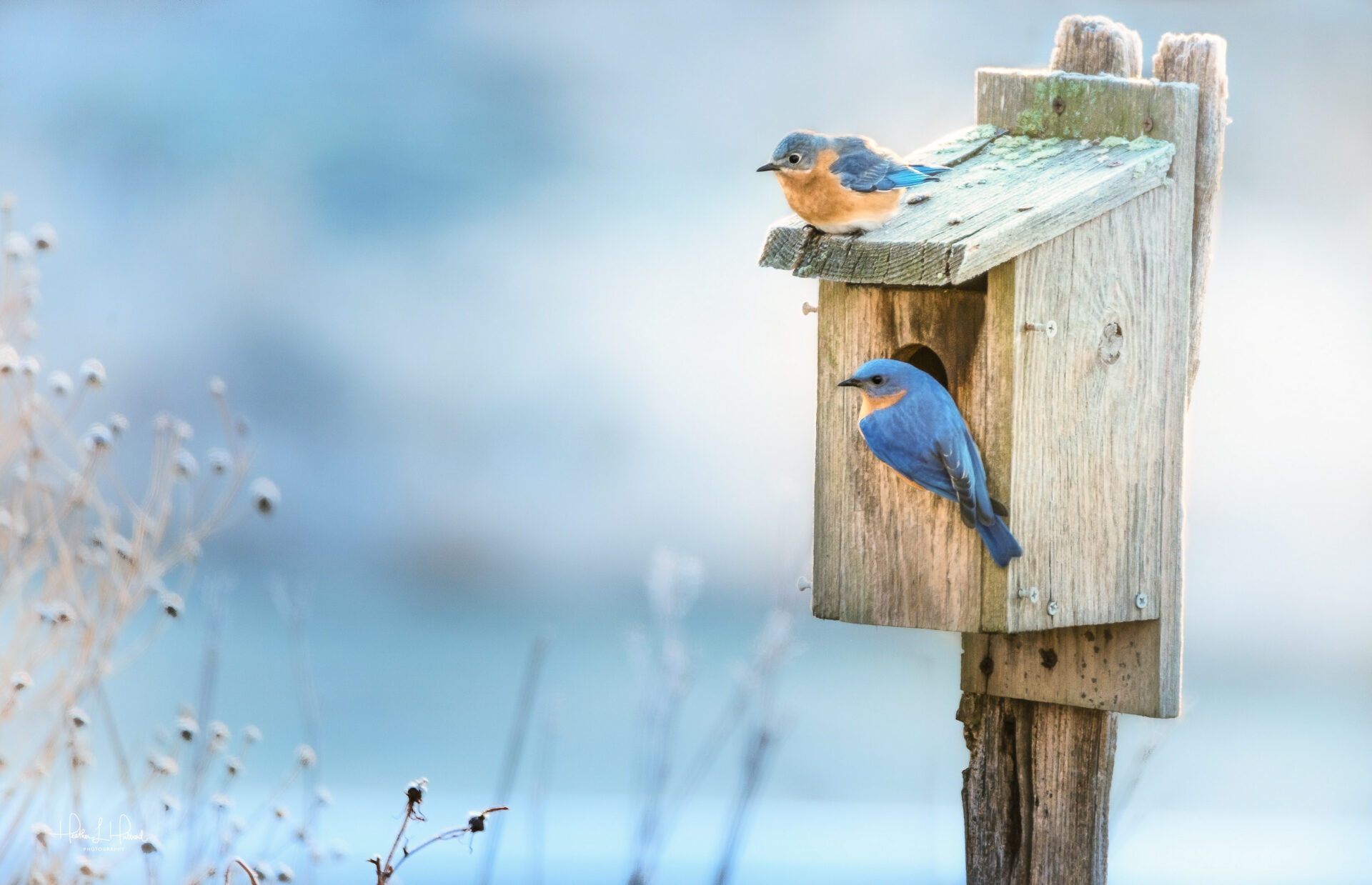
- The Nesting Crisis: It’s not just about the food. House Sparrows are notorious for bluebird house home invasions, displacing native pairs during the most vulnerable time of the year.
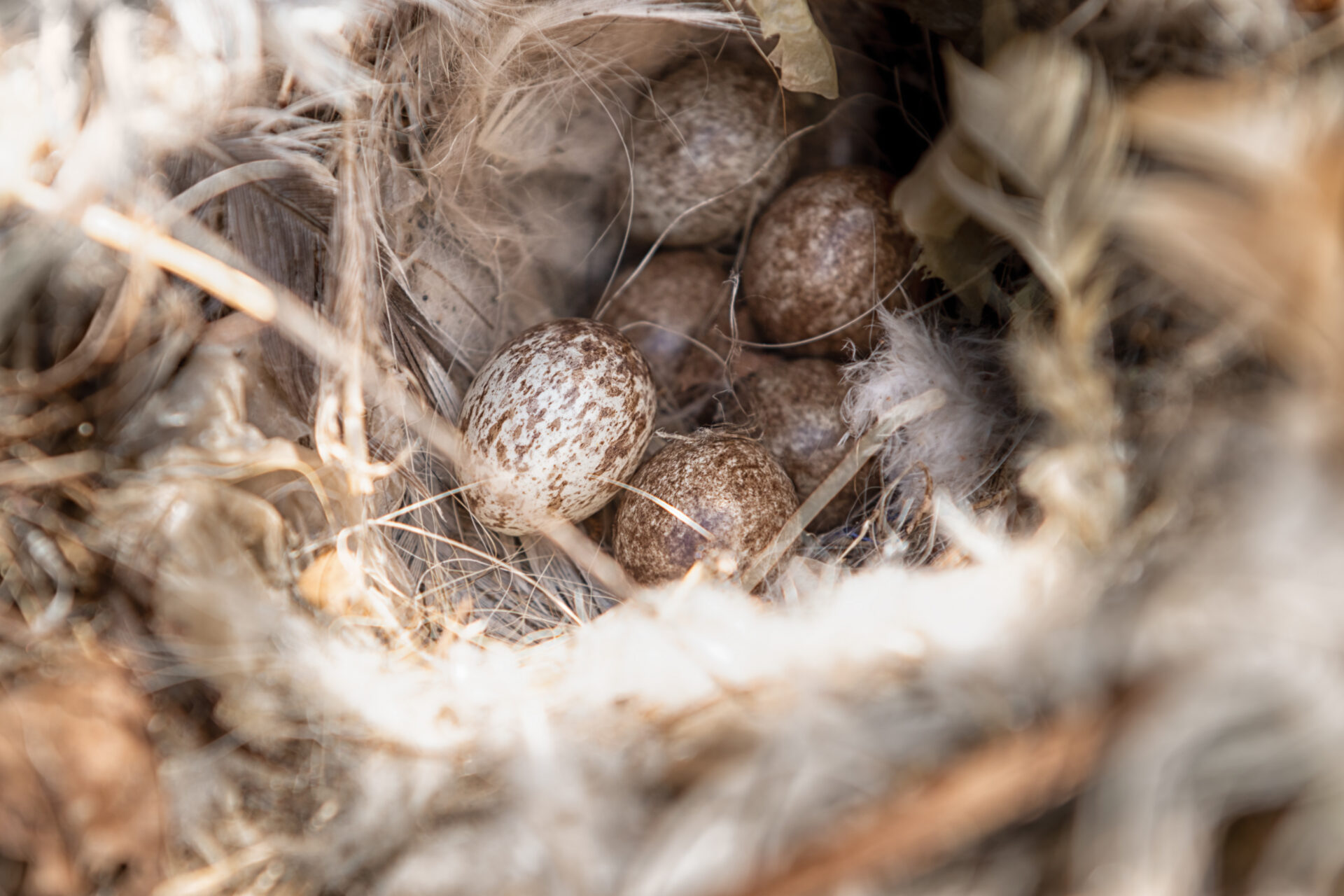
- The “House Sparrow Generator”: They breed early and often. Without an effective house sparrow deterrent, your yard becomes a factory for more sparrows, further pushing out the birds you actually wanted to help.
-
House Sparrows lay an average of 5 eggs 3-4 times a year.
Pro-biodiversity: It’s not “anti-bird,” it’s pro-native
Managing House Sparrows isn’t about being mean—it’s about selective bird feeding. You’re essentially saying: “I want my resources to go to the birds that actually need the help.” When you stop the “House Sparrow Tax,” you’re making a stand for your local ecosystem.
Expert Tip: While many ‘sparrow-proof’ feeders just use cages that also block cardinals, our specialized weighted vertical lines target house sparrow behavior specifically, keeping the VIP list open for your favorite native birds.
The science of the sparrow spook: How to deter the mob
Now that we’ve identified the culprit, how do we fix the problem without turning our backyard into a high-security prison? The answer lies in Avian Behavior.
The “Magic Halo” effect: Fear vs. agility
At Sparrow-B-Gone, we don’t believe in “blocking” birds with cages or bars, and we do NOT advocate trapping. Instead, we use the science of aversion. Research has shown that House Sparrows have a unique psychological “spook factor” when it comes to weighted vertical lines (often called the Magic Halo method).
To a House Sparrow, a vertical line represents a threat to their rapid “swarm and scatter” flight pattern. They find these lines unpredictable and spooky, so they simply choose to feed elsewhere.
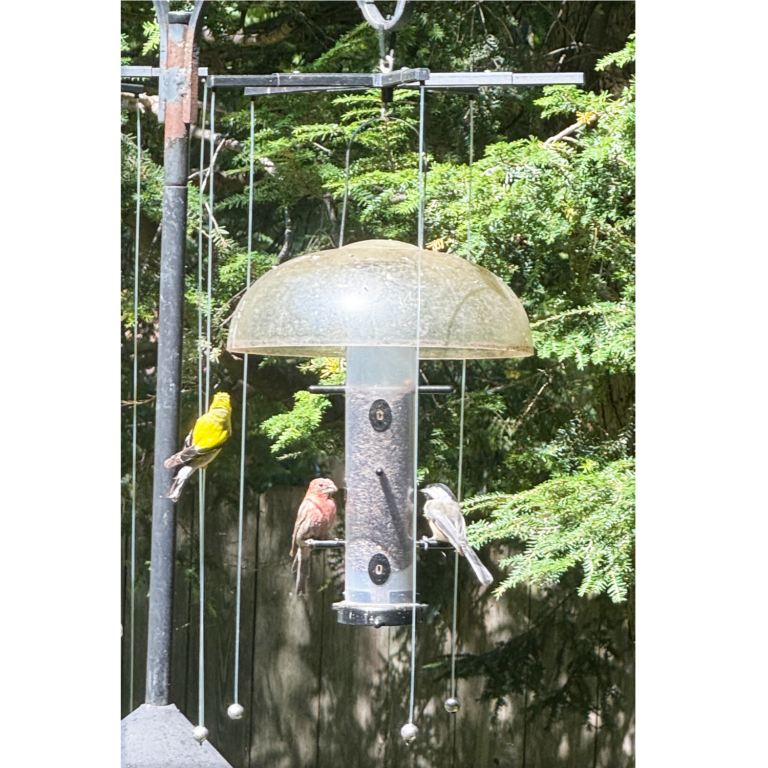
The best part? Our favorite native birds—like cardinals, chickadees, and nuthatches—are much more agile and less skittish. They fly right through the lines, or even use them as a convenient “waiting room” perch!
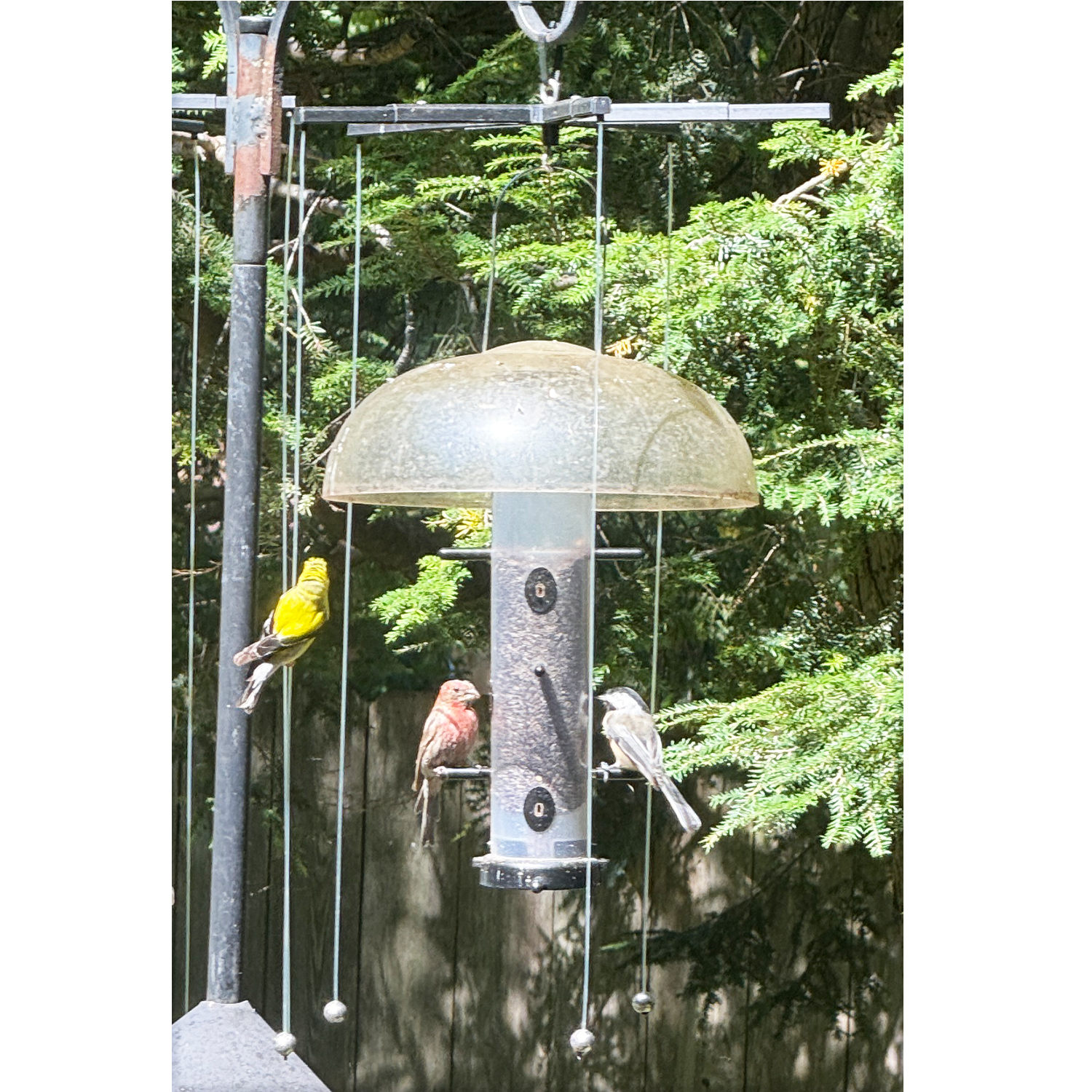
Native birds using the weighted cords of Sparrow-B-Gone! to wait their turn at the feeder
The native bird revival: Who is waiting in the wings?
Once the House Sparrow mob is un-invited, your backyard undergoes a dramatic transformation. We call this the Native Bird Revival. Without the constant squabbling and “seed sweeping” of the invasive species, the “VIP list” of colorful, native birds finally feels safe enough to return to the table.
The top birds that return after House Sparrow deterrence
According to hundreds of our community reviews, these are the species that make the quickest comeback:
- Northern Cardinals: Known for being shyer than they look, Cardinals are often the first to return. Reviewers frequently report seeing “red back at the feeder” within just 48 hours of installing a House Sparrow deterrent.
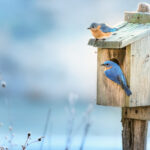
Eastern Bluebirds on nesting box
- Eastern Bluebirds: These are the crown jewels of the sanctuary. By protecting both your feeders and your bluebird houses, you’re giving these birds a reason to stay for the long haul. Read more at Sialis.org.
- Goldfinches & House Finches: These acrobatic flyers love our 250lb-test cords—they actually use them as perches! Without House Sparrows hogging the perching space, you’ll see a massive increase in yellow and red finch activity
- Chickadees & Titmice: These high-energy birds are the “first responders.” They aren’t bothered by vertical lines and will often be the first to zip in once the House Sparrow crowd thins out.
The ROI of backyard birding: Stop the “House Sparrow Tax”
Let’s talk numbers. Birdwatching is a joy, but it shouldn’t be a financial drain. If you feel like you’re buying a 20lb bag of seed every few days, you aren’t feeding more birds—you’re likely just subsidizing House Sparrow waste.
How to calculate your bird seed savings
House Sparrows are “seed sweepers.” They don’t just eat; they flick. Because they are searching for specific morsels, they toss the rest of your premium bird seed onto the ground. This “House Sparrow Tax” can account for up to 70% of your total birding budget. Based on our product reviews, customers save money on birdseed in the long run.
| The cost comparison | Standard setup (The Buffet) | The Sparrow-B-Gone system |
| Feed refilling frequency | Every 1–2 days | Every 5–7 days |
| Weekly seed cost | ~$20.00 | ~$6.00 |
| Average customer’s seed cost | $1,040.00 | $312.00 |
| Possible total annual savings | — | $728.00 |
A specialized tool that pays for itself
According to customer reviews, by installing a Sparrow-B-Gone!, the average birder saves enough in wasted seed to pay for the unit in less than six weeks.
That’s money that can go toward buying more feeders, or a great new set of birding binoculars. When you stop the waste, you can afford to buy the high-quality blends that native species truly love.
House Sparrow identification: Know your guest before you un-invite them
Before you set up your Sparrow-B-Gone system, you need to be 100% sure you’re dealing with House Sparrows. Because they aren’t actually related to North American sparrows (they are Old World Weaver Finches), they have a different “vibe” and structure.
How to ID the House Sparrow: Chunkier, tougher, bolder
We are working on a really detailed regional house sparrow identification article that helps you visualize which birds you may be confusing for house sparrows in your area. But most of you probably just want a quick and easily accessible ID.
If a bird looks like it’s been hitting the gym and has a bit of an attitude, it’s probably a House Sparrow. Look for these three physical markers:
- The Bill: Thick, conical, and “heavy-duty.” It’s designed for crushing tough grains, unlike the more delicate, pointed beaks of many native songbirds.
- The Body: Chunky and full-chested. They sit “low” and look more solid than the sleek, flighty native sparrows.
- The Tail: Short and usually squared off at the end.
Male vs. female vs. juvenile House Sparrows
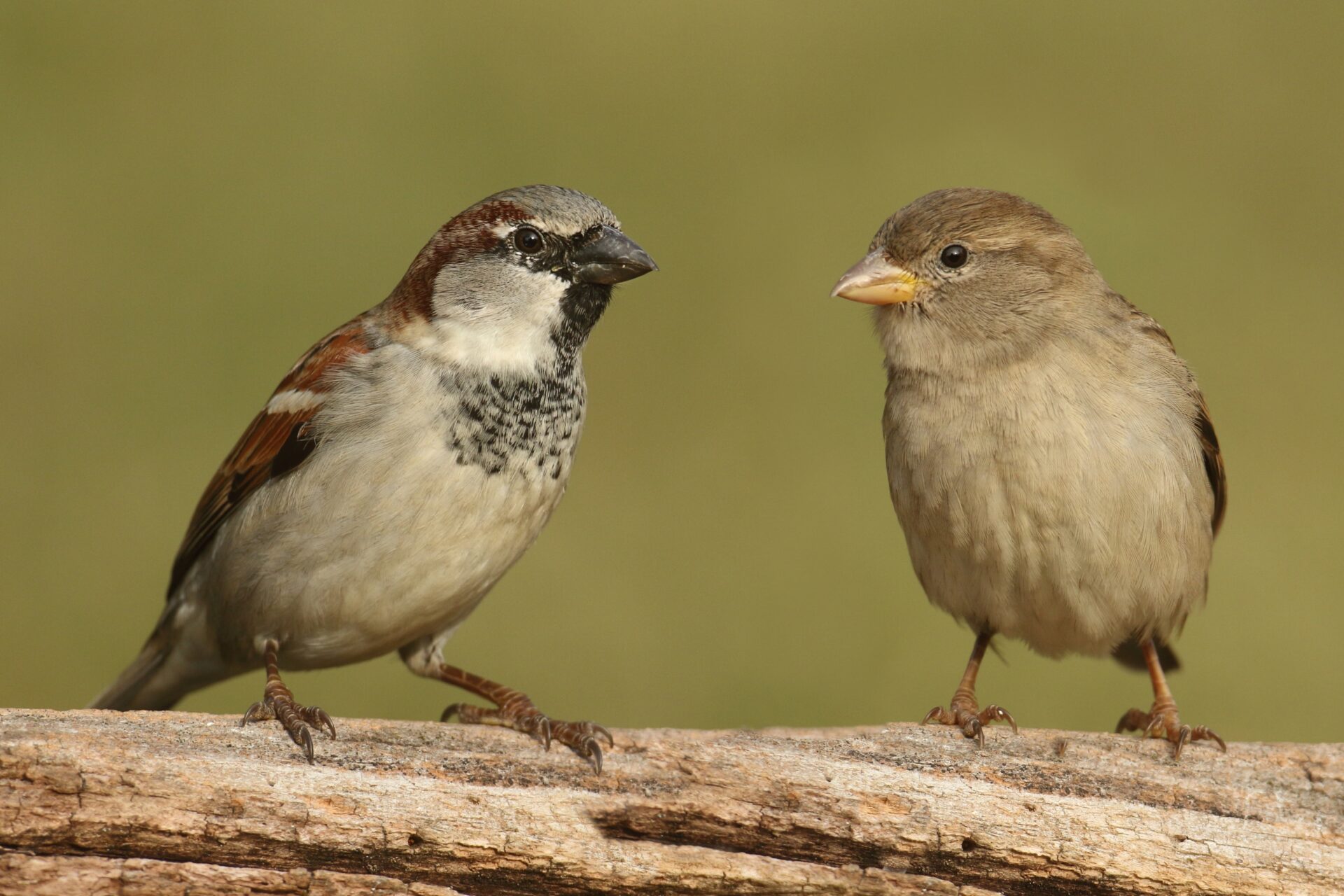
Male (left) and Female (right) House Sparrows (Passer domesticus) perched on a log
Unlike many native species where males and females look similar, House Sparrows are “sexually dimorphic”—they have a distinct “his and hers” look.
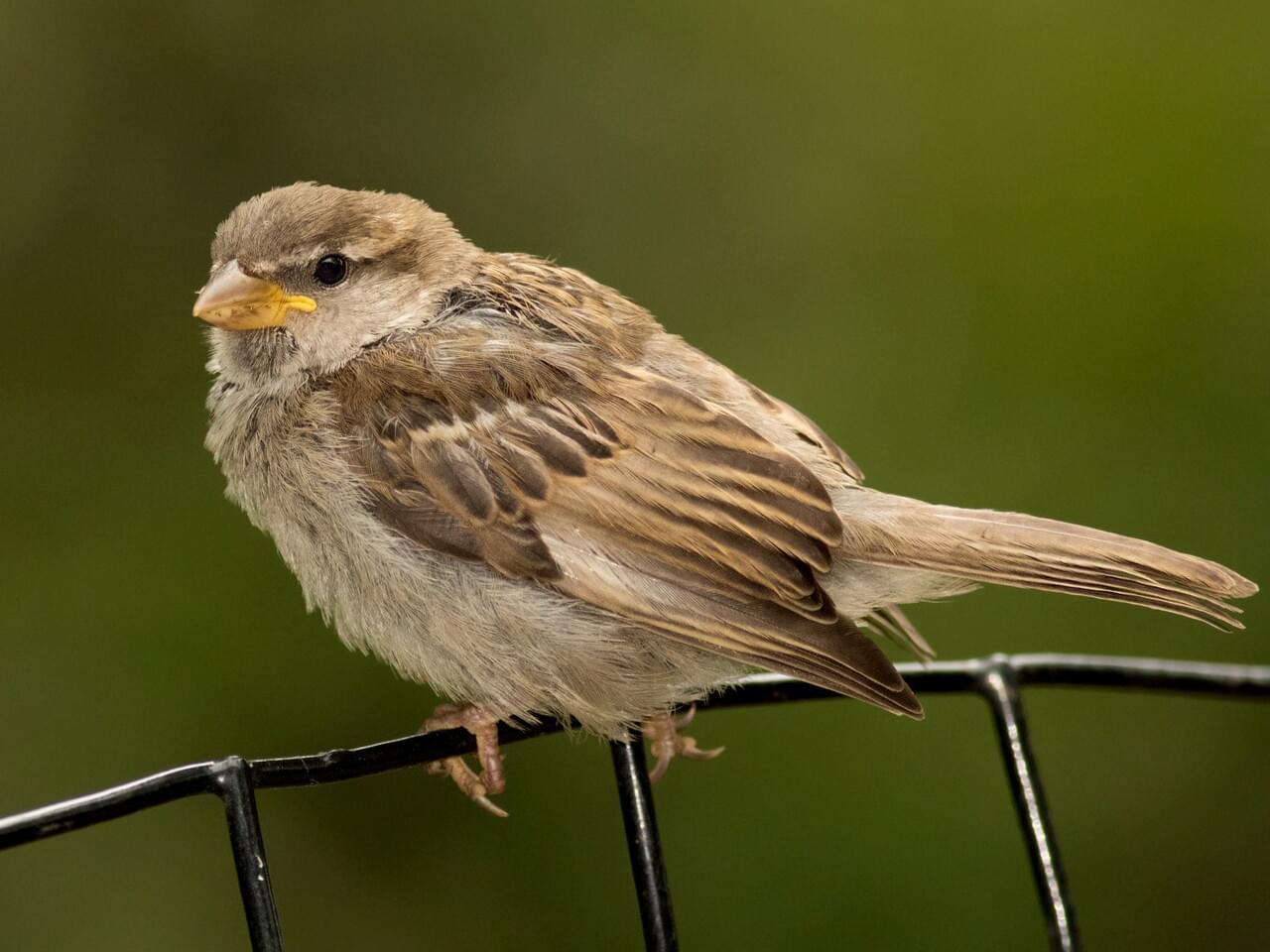
A juvenile House Sparrow
| Feature | Male House Sparrow | Female House Sparrow |
| Crown | Dark grey cap | Plain, buffy-brown |
| Cheeks | Bright white | Dull, sandy-brown |
| The “Bib” | Black throat/chest patch (gets bigger in spring!) | None |
| Eye Stripe | Chestnut/Rufous stripe behind the eye | Pale, tan “eyebrow” line |
Expert Note: If you see a “black bib,” it is almost certainly a male House Sparrow. No native North American sparrow has this specific black-tie-affair look!
A more detailed beak ID that notes changes in and out of breeding season:
| Season | Male House Sparrow beak | Female House Sparrow beak |
| Spring/Summer (breeding) | Inky black – Solid and dark from base to tip. | Dark brown/grey – Often bicolored (darker on top). |
| Fall/Winter (non-breeding) | Yellowish-horn – Pale yellow base with a dusky grey tip. | Pale sandy-yellow – Lightest color of the year. |
The “little brown bird” dilemma: The House Sparrow quick-check system
If you are looking at a small brown bird and aren’t sure, ask yourself these three questions:
- Does it have a black “bib”? (If yes: It’s a male House Sparrow.)
- Is the chest perfectly plain or heavily streaked? (House Sparrows are always plain-chested. If it has streaks, it’s a native Song Sparrow or finch.)
- Is it part of a noisy “mob”? (House Sparrows are rarely alone. If there are 10 of them squabbling, they are the culprits.)
Side-by-side: House Sparrows vs. the look-alikes
For a more thorough regional identification system, stay tuned — it is in the works!
1. The House Finch (The most common mix-up)
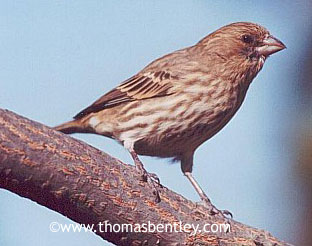
The female House Finch is frequently misidentified as a House Sparrow
- The Lookalike: Both are chunky and found in the same backyard spots.
- The Difference: * The beak: A Finch has a curved, heavy beak; a House Sparrow has a straight, conical “seed-crusher” beak.
- The Markings: Male House Finches have a red face and breast. Female House Finches have blurry brown streaks all down their bellies. A female House Sparrow is completely plain and dingy underneath.
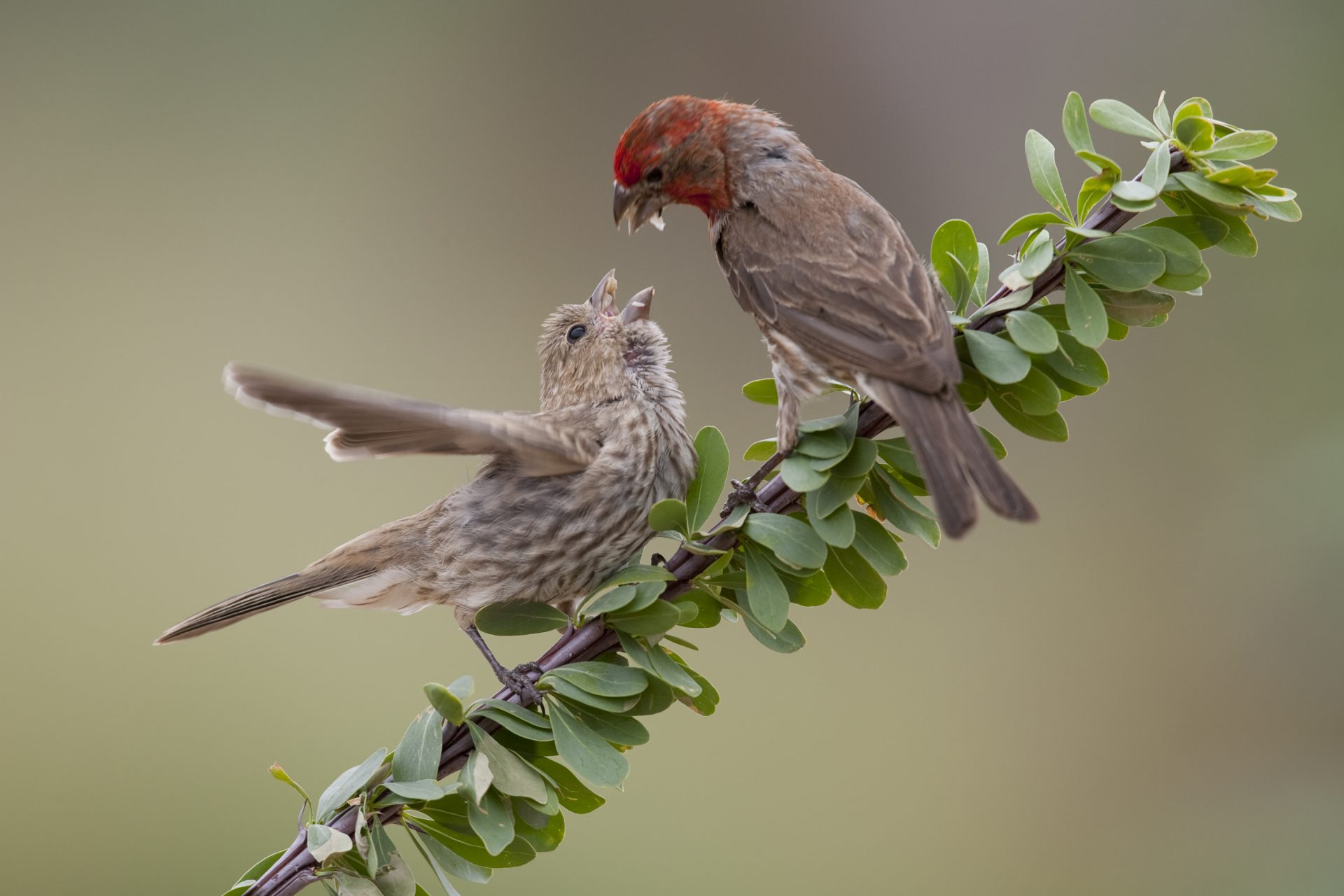
Juvenile House Finch (left), male House finch (right)
2. The Eurasian Tree Sparrow (The “Double-Take” Twin)
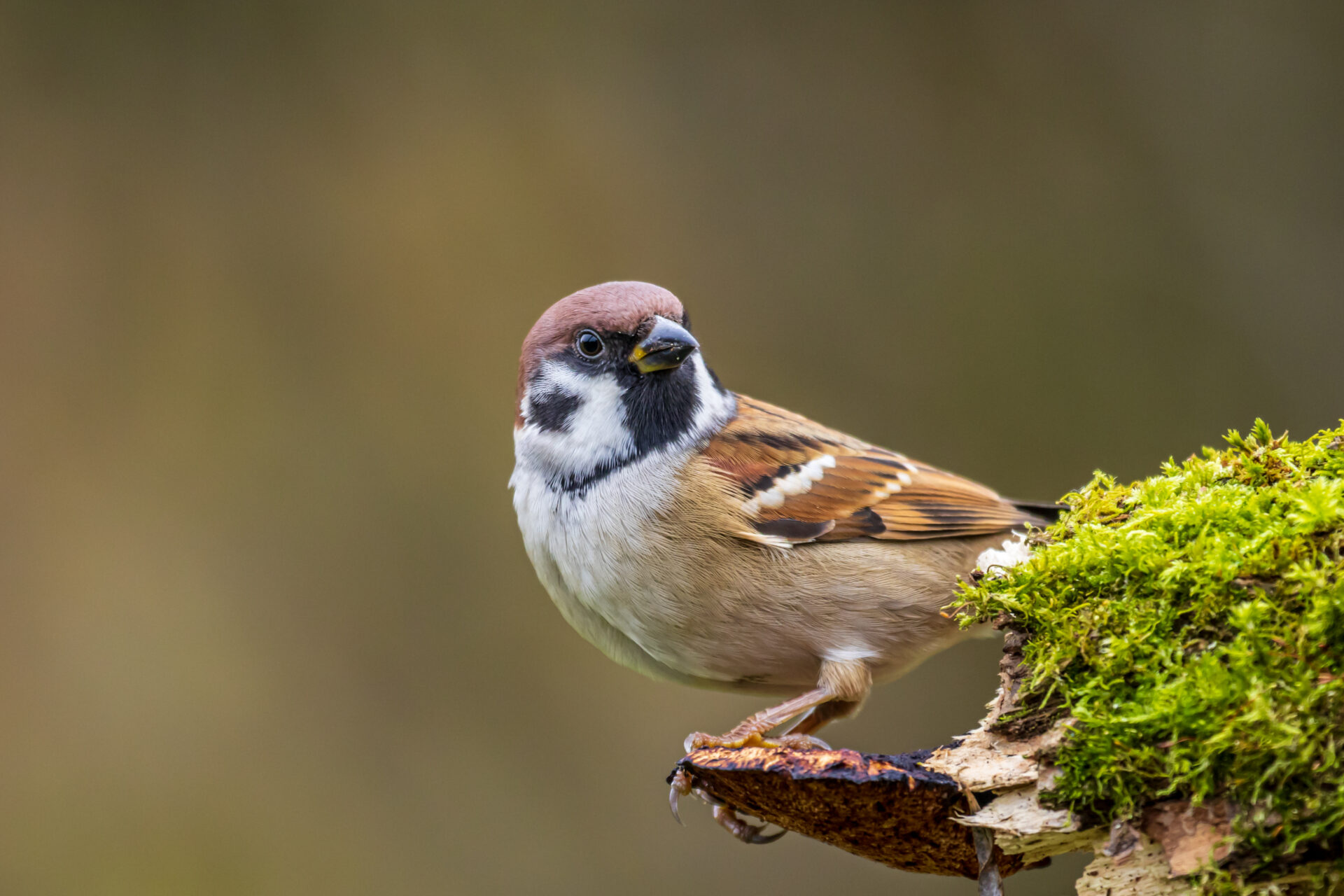
Cute Eurasian tree sparrow sitting on a mushroom on a mossy log
The Lookalike: This is the ultimate test for backyard birders. Unlike finches or song sparrows, the Eurasian Tree Sparrow belongs to the exact same genus (Passer) as the House Sparrow. At a glance, both males look almost identical with their rich chestnut backs, grey crowns, and black bibs.
The Difference:
-
The Cheek Spot: This is your best field mark. A Eurasian Tree Sparrow has a distinct, sharp black spot on its stark white cheek. A male House Sparrow has a dingy grey cheek with no spot at all.
-
The Crown: Look at the top of the head. A Eurasian Tree Sparrow sports a solid, rich chocolate-brown cap. A male House Sparrow has a distinct slate-grey stripe running right down the center of his crown.
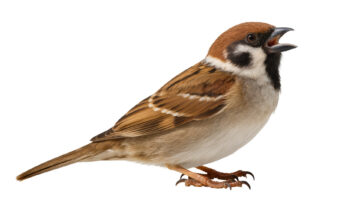
Eurasian Tree Sparrow with solid brown cap and black spotted cheek
-
The Gender Rule: With House Sparrows, males and females look completely different (dimorphic). With Eurasian Tree Sparrows, males and females look exactly alike. If you see a “male” House Sparrow lookalike tending to a nest with a partner that looks exactly like him, you are actually looking at a pair of Eurasian Tree Sparrows!
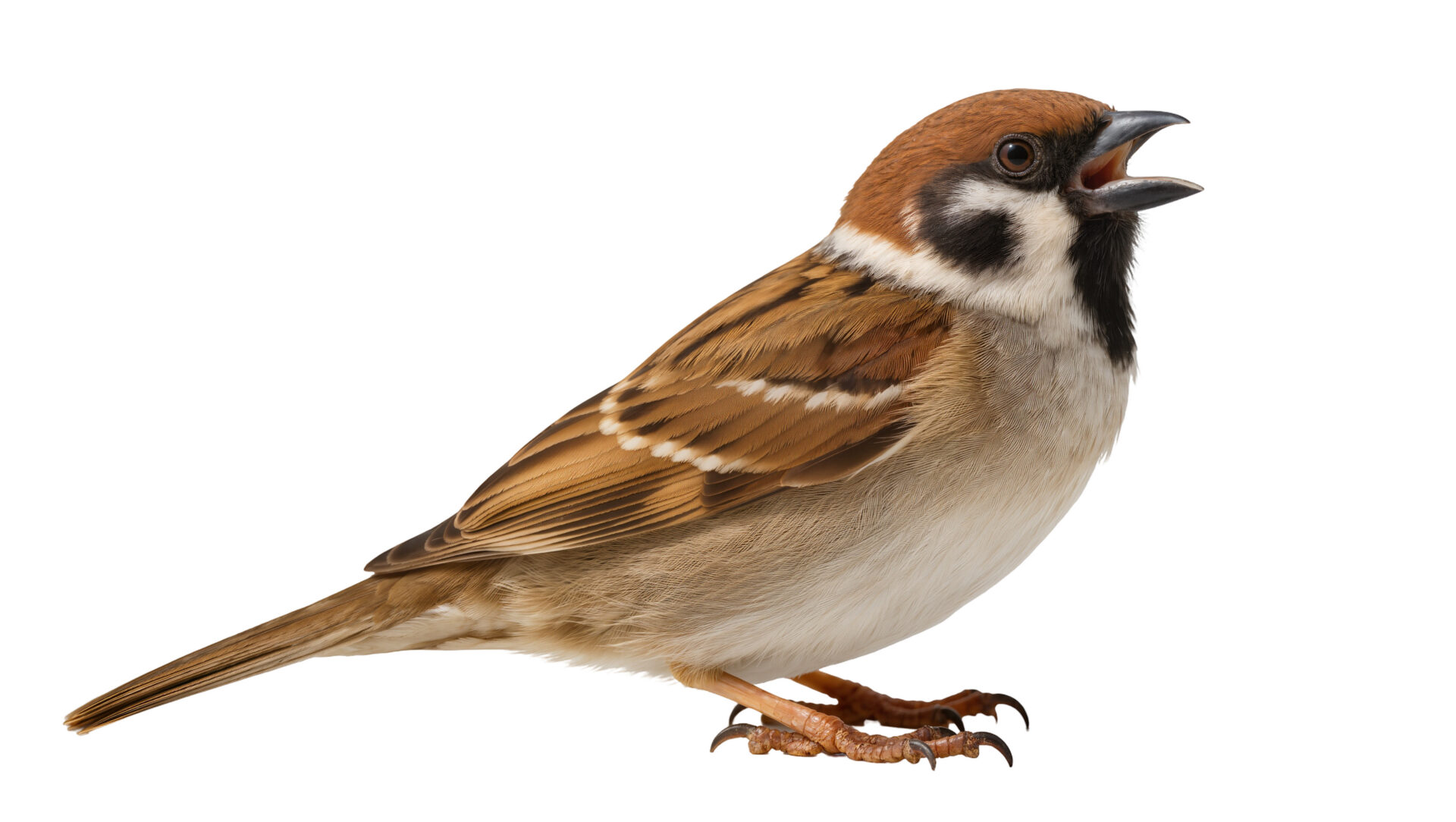
3. The Song Sparrow (The “streak” master)
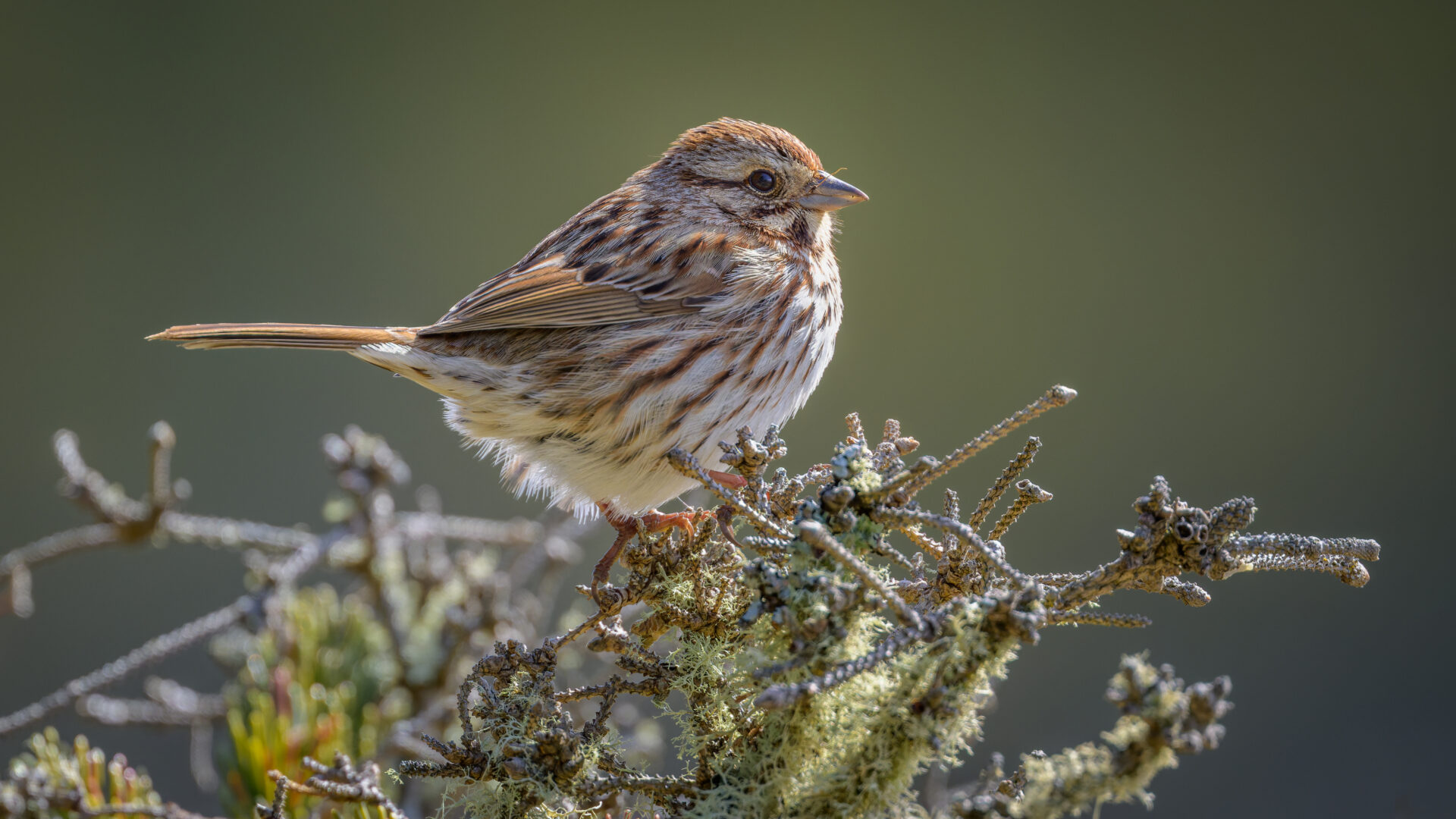
The Song Sparrow has a heavily streaked chest/belly
- The Lookalike: Similar size and brown-streaked back.
- The Difference: * The Chest: Song Sparrows have thick, dark streaks that usually gather into a large central spot on the breast. House Sparrows never have this spot or any chest streaks.
- The Tail: Song Sparrows have longer tails that they frequently “pump” or flick downward. House Sparrows have short, stiff, squared-off tails.
4. The Chipping Sparrow (The “polite” sparrow)
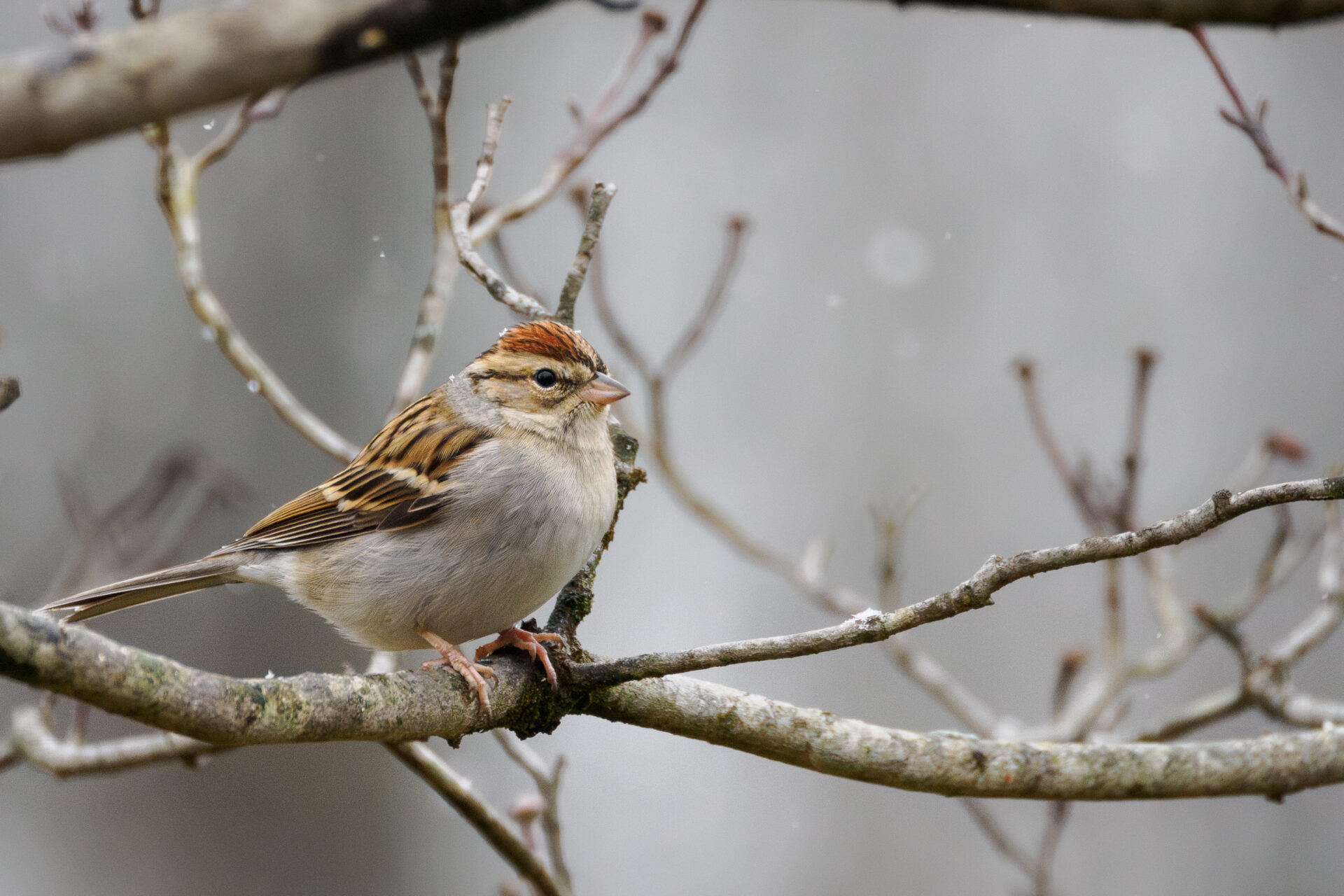
A Chipping Sparrow perched on dogwood branches during light snowfall
- The Lookalike: Both have a reddish-brown cap in the spring.
- The Difference: * The “Eyeliner”: Chipping Sparrows have a very crisp, black line running directly through the eye.
- The Build: Chipping Sparrows are much smaller, thinner, and more “delicate” than the chunky, bull-headed House Sparrow.
5. White-Crowned & White-Throated Sparrows
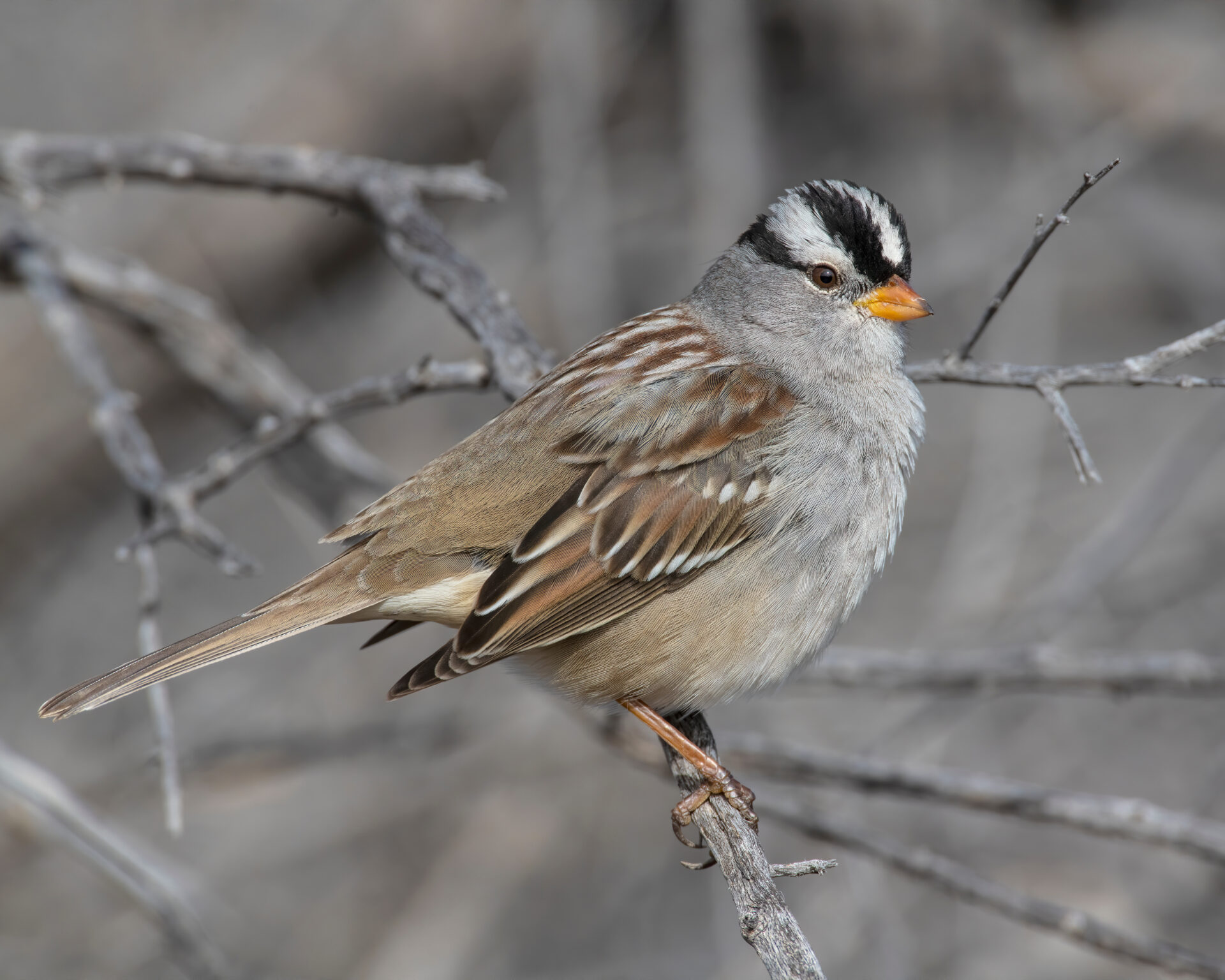
The striped head of the White-Crowned Sparrow distinguishes it from House Sparrows
- The Lookalike: Similar size and “bold” head patterns.
- The Difference: * The Head Pattern: Native White-Crowns have a striking “bicycle helmet” of black and white stripes. White-Throats have a bright yellow spot between the eye and the beak. House Sparrows never have yellow facial spots or black-and-white striped crowns.
- Leg Color: Native sparrows usually have pale pinkish legs. House Sparrows have darker, dingy grey or brownish legs.
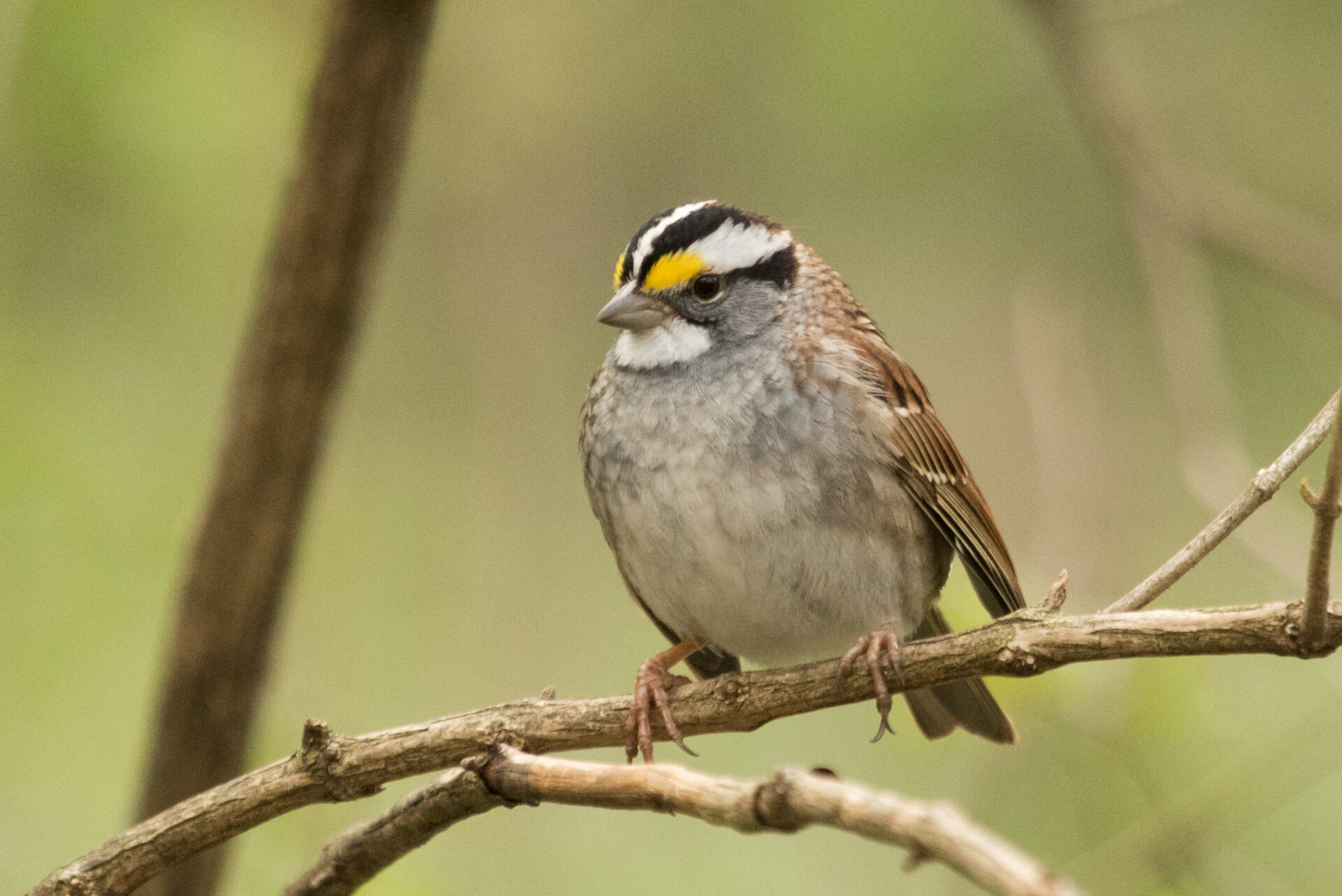
The distinct yellow “eye brow” sets the White-Throated Sparrow apart from other sparrows
Identification cheat sheet
| Feature | House Sparrow | Native sparrows |
| Chest/belly | Always plain (no streaks) | Often streaked or spotted |
| Tail shape | Short and squared-off | Usually longer or notched |
| Leg color | Dark grey/brown | Pale pinkish |
| Behavior | Aggressive, stays in mobs | Shy, travels in pairs/small groups |
| Flight | Direct, heavy flapping | Often bouncy or “flicking” |
Expert note: Because House Sparrows are an invasive species, they don’t follow the “rules” of our local ecosystem. They are louder, bolder, and stay much closer to human structures (eaves, gutters, and parking lots) than our native friends.
Conclusion: Reclaim your sanctuary today
At the end of the day, backyard birding is supposed to be a source of peace, color, and connection to nature. It shouldn’t be a source of financial stress or a daily battle with a House Sparrow mob.
By understanding the science of aversion and moving away from ineffective, one-size-fits-all “caged” feeders, you aren’t just buying a gadget—you’re investing in a pro-biodiversity ecosystem. When you un-invite the House Sparrow, you invite the world back in.
The expert advantage
As the leaders in House Sparrow deterrence, we are committed to providing solutions that are as safe as they are effective. Whether you are protecting a high-tech smart feeder from “seed sweeping” or ensuring your bluebird houses remain a haven for the next generation, we have the specialized engineering to make it happen.
No more “House Sparrow Tax.” No more drab, grey takeover. Just the vibrant, native bird backyard you’ve always wanted.
Ready to upgrade your view?
We are thrilled to announce that the full Sparrow-B-Gone! ecosystem—including our most advanced 3D-printed adjustable kits—has moved into to its new home.
Visit Sparrow-b-gone.com to:
- Shop the full collection: Get exclusive sizes, combination packages, and custom-fit options you won’t find on elsewhere.
- Join the Rain-B-Gone! waitlist: Be the first to get your hands on our upcoming weather protection for smart feeders. The waitlist will be up soon!
- Personalize your setup: Browse our upcoming Katie Top collection to find the perfect silhouette to crown your sanctuary.
Stop feeding the mob and start feeding the native birds who need protecting. Your House Sparrow-free sanctuary is just a click away.