One of our customers recently reached out with a classic head-scratcher. They’ve been using Sparrow-B-Gone! to protect their feeders, and it’s been working like a charm—until suddenly, a few rogue birds started showing up. They looked suspiciously like House Sparrows, and they were acting like they owned the place.
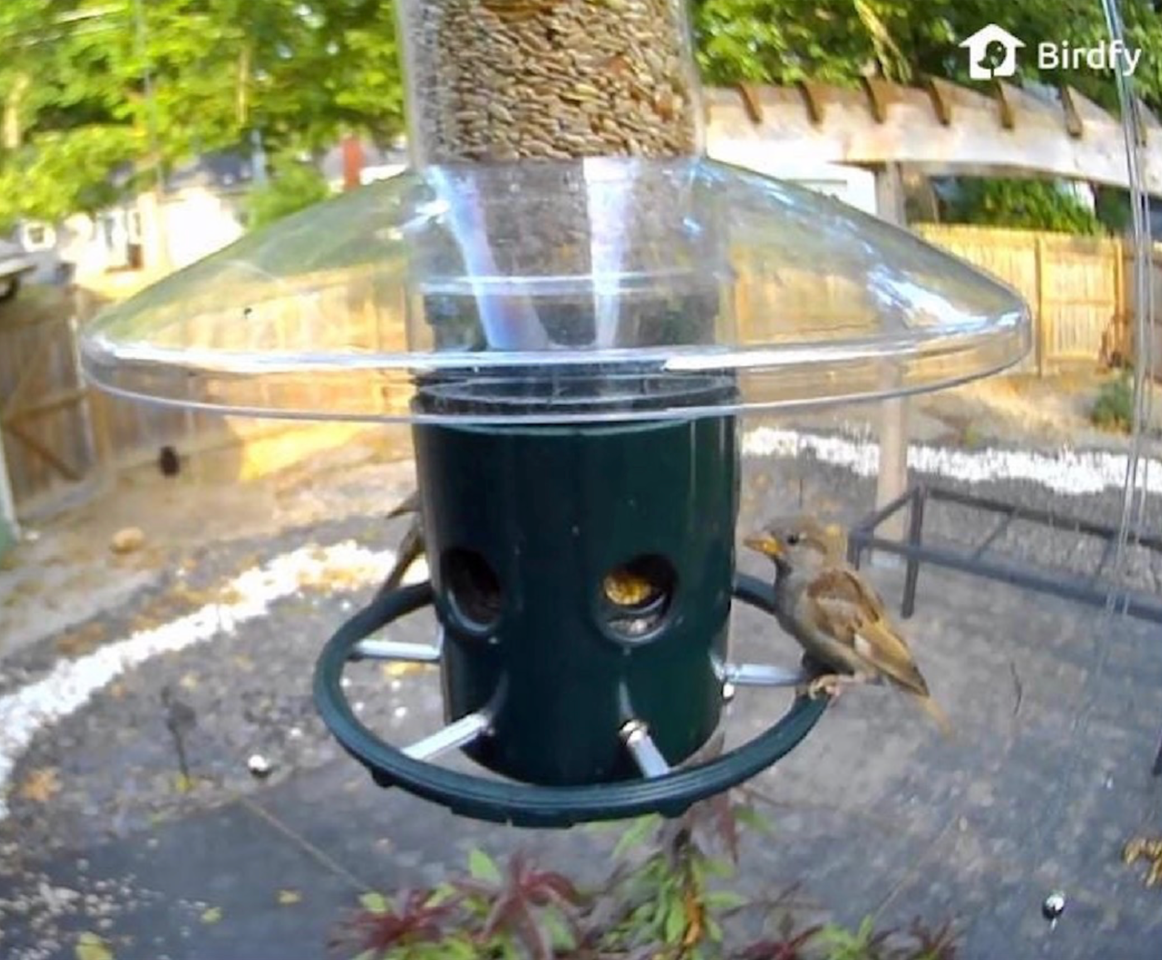
Our customer snapped a photo of a juvenile House Sparrow completely ignoring the sparrow spooker and asked: What’s going on?

The reckless abandon of youth sometimes leads juvenile HOSP to ignore Sparrow-B-Gone!
The “teenage” phenomenon
If you’re seeing the same thing in your yard, don’t worry—your sparrow deterrent isn’t broken. You’ve just encountered a teenage House Sparrow.
Much like human teenagers, juvenile House Sparrows are seemingly afraid of nothing. They’re bold, they’re hungry, and they have zero regard for the “scary” dangling cords that keep the adults away. They haven’t yet learned that those cords are meant to be a warning sign to stay clear of the bird feeder.
What the research says
The original research conducted at the University of Nebraska in the 1990s confirmed exactly what our customer witnessed. The data showed that teenage House Sparrows were the only ones bold enough to consistently ignore the deterrent cords.
The good news? It’s a phase. Once these “kids” mature, they eventually come to their senses, slap their foreheads with their wings, and realize, “What was I thinking? Those dangling cords are actually pretty terrifying!”
A few bird-brained observations
While the teenagers are the main culprits, we do see a few other interesting behaviors when it comes to our protecting feeders from House Sparrows:
- The “fast food” dash: When these youngsters visit our own protected feeders at home, they definitely hesitate for a second. But, driven by the reckless abandon of youth, they often decide to brave the cords for a quick snack.
- The motherly instinct: Research has shown that some mother House Sparrows will occasionally and hesitantly brave the cords to reach their nestlings. This is uncommon, and thankfully, it doesn’t persist once the fledglings are out of the nest and foraging on their own.
- The “wimp” factor: As a side note, adult male House Sparrows are—to put it bluntly—total wimps. With very rare exceptions (we assume they’re related to Genghis Khan), adult males rarely have the courage to approach the cords. They usually prefer to let their wives take the risk when the babies are hungry!
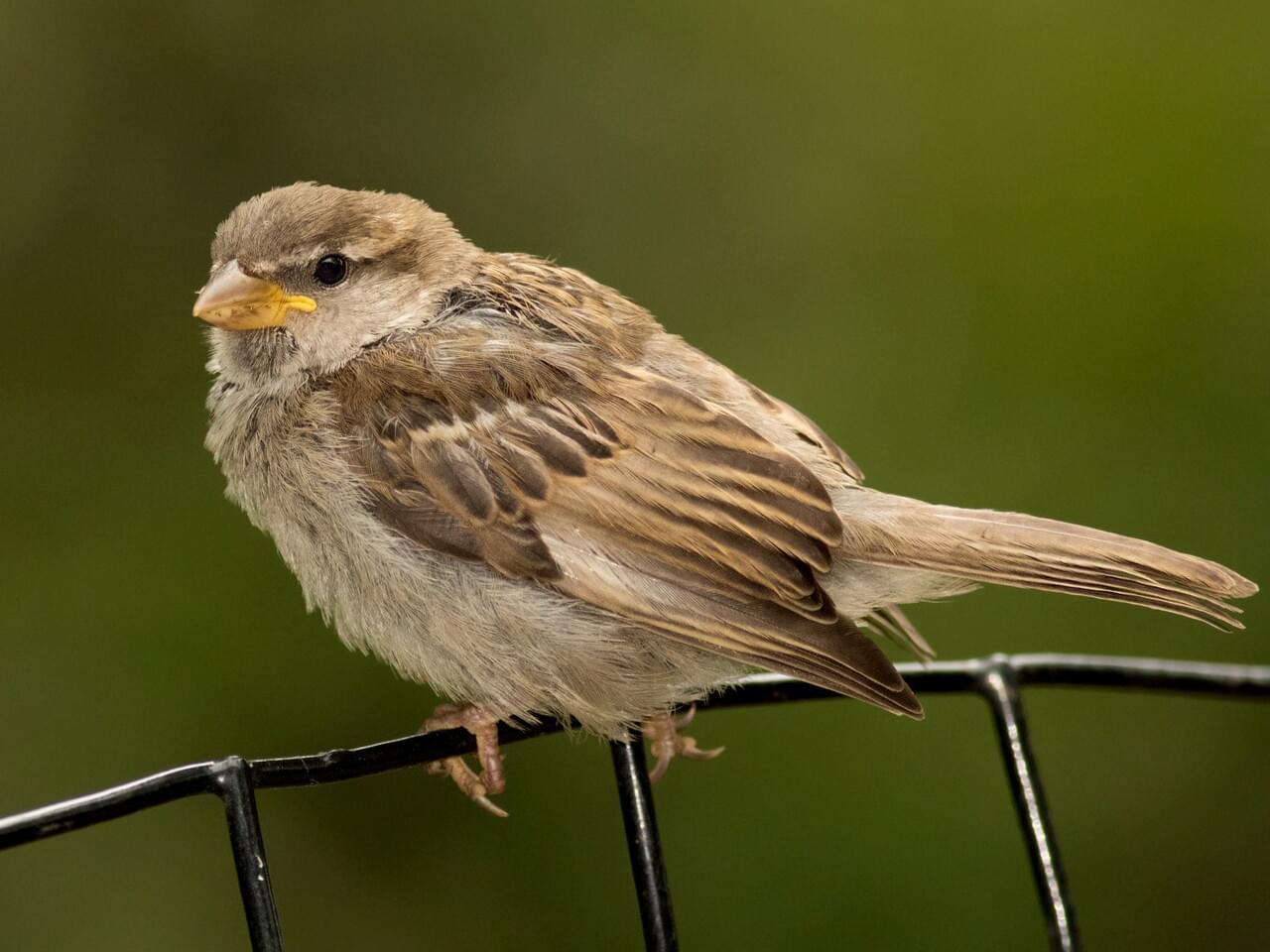
A juvenile House Sparrow
The takeaway
If you spot a juvenile House Sparrow acting like it’s invincible, don’t panic. The effectiveness of Sparrow-B-Gone! relies on the natural, cautious instincts of adult birds. These teenagers are just going through a growth spurt, and they’ll be avoiding your feeder area as soon as they reach adulthood.
In the meantime, keep that Sparrow-B-Gone! in place. It’s still the most effective way to maintain a sparrow-free bird feeder—even if you have to deal with a few moody, fearless teenagers for a couple of weeks!