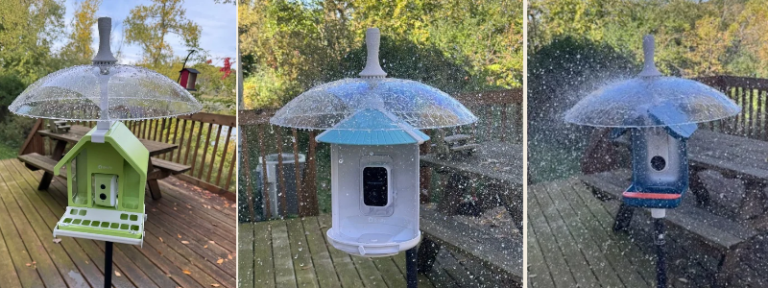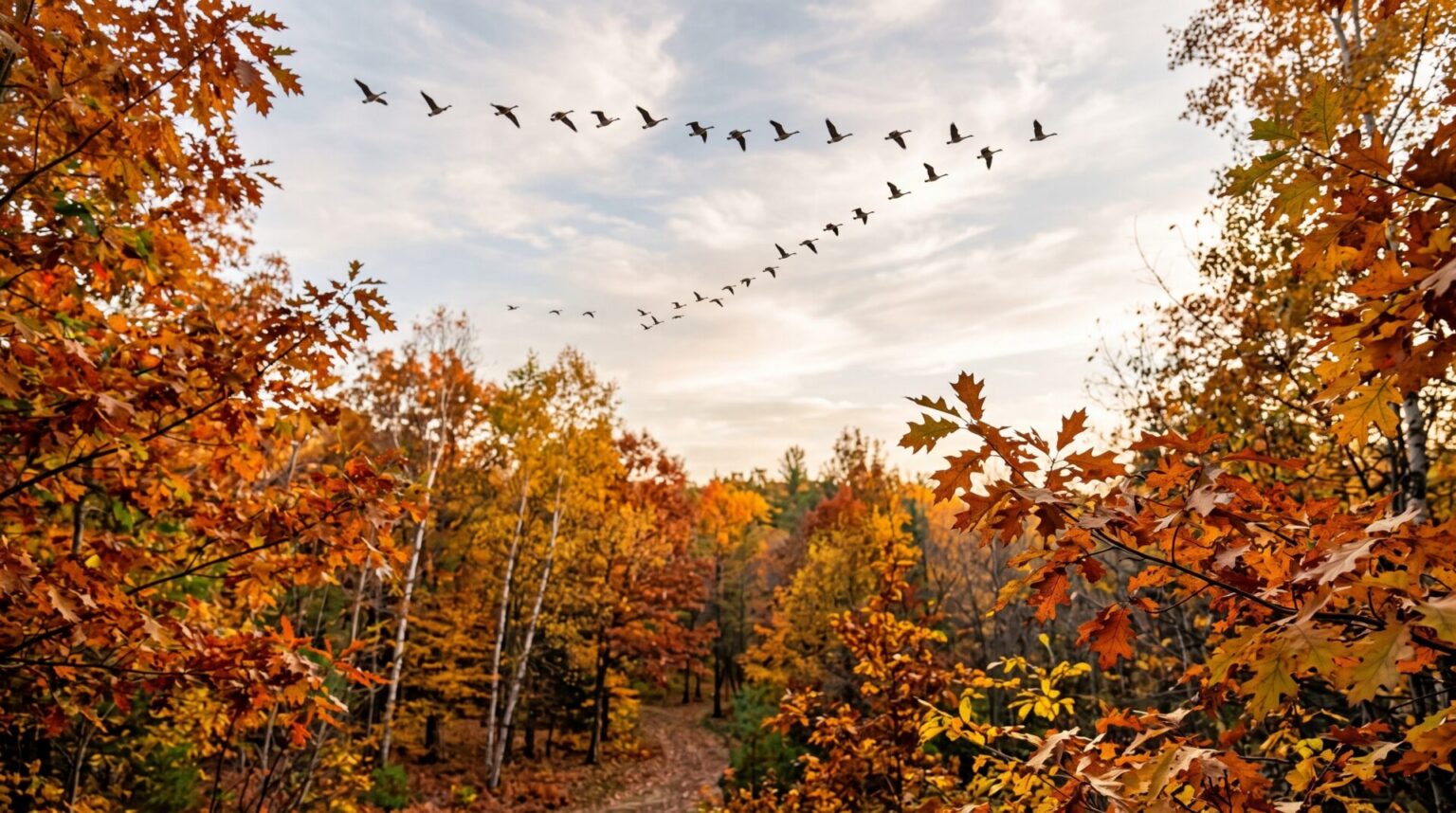
Every year between late August and early November, the Mississippi Flyway—the ultimate superhighway of bird migration—turns into an avian rush hour. Hundreds of species gear up for a marathon flight down to Central America, South America, or the Gulf Coast.
It’s an inspiring, awe-inspiring biological miracle.
…Until you realize that while the polite native birds pack up and leave, the House Sparrows look at your roof soffits and say, “Cool, extra room for us!”
Let’s talk about what’s actually happening in Midwestern skies this fall—and what it means for your property.
The Mississippi Flyway: Midwest’s Sky Superhighway
The Midwest serves as the funnel for over 325 migratory bird species. Why? Because following major river systems like the Mississippi, Missouri, and Ohio gives birds clear visual landmarks, plentiful food stops, and reliable thermal wind currents.
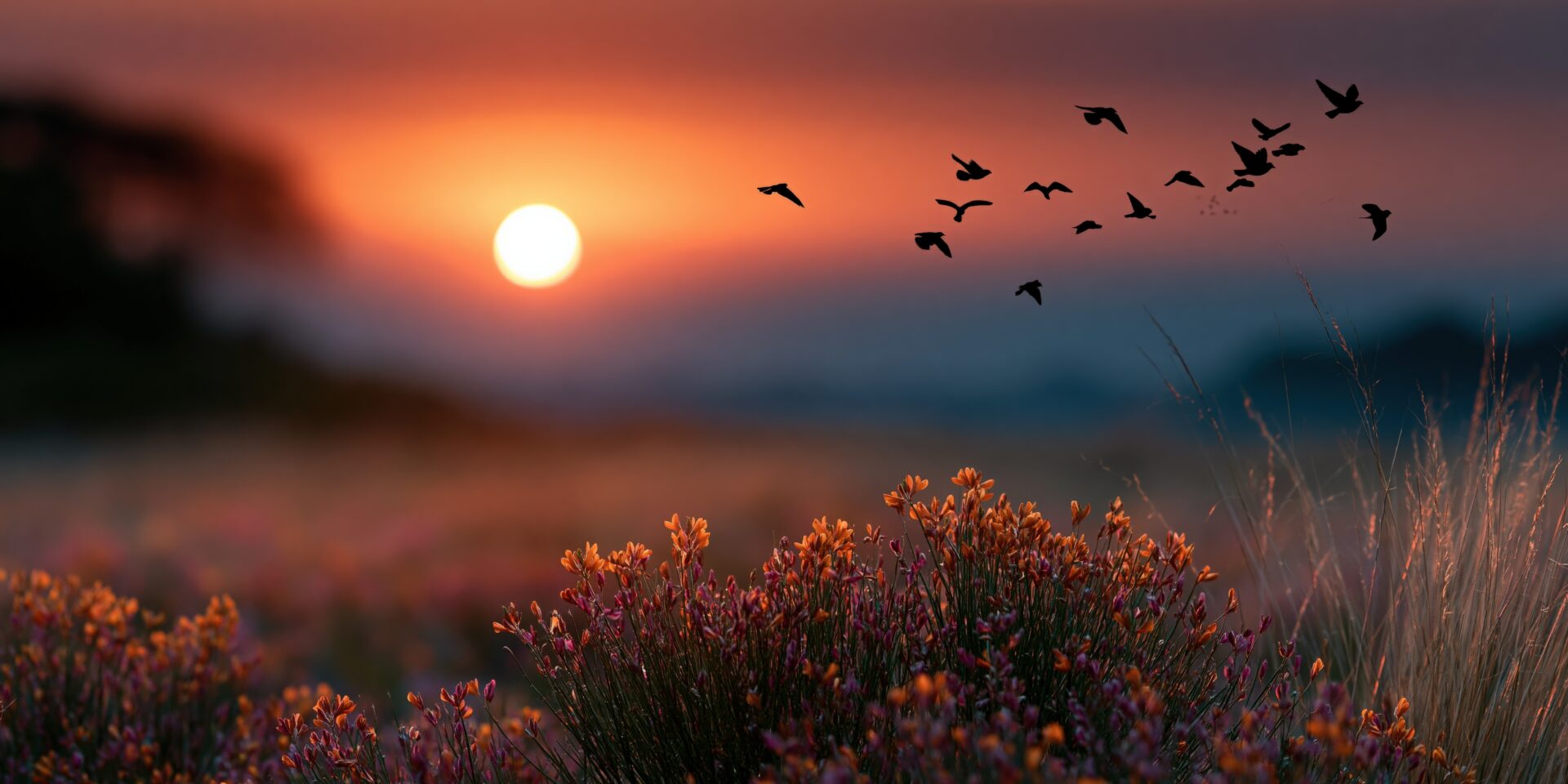
Sunset flock of birds flying over wild flower meadow.
- Who’s leaving? Warblers, thrushes, swallows, and hummingbirds are among the early birds to pack their bags.
- How do they navigate? A wild combination of celestial navigation (stars), the Earth’s magnetic field, and landmark memory.
- The night shift: You might not see them, but millions of songbirds migrate at night. Darker skies mean cooler air (less overheating), calmer winds, and fewer predators like hawks looking for a midnight snack.
The “Hyperphagia” Frenzy: Bird Power-Eating
Before a bird flies 2,000 miles, it can’t just swing through a drive-thru. They undergo a physiological state called hyperphagia—basically professional overeating.
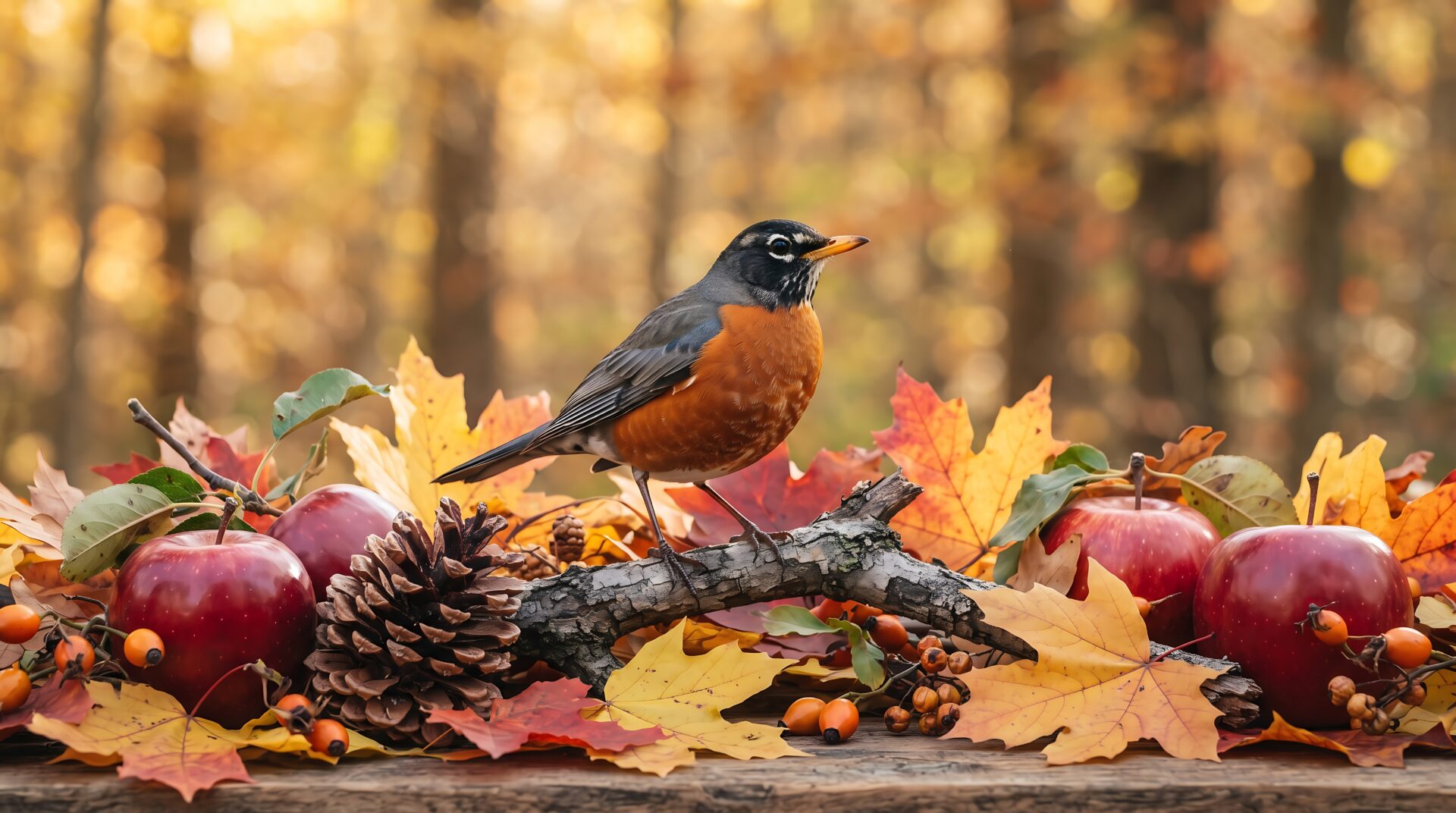
In the weeks leading up to migration, songbirds double their body weight in fat stores. To put that in human terms: imagine eating enough cheese curds and deep-dish pizza in two weeks to gain 150 pounds, then immediately running a nonstop marathon across the Gulf of Mexico. Respect.
The Uninvited Guests: Invasive Sparrows Stay Put
While native sparrows (like the White-throated Sparrow or Fox Sparrow) pass through respectfully on their way south, House Sparrows (Passer domesticus) are a completely different story.
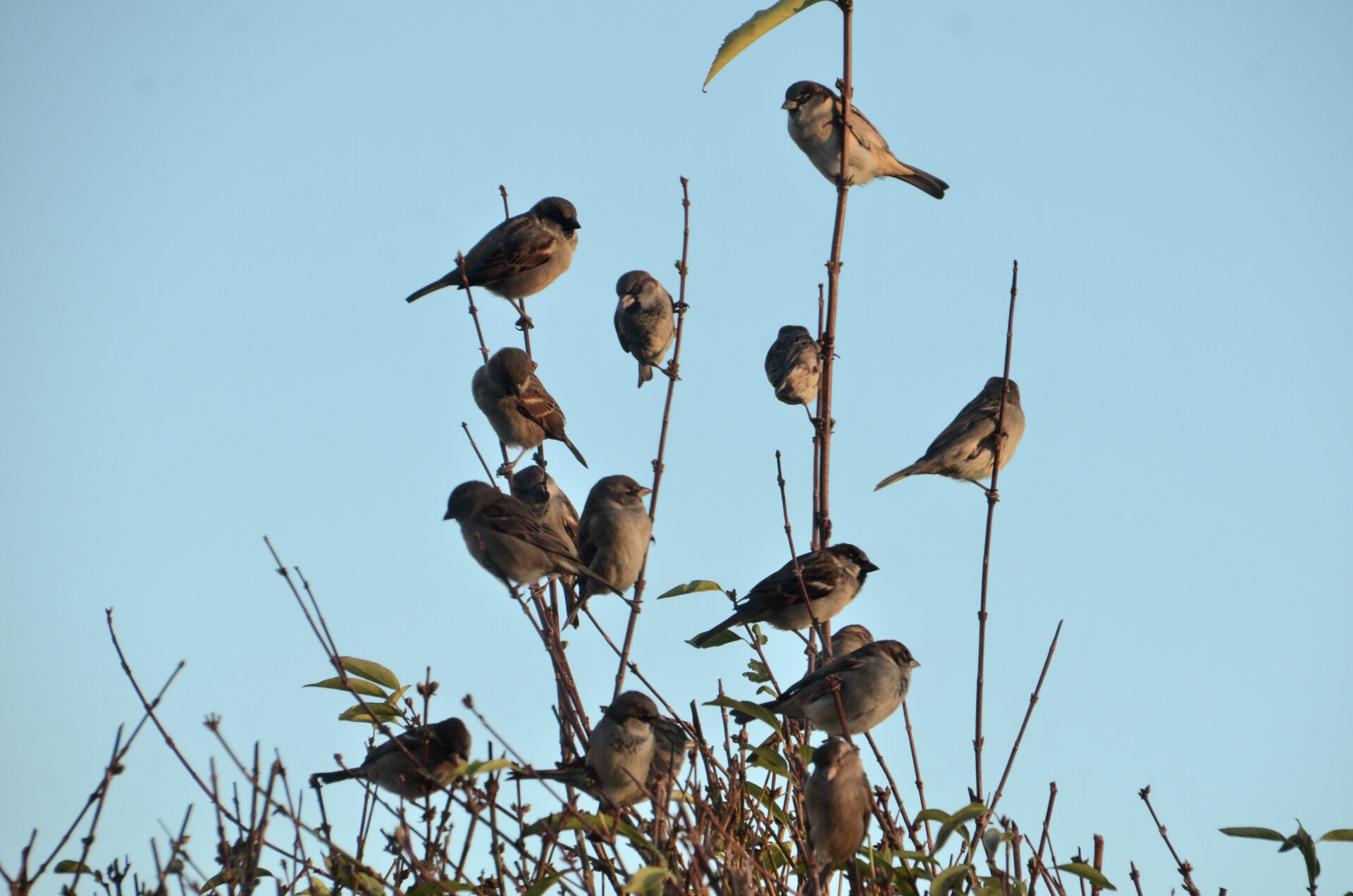
Here’s the catch: House Sparrows are not native to North America, and they do NOT migrate.
When autumn temperatures drop across Illinois, Wisconsin, Ohio, and Iowa, House Sparrows don’t head for Cancun. Instead, they scout out sheltered spots—especially empty nest boxes—to roost in all winter long. Once they establish ownership in winter, they will aggressively defend those boxes come spring, crowding out returning bluebirds and chickadees.
Autumn Nest Box Care & Sparrow-B-Gone Strategies
Autumn is the ideal time to clean, adjust, and safeguard your nest boxes so they stay open for native nesters next spring rather than becoming winter sparrow dens.
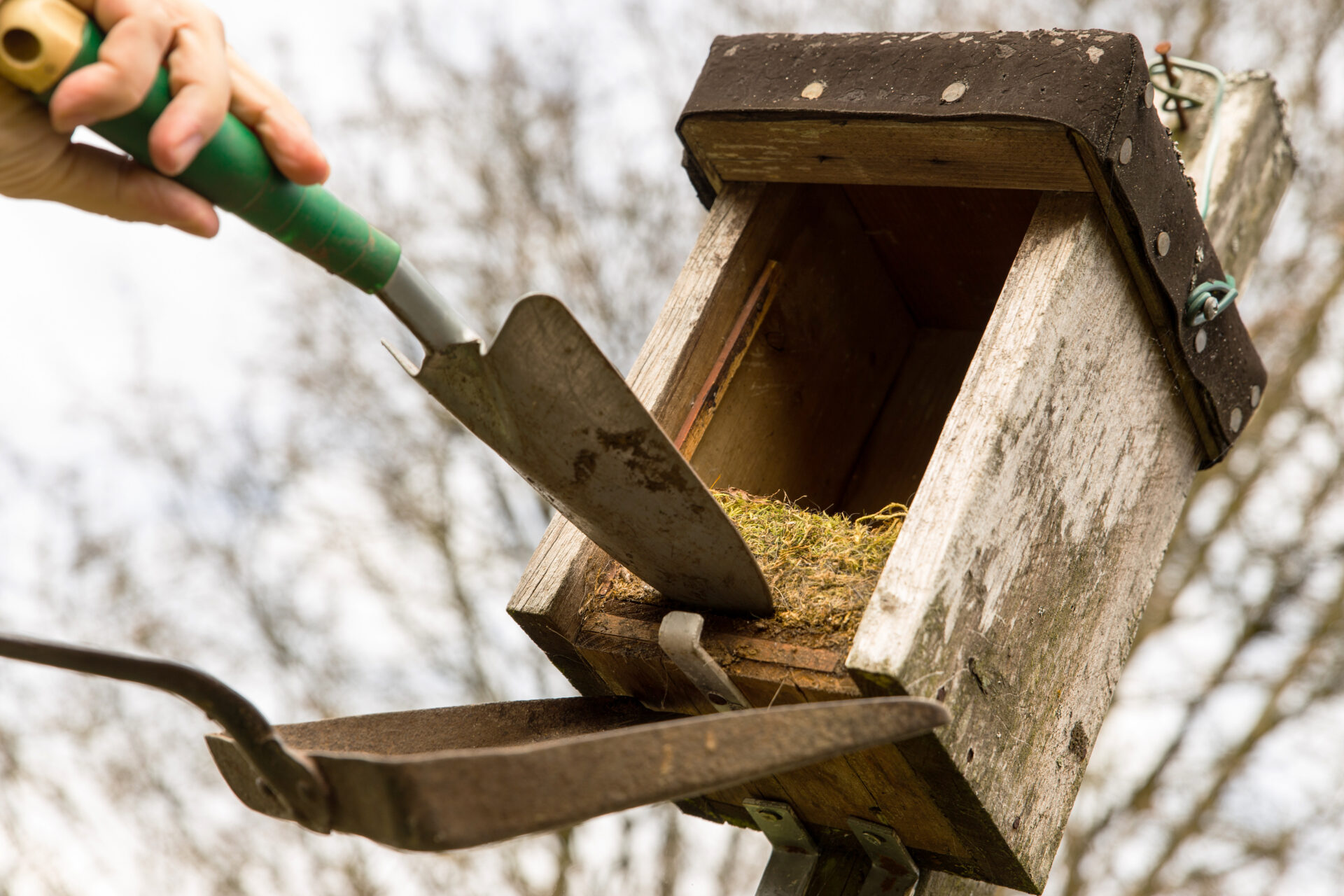
opened birdhouse with old nest being removed
- Clean and Evict in Late Autumn: Once native broods have fledged, open your nest boxes and clear out old nesting material. Removing debris destroys pest harborages and discourages House Sparrows from settling in for winter shelter.
- Size the Hole for Native Species: House Sparrows require an entrance hole of about 1½ inches or larger. If you’re trying to attract smaller native species like Chickadees or House Wrens, install a hole reducer guard (1⅛” to 1¼”). It lets tiny native birds enter while physically keeping sparrows out
- Deploy Sparrow-B-Gone Deterrents: When sparrows claim a box, gentle deterrence helps change their habits without harming them:
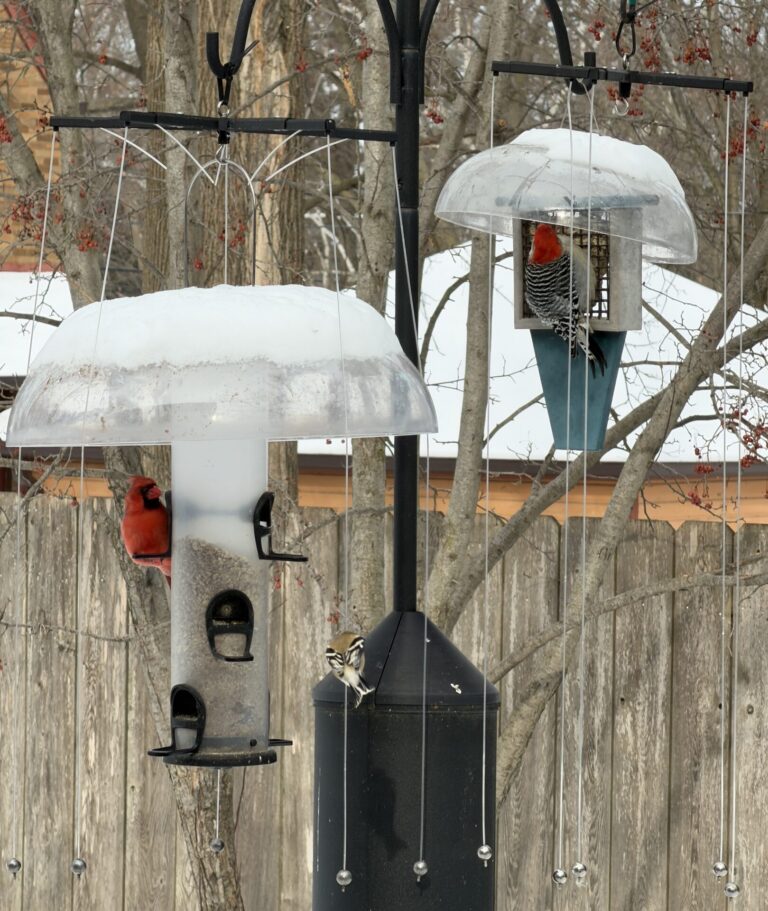
- Hanging Monofilament / Sparrow Sleds: Sparrows are uniquely bothered by vertical lines or weighted strands dangling near a nest entrance, while native bluebirds and swallows navigate around them easily.
- Acoustic & Scent Repellents: Botanical scent repellents or auditory deterrents near problem zones encourage sparrows to move along to wild roosting sites.
Ready to prepare your yard for fall?
Don’t let invasive sparrows claim your nest boxes this winter. Explore our collection of Sparrow-B-Gone nest box guards, or try DIY sparrow spookers!