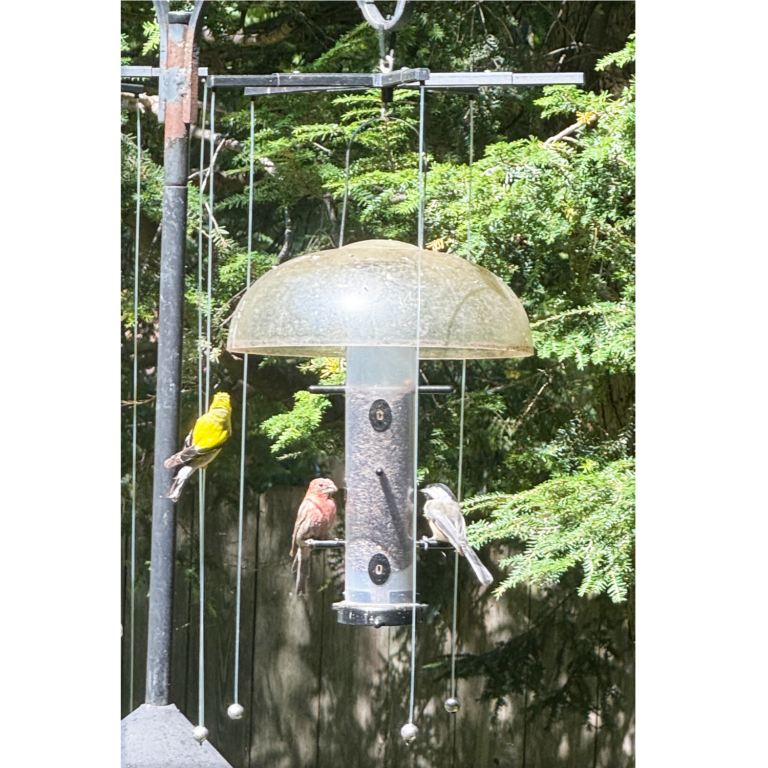
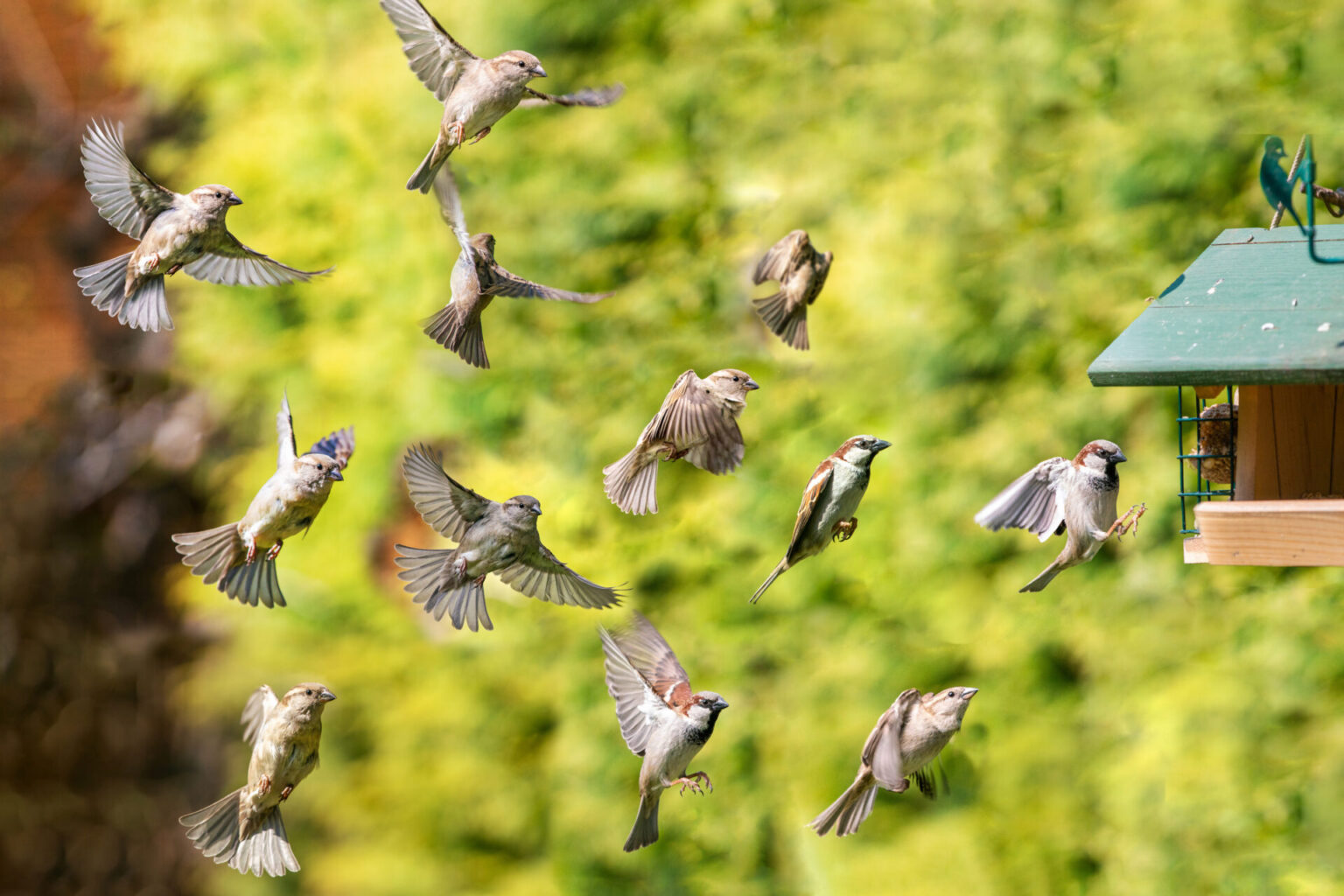
If you look out at your backyard bird feeders right now and feel like you are hosting a chaotic, non-stop frat party for feathered freeloaders, don’t panic. You haven’t lost your mind. You are just being thoroughly outmaneuvered by the local House Sparrow population.
Spring gets all the glamorous press for its beautiful migratory arrivals, but late summer is when the invasive House Sparrow (Passer domesticus) pulls off its annual coup. If your peaceful backyard sanctuary has suddenly descended into a noisy, aggressive turf war at the seed trays, it’s all due to a perfect storm of biology, bad manners, and exponential math that peaks every year in July and August.
Here is why your yard feels like Sparrow Ground Zero right now—and the science behind the swarm.
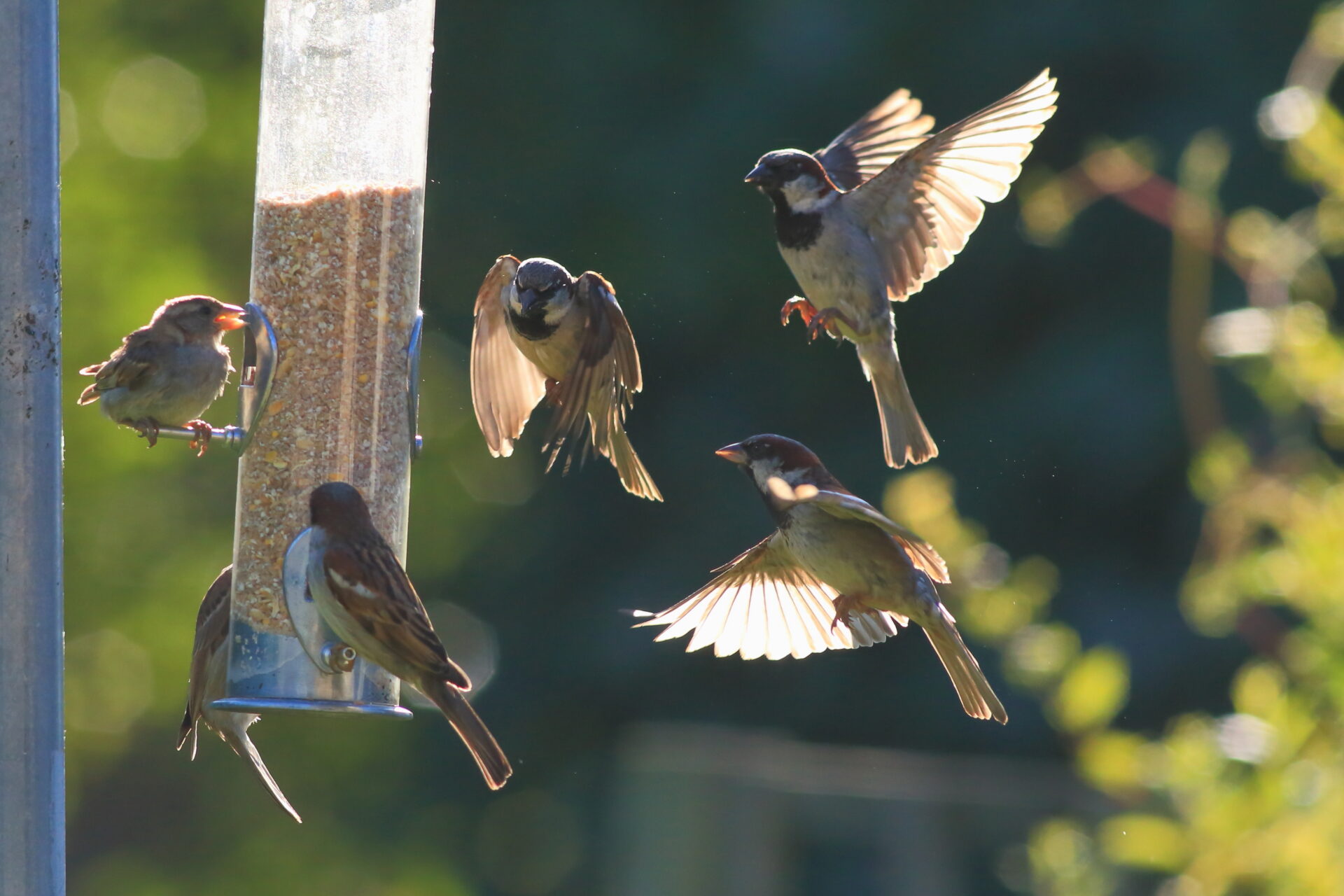
Group of sparrows swarming garden bird feeder
1. The multi-brood boom (Or: sparrow math)
Unlike our polite, native birds that raise a single, sensible family per year, House Sparrows have zero chill. A single pair can successfully crank out three to five broods in a single season.
By the time late July rolls around, the compounding interest on that reproductive cycle hits your backyard like a freight train. The adult sparrows that started nesting in April are now lounging around with their kids, grandkids, and great-grandkids. You aren’t just feeding the neighborhood sparrows anymore; you are financing a family reunion that never ends.
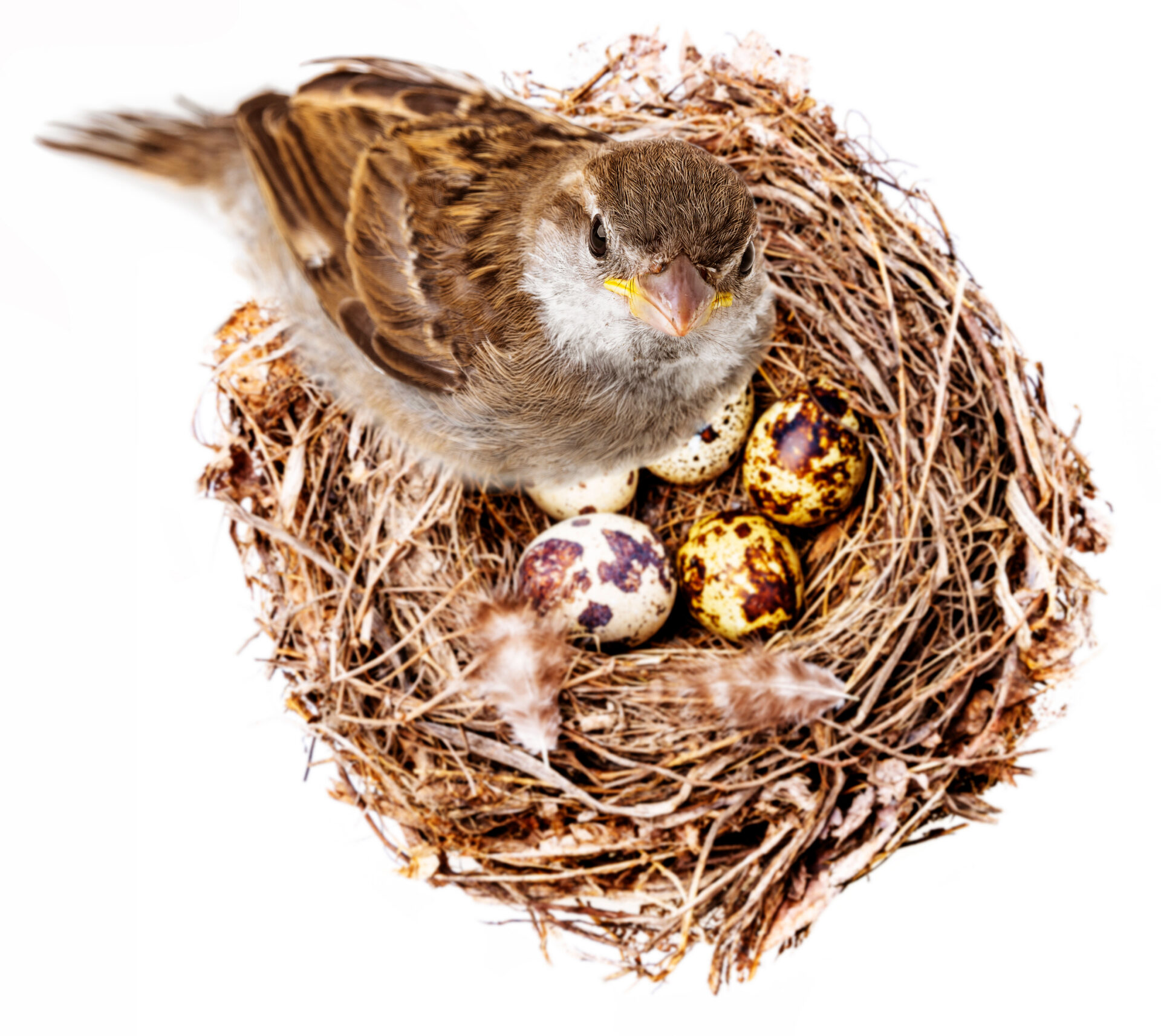
Female House Sparrow and a nest of its eggs
2. The relentless “teenager” invasion
Notice how the birds at your feeders seem louder, clumsier, and utterly devoid of personal space? That’s because a massive chunk of the flock consists of avian teenagers.
Late summer is when waves of newly fledged sparrows leave the nest. They are permanently ravenous, highly demanding, and haven’t yet learned the healthy sense of caution that keeps older birds polite. They crowd the feeders in tight, obnoxious cliques, begging for handouts and actively elbowing out your local Goldfinches and Chickadees.
3. The great super-flock merger
Back in spring, House Sparrows were fiercely territorial, screaming at each other over nesting boxes. But once August nears, they decide to put aside their differences and form a cooperative syndicate.
Smaller family units merge into massive post-breeding super-flocks. These feathered biker gangs travel the neighborhood together, hunting for the ultimate seed jackpot. If a single scout sparrow spots your premium setup, they instantly drop a pin for the rest of the gang. Within twenty minutes, your yard is the hot new club in town.
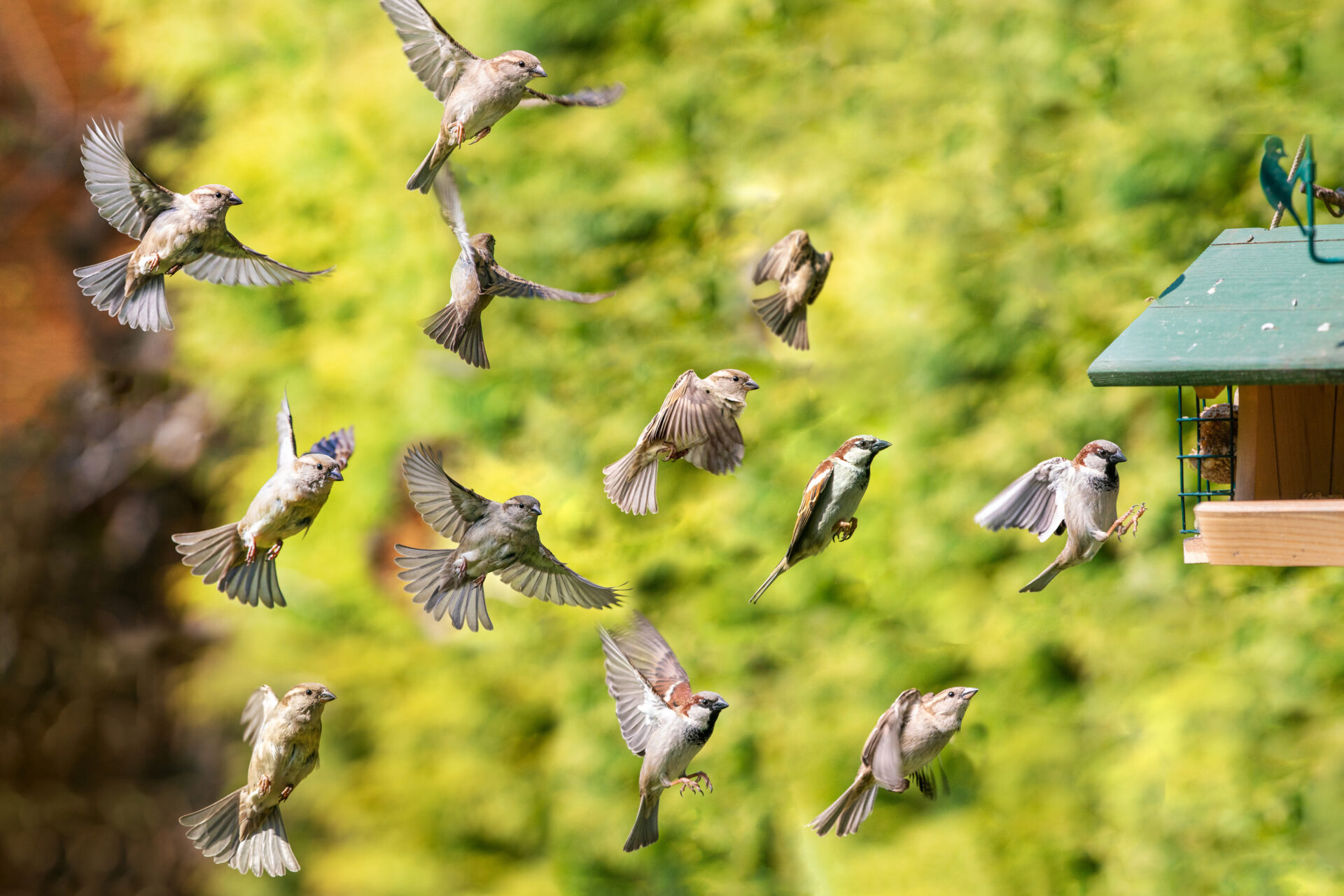
Rush hour at the feeder
4. Work smarter, not harder
You would think summer offers plenty of wild seeds and insects, but why should a sparrow hunt in the weeds when you’re offering an all-you-can-eat buffet? Feeding a massive, bloated population of young birds takes a lot of calories. Your highly visible, easily accessible bird feeders represent a low-effort, high-reward jackpot. They aren’t starving—they’re just lazy.
The Reality Check: House Sparrows are an introduced, invasive species, which means they don’t pack up and migrate when the weather turns. The rowdy crowd dominating your seed trays this August is the exact same crowd that will be stealing your nesting boxes next spring.
Breaking up the summer swarm isn’t just about saving your seed budget today—it’s about reclaiming your yard for the native birds who actually have some manners.
Time to evict the freeloaders
If you’re ready to stop financing the local sparrow syndicate and actually give your Goldfinches, Bluebirds, and Chickadees a fighting chance, it’s time to intervene. You don’t have to sit by and watch your expensive seed get hoarded by the neighborhood bullies.
At Sparrow-B-Gone™, we build patent-pending, targeted protection systems designed to capitalize on sparrow behavior. They keep the bullies out while welcoming your favorite native species back to the table. Think of it as a VIP velvet rope for your bird feeders—because your yard isn’t a free-for-all, and it’s time the sparrows learned some manners.
[Reclaim Your Yard: Shop the Collection]